Metal Fabrication for Signage and Architectural Metalwork
Laser-cut letters, facade screens and cladding brackets in aluminium and stainless steel for MENA signage and architecture
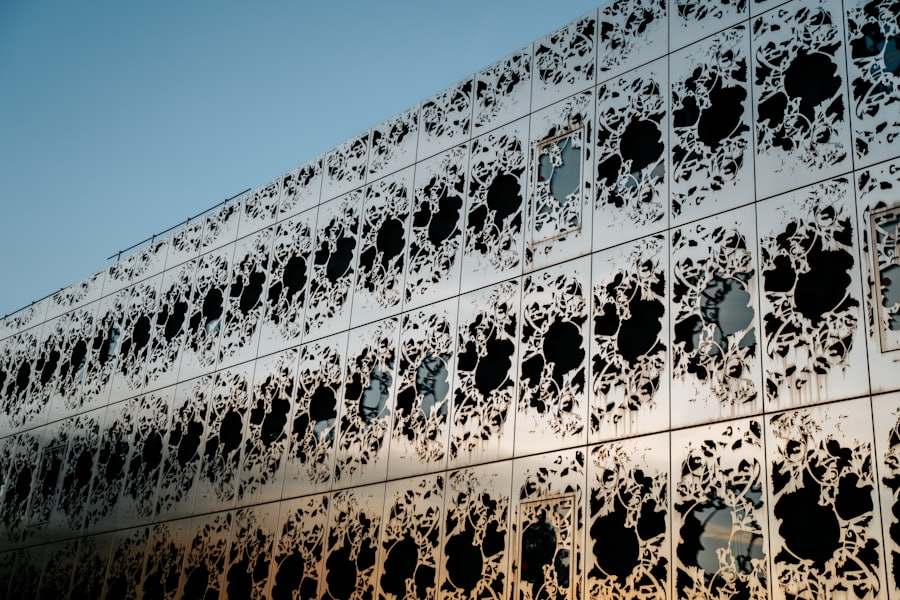
Signage and architectural metalwork is judged on visible finish more than any other category CutLinq fabricates, since a wavy laser-cut letter edge or an uneven bracket line is seen from the street. CutLinq laser cuts, bends and finishes aluminium 5754 and 6061-T6 and stainless 1.4301 (304) for channel letters, facade screens, perforated panels and cladding support brackets across Egypt, the UAE and Saudi Arabia.
This page covers material choice for exterior signage, the finish tolerances that keep cut letters and panels looking sharp, and the corrosion protection needed for facade metalwork exposed to Gulf sun and coastal salt air.
Material choice for exterior visibility
Aluminium 5754 or 6061-T6 is the default for channel letters and lightweight facade panels because it is easy to laser cut and bend to a clean radius, does not rust, and takes powder coat or anodising well. Stainless 1.4301 (304) is chosen for high-end facades, handrails and cladding brackets where a brushed or mirror finish is the visible feature, and for coastal projects where 304 outlasts aluminium against salt pitting on unpainted surfaces.
Corten weathering steel is used for architectural feature panels where a controlled rust patina is the design intent, common on landscape and monument signage; it should never be specified where rust staining onto adjacent stone or paving is unacceptable.
| Material | Typical thickness | Use | Finish |
|---|---|---|---|
| EN AW-5754 aluminium | 1.5-4 mm | Facade screens, panels | Powder coat, anodised |
| 6061-T6 aluminium | 3-10 mm | Structural cladding brackets | Anodised, mill finish |
| 1.4301 (304) stainless | 1-6 mm | Letters, handrails, high-end cladding | Brushed No. 4, mirror |
| Corten steel | 2-8 mm | Feature panels, monument signage | Natural weathering patina |
| Galvanised S235JR | 2-6 mm | Concealed structural frame | Hot-dip galvanised |
Cut quality for visible letters and panels
Fiber laser cutting aluminium and stainless at typical signage thicknesses (1-4 mm) holds ±0.1 mm and produces a near-vertical edge with minimal dross, but internal corners on serif letterforms and fine typography need a minimum internal radius of about 0.5x material thickness to avoid the laser rounding a sharp corner more than the design intends.
Perforated facade screens with a repeating hole pattern rely on consistent hole size and spacing across a large panel; laser cutting holds this consistency far better than punching on panels above about 1.5 m x 1.5 m, where punch tooling wear becomes visible as pattern drift across the sheet.
Corrosion protection and colour for Gulf exposure
Anodising type II at 15-25 µm gives aluminium signage a durable colour that resists Gulf UV fading better than most powder coat systems, though powder coat offers a wider RAL colour range and is more common for large facade panels. Stainless facade brackets in coastal Jeddah, Abu Dhabi or Alexandria should be specified in 1.4404 (316L) rather than 304 if the surface will not be regularly cleaned, since accumulated salt deposits can cause surface pitting on 304 over several years.
Powder coat on exterior aluminium and steel signage should be specified at 80-100 µm minimum for UV and abrasion resistance in sun and sand exposure, higher than the 60-80 µm typical for indoor parts.
Design tips
- Specify a minimum internal corner radius of 0.5x thickness on cut letterforms to avoid over-rounding by the laser kerf.
- For perforated facade panels above 1.5 m, use laser cutting rather than punching to keep hole pattern consistent across the panel.
- Choose 316L over 304 for coastal facade brackets that will not be regularly washed of salt deposits.
- Specify anodising for colour-critical exterior aluminium signage; it resists UV fade better than most powder coat.
- Design cladding support brackets with slotted holes for ±3-5 mm adjustment to absorb building tolerance on site.
- Keep visible weld joints on stainless handrails to a minimum; specify continuous seam welds ground and polished flush.
- For large facade screens, split into panels within your laser bed's maximum size and design a concealed splice joint.
Applications
| Industry | Example parts | Typical material |
|---|---|---|
| Retail and commercial signage | Channel letters, illuminated boxes | Aluminium 5754, stainless 304 |
| Facade and cladding | Perforated screens, support brackets | Aluminium 6061-T6, 304 stainless |
| Handrails and balustrades | Posts, infill panels | 1.4301 (304) stainless |
| Landscape and monument signage | Feature panels, letterforms | Corten steel, aluminium |
| Interior architectural metalwork | Screens, panels, ceiling features | Aluminium, brushed stainless |
Pricing and lead time
Cost is driven by material (stainless roughly 3-4x aluminium per kg, 316L a further 30-40% over 304), by finish (anodising and mirror polishing add per-square-metre cost beyond cutting), and by pattern complexity (fine typography or dense perforation increases laser cutting time significantly compared with simple panel shapes). Laser-cut aluminium or stainless signage components without finishing are typically ready in 3-5 working days; with anodising, powder coat or polishing, 6-10 working days across Egypt, the UAE and Saudi Arabia.
Frequently asked questions
Yes, fiber laser holds ±0.1 mm on aluminium and stainless at signage thicknesses; for very fine serifs or thin strokes below about 1x material thickness, discuss the design with us first since the laser kerf can round sharp internal corners.
Upload your DXF or STEP file with material and finish noted, and receive a binding quote within 12 hours.