Powder Coating
Electrostatic powder coating for laser-cut and fabricated steel, galvanised and aluminium parts in any RAL colour
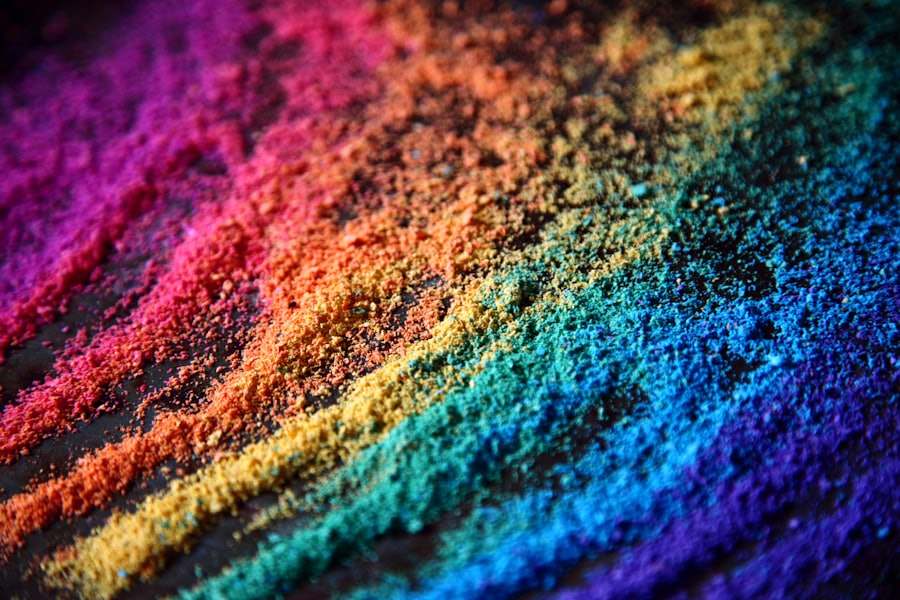
Powder coating is a dry finishing process: electrostatically charged polymer powder is sprayed onto a grounded metal part, then cured in an oven at 160-200 °C to form a continuous film of 60-120 µm. It is the standard protective and decorative finish for laser-cut steel, galvanised sheet and aluminium parts ordered through CutLinq, because it costs less than wet paint per square metre, contains no solvents and gives a harder, thicker layer in one pass.
This page covers the powder systems, pretreatment stages, film thickness and colour options available through fabrication partners in Egypt, the UAE and Saudi Arabia, and what to specify so the finish survives Gulf sun, sand abrasion and coastal humidity.
Powder types and where each is used
Four chemistries cover almost every order. Polyester (mostly TGIC-free) is the default for anything outdoors because it resists UV; epoxy has the best chemical and corrosion resistance but chalks in sunlight, so it stays indoors or under a polyester topcoat; epoxy-polyester hybrids are the economical choice for indoor furniture and enclosures; polyurethane gives the smoothest thin films for parts that must look like paint.
For exterior parts in Saudi Arabia and the UAE, specify a super-durable polyester (Qualicoat class 2 type) which keeps gloss roughly twice as long as standard polyester under the region's UV load.
| System | UV resistance | Chemical resistance | Typical film µm | Use |
|---|---|---|---|---|
| Polyester (standard) | Good | Moderate | 60-80 | Exterior fences, solar frames, signage |
| Polyester super-durable | Very good | Moderate | 60-80 | Facades, Gulf exterior, 10+ year sites |
| Epoxy | Poor (chalks) | Very good | 60-100 | Indoor panels, primer layer, chemical plants |
| Epoxy-polyester hybrid | Fair | Good | 60-80 | Furniture, enclosures, shelving |
| Polyurethane | Very good | Good | 40-60 | Thin decorative films, machinery covers |
| Zinc-rich epoxy primer + polyester | Very good | Very good | 120-160 (two coats) | Coastal steelwork, Alexandria, Jeddah, Dammam |
Pretreatment: what happens before the powder
Adhesion depends on pretreatment more than on the powder. Mild steel (S235JR, DC01) is degreased, rinsed and iron-phosphated; for outdoor use, shot blasting to Sa 2.5 before coating roughly doubles the corrosion life. Galvanised sheet (DX51D+Z) needs a zinc-phosphate or chrome-free conversion layer, and hot-dip galvanised parts should be lightly swept to remove zinc oxides. Aluminium (EN AW-5754, 6061-T6) is etched and chromated or treated with a titanium-zirconium conversion coating.
Laser-cut edges carry a thin oxide layer that powder can lift from; ask for edge deburring or blasting on parts where edge chipping would be visible. Welded assemblies must have weld spatter removed and porosity sealed, otherwise gas escapes in the oven and leaves pinholes.
- Degrease, rinse, iron phosphate: minimum for indoor steel
- Shot blast Sa 2.5 + zinc primer + polyester: exterior steel in coastal air
- Chrome-free conversion coating: aluminium and galvanised sheet
- Weld spatter and slag removed, sharp edges broken to R0.5 mm
Film thickness, tolerances and test values
A single polyester coat measures 60-120 µm; below 50 µm coverage on edges becomes unreliable and above 150 µm the film may orange-peel or crack on bends. Thickness is checked with a magnetic or eddy-current gauge, usually 5 readings per part. Colour is matched to the RAL Classic chart with a tolerance of Delta E under 1.5 against the reference plate; metallics and textures are batch-sensitive, so order all parts of one assembly in one run.
| Property | Typical value | Test standard |
|---|---|---|
| Film thickness, single coat | 60-120 µm | ISO 2808 |
| Adhesion, cross-hatch | Gt 0 to Gt 1 | ISO 2409 |
| Pencil hardness | H to 2H | ISO 15184 |
| Impact resistance | 2.5 Nm direct (polyester) | ISO 6272 |
| Salt spray, steel with zinc primer | 500-1000 h | ISO 9227 |
| Salt spray, steel iron-phosphate only | 250-500 h | ISO 9227 |
| Gloss levels | Matt 10-30, satin 30-70, gloss 70-90 GU | ISO 2813, 60° |
| Cure schedule | 10-20 min at 160-200 °C | Powder data sheet |
Colours, textures and masking
Most stock colours are RAL 9010 white, 9005 black, 7016 anthracite, 9006 and 9007 silver-grey metallics, 5010 blue, 3020 red and 6005 green. Any other RAL Classic colour is available from a minimum powder box, which is why small runs in unusual colours carry a surcharge. Finishes are smooth gloss, satin, matt, fine texture (hides laser dross and weld grinding) and wrinkle.
Threads, bearing seats and earthing points are masked with high-temperature tape or silicone plugs; each masked feature adds handling time, so keep threaded holes to a minimum or specify that M-threads are chased after coating.
Powder coating in MENA conditions
Surface temperatures on a dark RAL 7016 panel in Riyadh or Abu Dhabi in August can exceed 80 °C; this is within the service range of cured polyester, but it accelerates chalking of standard grades, so lighter colours and super-durable powder are recommended for large exterior surfaces. Sand abrasion on the leeward side of road signs and solar structures wears through thin films; specify 80-100 µm minimum there. In Alexandria, Jeddah and Dammam, chloride-laden air attacks bare steel under any pinhole, so a zinc-rich primer or hot-dip galvanising under the powder is the correct build for parts expected to last more than five years.
Design tips
- Keep sheet thickness at or above 1.0 mm for steel and 1.5 mm for aluminium so parts do not warp in the 180 °C oven.
- Provide at least one hanging hole of 4-6 mm diameter or a tab in a hidden location; parts without a hook point cost more to rack.
- Break all laser-cut edges to R0.5 mm or specify tumbling; powder is thinnest on sharp edges and chips there first.
- Avoid enclosed hollow sections without a 5 mm drain and vent hole; trapped pretreatment liquid boils out and ruins the film.
- Add 0.1-0.15 mm per side to clearance holes and slots for the coating build; a 10.0 mm hole becomes about 9.8 mm after coating.
- State the RAL number, gloss level (matt, satin, gloss) and whether the part is exterior; do not write only 'grey'.
- For parts to be welded on site later, mask 30-50 mm each side of the joint or choose a weld-through primer instead.
Applications
| Industry | Example parts | Typical material |
|---|---|---|
| Solar EPC | Mounting rails, panel clamps, cable trays | S235JR pre-galvanised DX51D+Z |
| HVAC | Diffuser frames, unit casings, louvres | DX51D+Z 1.0-1.5 mm |
| Signage | Pylon signs, letter backplates, wayfinding | Aluminium EN AW-5754, DC01 |
| Furniture and fit-out | Table bases, shelving, partition frames | S235JR tube, DC01 sheet |
| Electrical | Enclosures, panel doors, gland plates | DC01 1.5-2.0 mm, RAL 7035 |
| Machinery OEM | Guards, covers, machine frames | S235JR 2-5 mm |
| Architecture | Facade fins, balustrades, screens | Aluminium 6061-T6, 1.4301 (304) for uncoated |
Pricing and lead time
Price is driven by three factors: surface area and hanging efficiency (a flat panel racks tightly, a welded frame occupies oven space), colour and powder system (stock RAL 9005 in standard polyester is the baseline; a non-stock colour or super-durable powder adds roughly 20-40%, a zinc primer plus topcoat roughly doubles the finishing cost), and pretreatment level (shot blasting adds about 30-50% over phosphating). As a rule, coating adds 15-30% to the fabricated cost of a simple laser-cut steel part. Lead time for coating alone is 2-4 working days for stock colours and 5-8 working days for special colours or two-coat systems, added to the cutting or fabrication lead time.
Frequently asked questions
Yes, provided the zinc is cleaned and given a conversion coating, and hot-dip galvanised parts are swept and degassed at 200 °C before coating to avoid pinholes. Pre-galvanised DX51D+Z sheet coats reliably; ask for chrome-free pretreatment on the order.
Upload your DXF or STEP file, state the RAL number and gloss level, and receive a binding quote for cutting and powder coating within 12 hours.