Anodising vs Powder Coating
How the two aluminium finishes differ in process, durability, colour range and cost for parts made in Egypt, the UAE and Saudi Arabia
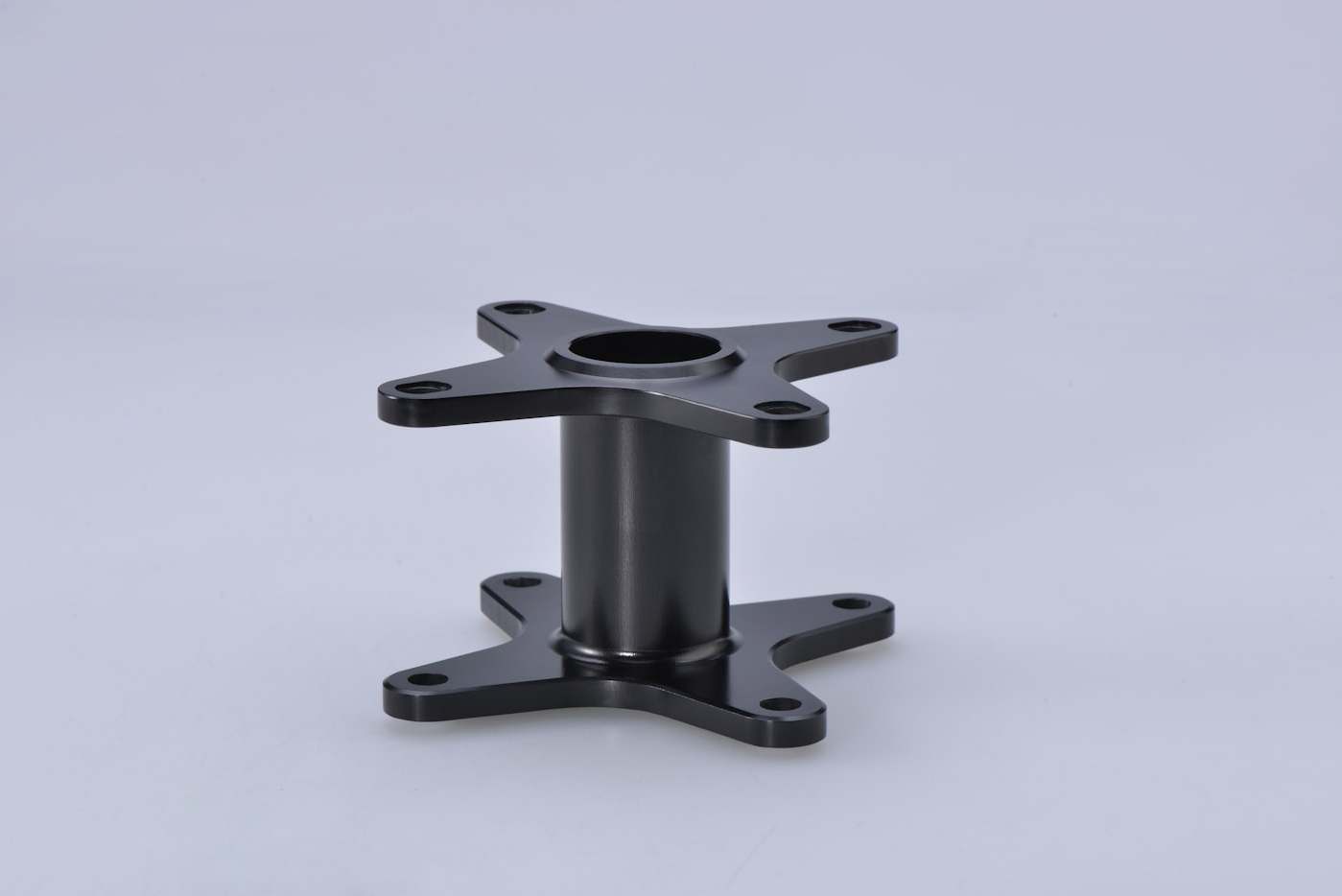
Anodising and powder coating are the two standard finishes for aluminium parts. Anodising is an electrochemical process that thickens the natural oxide layer already on aluminium (5-25 µm for type II, 25-50 µm for hard anodising), giving a finish that is part of the metal and cannot chip or peel. Powder coating is an electrostatically sprayed and oven-cured polymer layer (60-120 µm) applied over any metal, giving a wider colour range including any RAL shade and thicker impact protection.
This page compares the two processes on durability, colour, cost and typical use, and states which to specify for coastal, indoor and architectural parts in the region.
Process and coating structure
Anodising works only on aluminium (and titanium, to a lesser extent). The part is immersed in a sulfuric acid bath and an electric current grows a porous aluminium-oxide layer on the surface, which is then dyed and sealed. Because the layer grows out of the base metal, it does not add measurable dimension beyond the coating thickness and cannot delaminate the way a sprayed coating can.
Powder coating applies a dry polymer powder electrostatically to any conductive metal (aluminium, steel, galvanised steel), then melts and cures it in an oven at 180-200°C. The result is a continuous plastic film 60-120 µm thick that sits on top of the surface rather than growing from it, so it can chip on a sharp impact and exposes bare metal underneath if it does.
| Property | Anodising (type II) | Hard anodising (type III) | Powder coating |
|---|---|---|---|
| Applicable metals | Aluminium, titanium | Aluminium, titanium | Any conductive metal |
| Coating thickness | 5-25 µm | 25-50 µm | 60-120 µm |
| Colour range | Limited: clear, black, bronze, gold, some blues/reds | Mostly grey/black, dyeing limited | Any RAL shade, gloss, texture, metallic |
| Chip/peel risk | None, part of the metal | None, part of the metal | Chips on sharp impact |
| UV colour fastness | Excellent, dye can fade over 10+ years outdoors | Excellent | Good; polyester grades fade slower than epoxy |
| Typical cost vs bare part | Baseline for aluminium finishing | 20-30% above type II | Comparable to type II, lower on large flat areas |
Durability and where each performs better
Anodising wins on abrasion and scratch resistance because the oxide layer is harder than the underlying aluminium and cannot be knocked off; it is the standard finish for handles, extrusions, enclosures and architectural aluminium that gets handled or wiped daily. It is also the only finish that keeps working after a scratch, since there is no substrate exposed underneath a scuffed anodised layer the way there is under a chipped paint film.
Powder coating wins on colour matching (RAL 9010, 9005, and custom Gulf municipal colours are all achievable) and on covering steel and galvanised steel, which cannot be anodised. In coastal humidity and salt air, both finishes perform well on aluminium when properly sealed or cured; powder coating is the only option once the substrate is mild or galvanised steel, and a hot-dip galvanised plus powder coat duplex system gives the longest life for exterior steel structures in Jeddah, Dammam or Abu Dhabi.
- Handles, door furniture, extrusion trims: anodising, for wear resistance
- Facade cladding panels needing a specific architect's RAL colour: powder coating
- Enclosures and brackets in dusty, high-touch environments: anodising
- Structural steel, galvanised duct, signage frames: powder coating (anodising does not apply)
- Mixed-metal assemblies with both aluminium and steel parts: powder coat both for a matching finish
Colour and appearance
Anodising colour comes from dye absorbed into the porous oxide layer before sealing, so the palette is limited to what dyes penetrate well: clear (natural silver), black, bronze, champagne and a small range of blues, reds and golds. Matching an exact RAL or brand colour through anodising is difficult and not usually offered.
Powder coating uses pigmented polymer powder, so any RAL colour, a metallic or textured finish, or a two-tone design is achievable with standard equipment, and colour is consistent from batch to batch when the same powder lot is used.
Worked example
An aluminium facade louvre system for a Riyadh commercial building, 6 mm EN AW-6061-T6 extrusion, RAL 7016 anthracite grey specified by the architect: powder coating is the only realistic route, since RAL 7016 is not achievable by dye anodising. The same louvre in natural silver with no specific colour requirement could instead go through type II clear anodising at similar or slightly lower cost, with better long-term scratch resistance for a component that gets cleaned regularly.
Design tips
- If the specification names a RAL colour, default to powder coating; anodising cannot match an arbitrary RAL shade.
- For parts with sharp repeated wear (handles, hinge points, sliding rails), specify anodising over powder coating.
- Do not anodise steel or galvanised steel; only aluminium and titanium accept the process.
- Mask threaded holes and mating faces before anodising or powder coating; both add measurable thickness (5-25 µm and 60-120 µm respectively) that affects tight-tolerance fits.
- For outdoor architectural aluminium in coastal cities, specify type II anodising at 20-25 µm minimum or a polyester powder coat rated for exterior UV exposure.
- Hard anodising (type III, 25-50 µm) is worth the 20-30% premium only for wear surfaces like pistons, guide rails or valve bodies, not for cosmetic panels.
- When mixing anodised aluminium and powder-coated steel in one assembly, choose colours from the same RAL reference so panels read as a matched set.
Applications
| Industry | Example parts | Typical finish |
|---|---|---|
| Architecture and facades | Cladding panels, louvres, mullions | Powder coating (RAL match) or clear anodising |
| Signage | Letters, frames, light boxes | Powder coating |
| Consumer and door hardware | Handles, hinges, extrusion trims | Anodising |
| Electrical enclosures | Panel boxes, brackets | Powder coating |
| Solar mounting structures | Rails, clamps, brackets (steel or aluminium) | Powder coating or hot-dip galvanising |
| Furniture and fit-out | Frames, legs, brackets | Powder coating |
| Aerospace and precision parts | Aluminium housings needing hardness | Hard anodising (type III) |
Pricing and lead time
Cost is driven by which process applies (anodising only works on aluminium and titanium, so steel parts default to powder coating), by coating type and thickness (hard anodising and thick powder films cost more than standard type II or a thin powder pass), and by colour and batch size (custom RAL matching and small batches cost more per part than stock colours run in volume). Standard anodising and powder coating both typically run 4-7 working days including surface prep; hard anodising or custom colour matching can add 2-3 days.
Frequently asked questions
Powder coating gives good durability and a wider colour range, but the finish sits on the surface and can chip on a sharp impact, exposing bare metal. Anodising is part of the metal and does not chip, so for high-wear items anodising lasts longer even though the colour range is smaller.
Upload your DXF or STEP file and receive a binding quote within 12 hours, with anodising or powder coating specified.