Packaging and Conveyor Machinery
Machine frames, conveyor parts, guarding and change parts for packaging line manufacturers and integrators
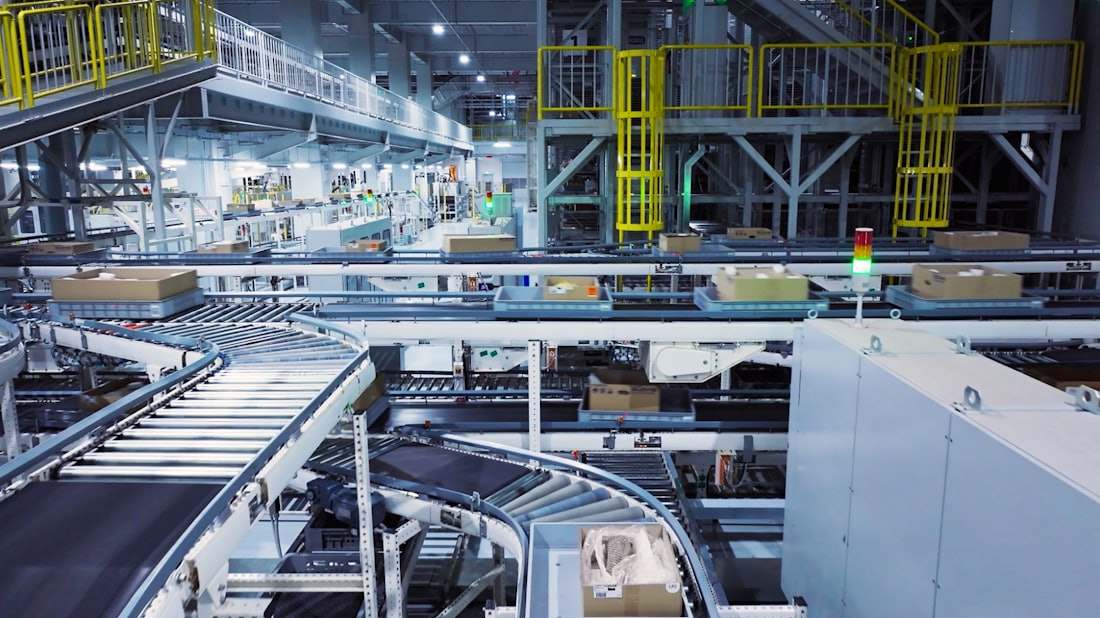
Packaging and conveyor machinery combines structural steel frames with precision-machined moving parts: guide rails, sprockets, shafts and change parts that must hold tight tolerance to run reliably at speed, alongside laser-cut guards and covers that keep the machine compliant with safety standards. Workshops in the CutLinq network fabricate both sides of this: welded S235JR frames and CNC-machined 1.4301 (304) or 6061-T6 components for OEMs and integrators building filling, wrapping, labelling and conveying equipment across Egypt, the UAE and Saudi Arabia.
This page covers typical part categories, tolerance requirements for moving components, and material choice for food-contact versus structural parts.
Structural frames versus precision change parts
Machine base frames and gantries are usually welded S235JR box section or channel, sized for stiffness rather than tight tolerance, with mounting faces machined flat and parallel after welding where drive components or linear guides must align. Change parts (format parts that swap when the packaging size changes) are CNC machined to tighter tolerance, typically ±0.05 mm, because they directly contact the product or the film and any inconsistency shows as a jam or a misfeed on the line.
Guide rails and product contact surfaces on food packaging lines are specified in 1.4301 (304) with a smooth finish (Ra 0.8 µm or better) to meet hygiene expectations and resist the cleaning chemicals used in wash-down areas.
| Part category | Typical tolerance | Typical material | Notes |
|---|---|---|---|
| Base frame, gantry | ±0.5 to ±1 mm structural | S235JR welded | mounting faces machined after welding |
| Guide rails, product contact | ±0.1 mm profile | 1.4301 (304) | smooth finish, wash-down resistant |
| Sprockets, gears, shafts | ±0.02 to ±0.05 mm | S235JR, 42CrMo4 for higher load | keyway and bore tolerance critical |
| Change parts, format parts | ±0.05 mm | 6061-T6, POM, 1.4301 | swapped per product size, must be interchangeable |
| Guards, covers, panels | ±0.2 to ±0.5 mm | S235JR, DX51D+Z, polycarbonate cutouts | laser cut, powder coated or clear panel |
Moving parts and wear considerations
Sprockets and drive shafts run continuously at line speed and are specified with keyway tolerance held to ±0.02 mm to avoid backlash that shows up as product jitter at high speed. Bore and shaft fits typically use an H7/g6 or H7/k6 running or transition fit depending on whether the part rotates freely or is fixed to the shaft; state the fit class explicitly rather than a bare tolerance, since the correct fit depends on the mating function.
Change parts that contact abrasive or dusty product (common in food packaging and in dusty Gulf and Egyptian factory environments) benefit from a hardened or coated wear surface; POM (acetal) is often substituted for machined metal on guide surfaces where low friction and no lubrication is preferred for food-contact areas.
Guarding and safety compliance
Machine guards are laser cut from S235JR or DX51D+Z sheet, often perforated for ventilation and visibility of the process inside, and powder coated to the OEM's standard colour, typically RAL 7035 or RAL 9006 for industrial equipment. Interlocked access panels and viewing windows with polycarbonate or wire-mesh infill are common on packaging lines to satisfy machine safety directives; specify the mesh or perforation pattern and the interlock mounting position on the drawing so the guard integrates with the safety system without rework.
Design tips
- Specify the fit class (H7/g6, H7/k6) on shaft and bore dimensions rather than a bare ± tolerance, since the fit function matters more than the number alone
- Machine mounting faces flat and parallel after welding, not before, on structural frames carrying linear guides or drive units
- Use 1.4301 (304) with Ra 0.8 µm or better for any surface in contact with packaged product
- For change parts across multiple product formats, standardise the mounting interface so only the contact profile changes between versions
- Specify perforation pattern (hole size and pitch) on guards balancing airflow, visibility and rigidity
- State interlock switch position and mounting hardware on guard drawings so panels integrate with the safety circuit
Applications
| Sector | Example parts | Typical material |
|---|---|---|
| Food packaging lines | Guide rails, change parts, product contact chutes | 1.4301 (304), POM |
| Filling and capping machinery | Frames, sprockets, format parts | S235JR, 6061-T6 |
| Wrapping and palletising | Conveyor frames, guarding, rollers | S235JR, DX51D+Z |
| Labelling equipment | Precision brackets, adjustment plates | 6061-T6, S235JR |
| Conveyor systems | Side rails, sprockets, tensioners | S235JR, 1.4301 for wash-down zones |
| Pharmaceutical packaging | Enclosure panels, product-contact chutes | 1.4404 (316L) |
Pricing and lead time
Cost on packaging machinery parts is driven by three factors: the split between structural fabrication (welded frames, priced mainly by weight and weld length) and precision machining (change parts and shafts, priced by machining time and tolerance rather than weight), material grade (stainless for product-contact parts costs roughly 30-40% more than mild steel equivalents), and finish (powder coating for guards, or a wash-down grade polish for stainless contact parts). Welded frames typically take 5-8 working days including machining of mounting faces; precision change parts and shafts run 4-7 working days depending on tolerance and quantity. Batch orders of repeat change parts see a meaningful per-unit cost reduction once the CAM programming is done on the first piece.
Frequently asked questions
Yes, this is standard practice for frames carrying linear guides or drive components; welding distorts the frame slightly and machining the mounting faces afterward restores flatness and parallelism to the tolerance the drive system needs.
Upload your DXF or STEP file for frames, change parts or guarding and receive a binding quote within 12 hours.