Medical and Laboratory Equipment
Laser-cut, machined and electropolished stainless parts for trolleys, instrument housings and lab benches in Egypt, the UAE and Saudi Arabia
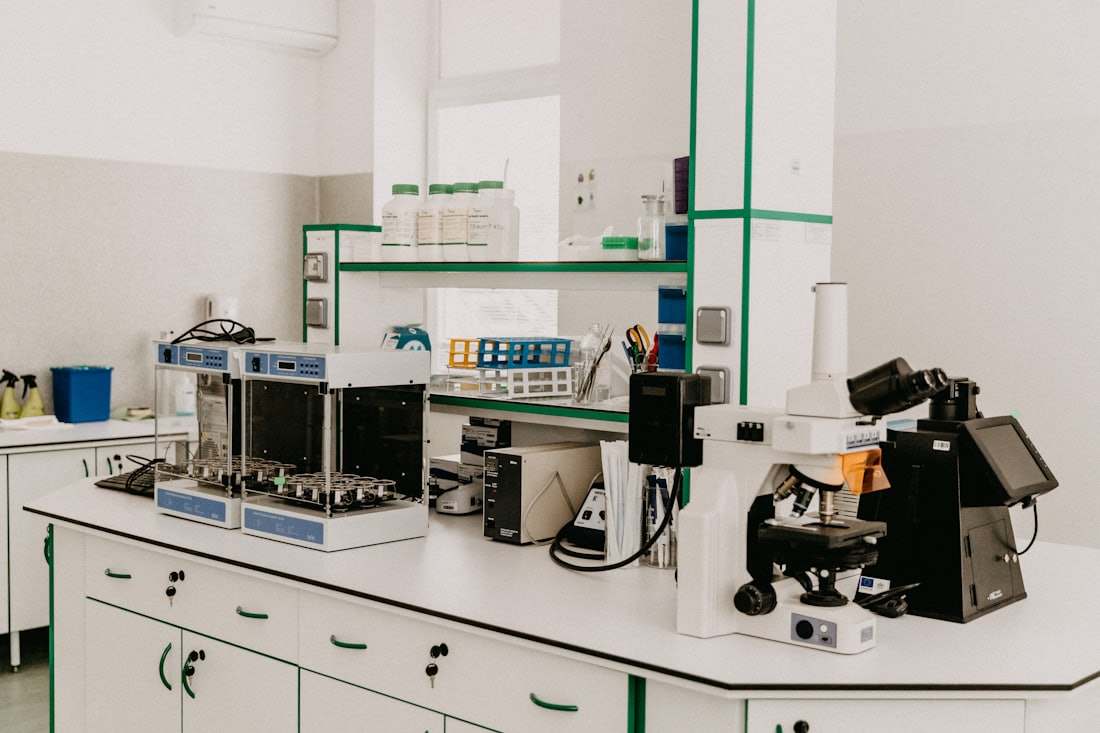
Medical and laboratory equipment fabrication covers trolleys, instrument housings, lab benches, storage cabinets, fume hood frames and mounting brackets, almost always in 316L stainless steel for its cleanability and resistance to disinfectants, saline and repeated sterilisation cycles. Parts are laser cut, formed, TIG welded with continuous hygienic seams, and often electropolished or passivated to remove weld heat-tint and give a smooth, cleanable surface.
CutLinq supplies these parts to medical equipment manufacturers, hospital maintenance departments and lab fit-out contractors across Cairo, Dubai, Riyadh and Jeddah when their own supply chain needs backup capacity. This page covers material choice, hygienic weld and edge requirements, and what to send for a quote.
Material: why 316L is the default
1.4404 (316L) is specified for almost all medical and lab parts because of its molybdenum content, which resists pitting from saline solutions, chlorine-based disinfectants and repeated autoclave or chemical sterilisation cycles far better than 1.4301 (304). 304 is occasionally accepted for dry, low-contact structural frames not in the sterile field, but any surface that contacts reagents, blood, saline or disinfectant should be 316L.
Surface finish matters as much as grade: a 2B mill finish is acceptable for hidden structural members, but exposed surfaces, trolley tops, instrument trays and bench tops are specified to a brushed No.4 (Ra 0.4-0.8 µm) or electropolished (Ra below 0.4 µm) finish, since a smoother surface holds fewer bacteria and cleans faster.
| Component | Material | Surface finish |
|---|---|---|
| Trolley frames and legs | 1.4404 (316L) | No.4 brushed |
| Trolley tops and trays | 1.4404 (316L) | Electropolished, Ra < 0.4 µm |
| Instrument housings | 1.4404 (316L) | No.4 brushed or electropolished |
| Lab bench frames (hidden) | 1.4301 (304) acceptable | 2B mill |
| Lab bench worktops | 1.4404 (316L) | Electropolished or No.4 |
| Fasteners and hinges | A4 (316) stainless | Passivated |
Hygienic welding and edges
Welds on medical and lab equipment are specified continuous, not stitched, so no gap or crevice can trap fluid or bacteria; internal corners are radiused rather than square for the same reason. TIG welding with argon backing purge is standard on visible or fluid-contact joints to avoid oxidation (sugaring) on the weld root, which otherwise creates a rough, hard-to-clean surface inside tube or box sections.
After welding, heat-tint discolouration around the weld must be removed by pickling, grinding or electropolishing; leaving heat-tint on 316L significantly lowers its local corrosion resistance at exactly the point most likely to see repeated cleaning chemical contact.
Edge quality and tolerances
All cut and formed edges on surfaces that will be handled or cleaned should carry a specified edge break (typically 0.2-0.5 mm) with no sharp burr, since gloved hands and cleaning cloths both catch on unbroken edges. Dimensional tolerance is usually ISO 2768-m for general structural dimensions, tightened to individual tolerances on features that mate with drawers, shelving or wheeled castors.
What to send for a quote
A DXF of flat patterns for laser-cut components, a STEP file for the assembled frame or housing, and a note on which surfaces need electropolishing versus brushed finish is enough for most quotes. State the intended sterilisation method (autoclave, chemical wipe-down, UV) since this can affect finish specification, and state whether mill certificates or material traceability are required for a hospital procurement process.
Worked example
A mobile instrument trolley for a Dubai private hospital, 316L frame in 25x25x1.5 mm tube, laser-cut 1.5 mm sheet top and shelf, TIG welded with argon backing purge: the top surface is specified electropolished at Ra below 0.4 µm for direct instrument contact, while the frame tube is No.4 brushed since it is handled but not sterile-field. All exposed edges carry a 0.3 mm edge break. This combination is typical for a single trolley design and adds roughly 2-3 working days to standard lead time for the electropolishing pass on the top.
Design tips
- Default to 1.4404 (316L) for any surface in the sterile field or in contact with saline, blood or chemical disinfectants.
- Specify continuous TIG welds with radiused internal corners on any joint that will be washed down or contact fluid.
- Request argon backing purge on tube and box-section welds to avoid weld-root oxidation inside the closed section.
- State a surface roughness (Ra) target, not just 'polished'; Ra below 0.4 µm is the common benchmark for cleanable medical surfaces.
- Break all exposed edges to 0.2-0.5 mm; unbroken laser-cut edges are sharp enough to cut through examination gloves.
- Ask for a mill certificate and material traceability documentation early if the equipment goes through hospital procurement, since sourcing traceable stock can add lead time.
- Specify A4 (316) stainless fasteners to match a 316L structure; mixed-grade fasteners create a corrosion weak point at the joint.
Applications
| Industry | Example parts | Typical material |
|---|---|---|
| Hospitals | Instrument trolleys, IV stands, bedside cabinets | 1.4404 (316L) |
| Diagnostic laboratories | Bench frames, fume hood housings, storage racks | 1.4404 (316L), 304 for hidden frames |
| Pharmaceutical manufacturing | Clean-room trolleys, equipment housings | 1.4404 (316L), electropolished |
| Dental clinics | Instrument trays, mobile carts | 1.4404 (316L) |
| Veterinary equipment | Exam tables, cages, trolleys | 1.4404 (316L) |
| Food-safe lab equipment | Sample prep tables, wash stations | 1.4404 (316L) |
| Research institutions | Custom fixtures, enclosures | 1.4301 (304) or 316L per application |
Pricing and lead time
Price is driven by material grade (316L costs roughly 25-40% more than 304), by surface finish (electropolishing and No.4 brushing each add a separate processing step beyond mill finish), and by weld complexity (continuous hygienic welds with backing purge take longer per joint than standard structural welds). Standard laser-cut and welded frames ship in 5-8 working days; parts requiring electropolishing add 2-3 working days; parts with mill certificate sourcing for hospital procurement can add a further 2-3 days.
Frequently asked questions
Yes, when material is sourced against a traceable stock lot. State this requirement on the RFQ, since it affects sourcing and can add 2-3 working days.
Upload your DXF or STEP file with the required finish noted and receive a binding quote within 12 hours.