Furniture and Interior Fit-Out
Laser-cut and welded metal frames, brackets and screens for furniture, retail and hospitality fit-out
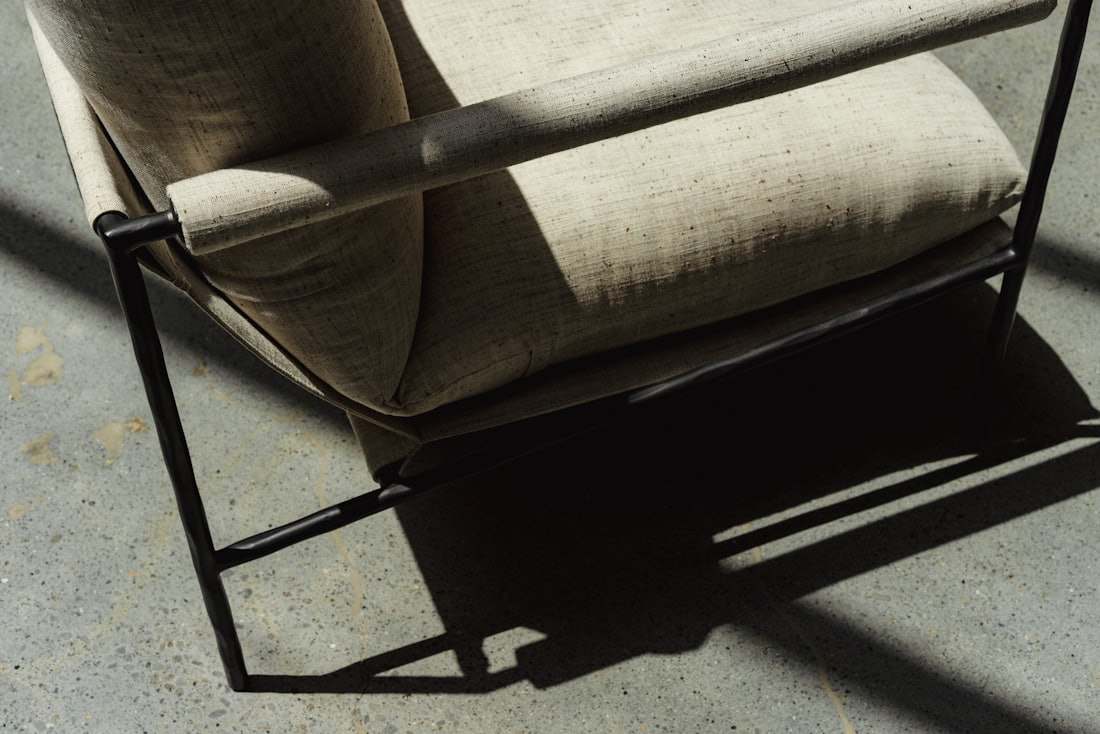
Metal parts in furniture and interior fit-out combine visible finish quality with structural function: table and chair frames carry load and must not flex, decorative screens and dividers are laser cut for pattern accuracy, and shelving brackets and fixings are hidden but must be dimensionally consistent for repeat installations. Workshops in the CutLinq network cut, bend, weld and finish these parts in mild steel, stainless steel, aluminium and brass for hotels, offices, retail fit-out and residential furniture makers across Egypt, the UAE and Saudi Arabia.
This page covers the materials and finishes typical to furniture work, tolerances that matter for visible assemblies, and what to send for a quote on a table frame or a batch of shelving brackets.
Materials and finishes for furniture parts
S235JR mild steel tube and plate is the default for painted or powder-coated frames where cost matters most. 1.4301 (304) stainless is chosen for hospitality and food-adjacent furniture (bar counters, kitchen fit-out) for hygiene and appearance, usually with a brushed (Ra 0.4-0.8 µm) or mirror finish. 6060 and 6082 aluminium extrusions and 5754 sheet suit lightweight display stands and portable fixtures. Brass (CuZn37) is specified for decorative trim, handles and hospitality accents where a warm metal tone is wanted, either lacquered or left to patina depending on the design brief.
Powder coating in a matt or textured RAL finish is the most common protective and decorative finish for steel furniture frames; anodising in bronze, black or natural silver tones is preferred for aluminium where a metallic (not painted) look is wanted.
| Material | Typical furniture use | Common finish | Thickness/section range |
|---|---|---|---|
| S235JR tube/plate | table and chair frames, structural bases | powder coat RAL, matt or satin | 1.5-4 mm sheet, 20-50 mm tube |
| 1.4301 (304) stainless | bar counters, kitchen fit-out, handrails | brushed Ra 0.8, mirror | 1-3 mm sheet |
| 6060/6082 aluminium | display stands, portable frames | anodised or powder coat | profile 20-60 mm, sheet 1-4 mm |
| Brass (CuZn37) | trim, handles, decorative accents | lacquered or natural patina | 0.5-3 mm sheet, machined bar |
| Perforated/laser-cut screen panels | room dividers, facade screens | powder coat or anodised | 1.5-3 mm sheet |
Tolerances that matter for visible furniture assemblies
A furniture frame that will be seen and touched daily needs tighter control than a hidden bracket: leg lengths should match within ±0.5 mm so a four-legged table does not rock, weld joints on visible corners should be ground flush to Ra 3.2 µm or better before finishing, and repeat parts across a batch (for example 20 identical chair frames) need the same jig used throughout to keep dimensions consistent, since a customer noticing that chair legs differ slightly is a common complaint in hospitality fit-out.
Laser-cut decorative screens hold a profile tolerance of ±0.1 to ±0.2 mm, which is tight enough for repeating geometric patterns to align visually across panel joins; state the pattern repeat dimension explicitly so adjoining panels are cut to match.
| Feature | Tolerance target | Why it matters |
|---|---|---|
| Table/chair leg length matching | ±0.5 mm across the set | prevents rocking on a flat floor |
| Visible weld grind finish | Ra 3.2 µm or better | even appearance under paint or clear coat |
| Screen panel pattern repeat | ±0.2 mm | visual alignment across adjoining panels |
| Shelf bracket hole spacing (repeat batch) | ±0.3 mm | interchangeability across installation |
| Frame squareness, tabletop support | ±1 mm over 1000 mm diagonal | tabletop sits flat without shimming |
Designing furniture parts for fabrication
Tube joints (T-joints on a table frame, for example) should be coped to the mating tube profile by tube laser for a consistent gap under 0.5 mm, giving a cleaner weld and less grinding. Hidden fixing points (levelling feet, cross braces) can use a coarser tolerance than visible surfaces, so specify tolerance per feature rather than one blanket value for the whole part. For screens and perforated panels, keep the minimum slot width at or above material thickness and round sharp internal corners to at least 0.5 mm radius to avoid stress points during handling and installation.
Design tips
- Specify leg or frame matching tolerance (±0.5 mm) explicitly for multi-leg furniture; the process default may not be tight enough
- For hospitality bar counters, specify 1.4301 (304) brushed finish and confirm Ra target if a mirror look is needed
- Cope tube-to-tube joints by tube laser rather than hand-cutting for consistent gap and cleaner welds
- State the pattern repeat dimension on laser-cut decorative screens so adjoining panels align
- Add a hidden levelling foot thread (M8 or M10) to table and cabinet frames rather than relying on shims
- Batch identical frames on one fixture reference so a 20-piece order stays dimensionally consistent
- For brass trim, state lacquered or natural finish; unlacquered brass will tarnish within months indoors
Applications
| Sector | Example parts | Typical material |
|---|---|---|
| Hospitality | Bar counters, reception desks, room dividers | 1.4301 (304), S235JR |
| Retail fit-out | Display stands, shelving, signage frames | 6060/6082 aluminium, S235JR |
| Office furniture | Desk frames, storage units, partitions | S235JR, DX51D+Z |
| Residential furniture | Table and chair frames, shelving brackets | S235JR, brass trim |
| Architectural interiors | Perforated screens, staircase balustrades | 1.4301 (304), S235JR |
| Lighting and display | Fixture housings, cable trays | 6060 aluminium, S235JR |
Pricing and lead time
Furniture and fit-out parts are priced by three factors: material (mild steel is the baseline, stainless costs roughly 30-40% more, brass and bronze machined trim significantly more due to raw material cost), finish complexity (a mirror-polished stainless surface or a metallic anodised colour costs more than standard powder coating), and batch consistency requirements (a jig or fixture built for a 20-piece identical set is a one-time cost that lowers unit price on repeat orders). Cutting and welding typically takes 3-6 working days, with an additional 2-4 working days for powder coating or anodising and 4-6 days for polished stainless finishes. Delivery to fit-out sites in Cairo, Dubai, Riyadh and Jeddah is coordinated for installation windows, with WhatsApp support confirming site access and delivery timing.
Frequently asked questions
Yes, we specify a leg-length matching tolerance of ±0.5 mm and use a single jig across the batch. State the quantity and this requirement when requesting the quote.
Upload your DXF or STEP file for your furniture or fit-out parts and receive a binding quote within 12 hours.