Metal Fabrication for Food and Beverage Equipment
Hygienic stainless steel tables, tanks, guards and fittings cut, formed and welded for food processing in MENA
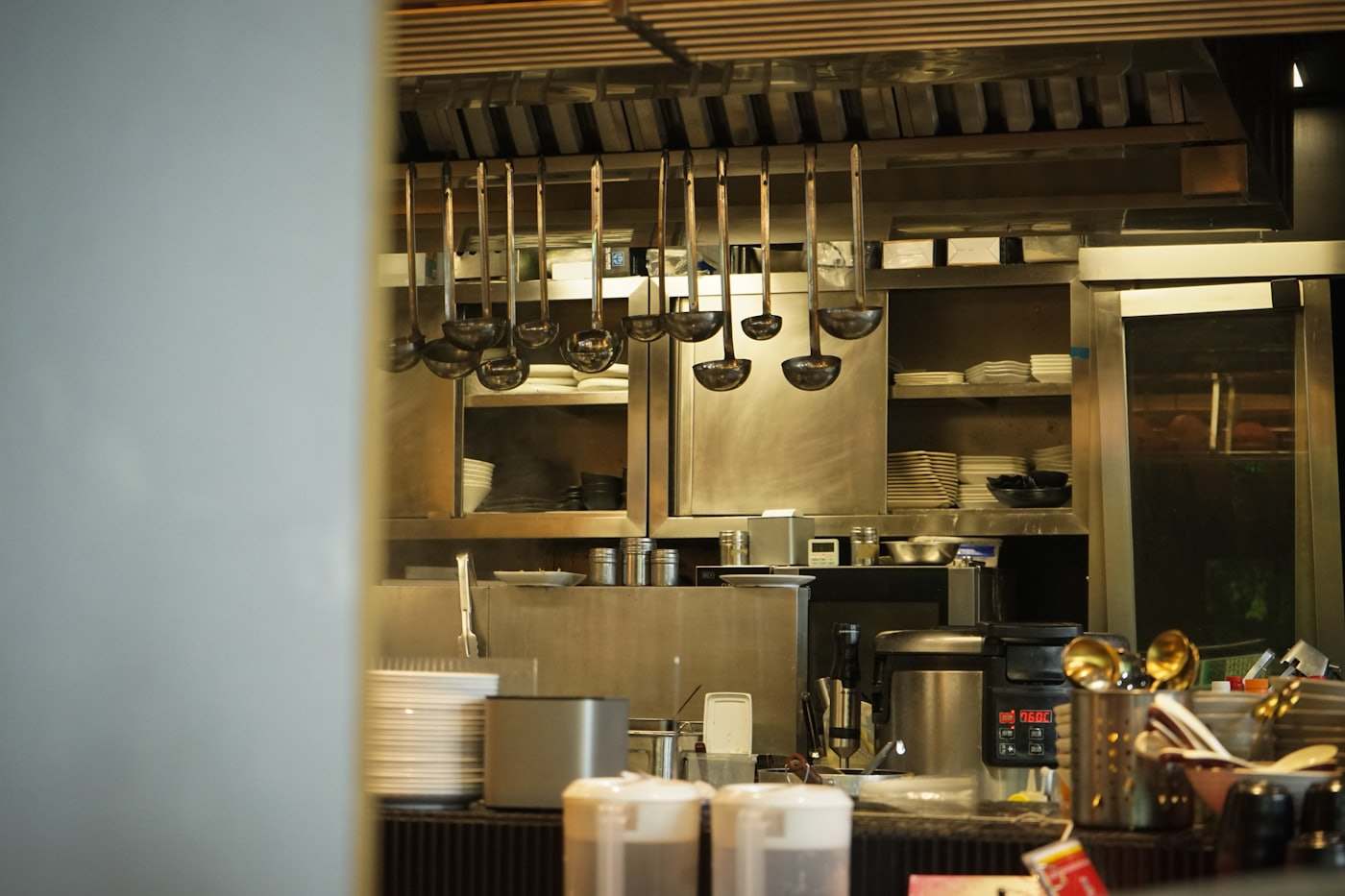
Food-contact equipment fails inspection over surface finish and crevices long before it fails structurally, so hygienic design rules apply as much as material grade. CutLinq laser cuts, bends and welds stainless steel 1.4301 (304) and 1.4404 (316L) for prep tables, tanks, guards, hoppers and conveyor frames used across Egypt, the UAE and Saudi Arabia's food processing and hospitality sector.
This page covers the grade choice between 304 and 316L, hygienic surface finish requirements, weld and edge detailing that avoids bacterial traps, and the typical parts CutLinq fabricates for kitchens, dairies and beverage lines.
304 versus 316L: when the extra cost is justified
1.4301 (304) is the default for dry food contact, kitchen equipment and general processing where cleaning uses standard detergents. 1.4404 (316L) adds molybdenum for resistance to chlorides and is required where equipment contacts salt, brine, acidic products (citrus, tomato, vinegar) or is cleaned with chlorine-based sanitiser, which is common in Gulf food plants using higher-chloride water.
316L costs roughly 30-40% more than 304 per kilogram. For coastal facilities in Jeddah, Dammam or Abu Dhabi where salt-laden air also reaches indoor equipment near loading docks, 316L is worth specifying even for parts not in direct product contact.
| Grade | Chloride resistance | Typical use | Relative cost |
|---|---|---|---|
| 1.4301 (304) | Moderate | Dry food, general prep tables, guards | Baseline |
| 1.4404 (316L) | High | Brine, acidic product, chlorine wash-down | +30-40% |
| 1.4301 with electropolish | Moderate, smoother | Visible equipment, easier cleaning | +15-20% over mill finish |
| 1.4404 with electropolish | High, smoothest | Pharma-grade or high-hygiene lines | +45-60% over 304 mill finish |
Hygienic surface finish
Mill finish (2B) at Ra 0.5-1.0 µm is acceptable for structural frames and non-contact parts. Product-contact surfaces should be specified at Ra below 0.8 µm as a minimum, brushed (No. 4) finish at Ra 0.3-0.6 µm for general food contact, and electropolished at Ra below 0.3 µm where cleaning validation or pharmaceutical-adjacent standards apply.
All welds on product-contact surfaces should be ground flush and polished to match the surrounding surface finish; an unground weld bead is the single most common finding in a hygienic equipment audit because it traps residue and resists cleaning.
| Finish | Typical Ra | Use case |
|---|---|---|
| 2B mill finish | 0.5-1.0 µm | Structural frames, non-contact |
| No. 4 brushed | 0.3-0.6 µm | General food contact surfaces |
| Electropolished | below 0.3 µm | High-hygiene, pharma-adjacent |
| Bead-blasted | 1.0-2.0 µm | Matte non-contact exterior, anti-glare |
Hygienic joint and edge design
Avoid sharp internal corners on tanks and troughs; specify a minimum 6 mm radius so residue does not collect and cleaning brushes can reach the corner. Lap joints and spot welds are avoided on product-contact surfaces in favour of continuous seam welds ground flush, since a lap joint traps moisture and bacteria between the two sheets.
Fasteners on product-contact zones should be avoided in favour of welded studs or tri-clamp fittings; where a bolted joint is unavoidable, specify a sealed or hygienic-design fastener rather than a standard hex bolt with an open thread.
Design tips
- Specify 1.4404 (316L) for any part contacting salt, brine, acidic product or chlorine-based sanitiser.
- Grind and polish every product-contact weld flush; state this on the drawing rather than assuming it is default.
- Use minimum 6 mm internal radius on tank corners and troughs to avoid residue traps.
- Specify surface finish by Ra value and grit (No. 4 brushed, Ra 0.3-0.6 µm), not just 'polished'.
- Design leg supports with a sloped foot or adjustable levelling foot at least 150 mm off the floor for cleaning access underneath.
- Avoid horizontal ledges wider than a few millimetres on exterior frames; they collect dust and moisture.
- For tanks, specify a slight slope (1-2°) to the drain point so no product pools after cleaning.
Applications
| Industry | Example parts | Typical material |
|---|---|---|
| Commercial kitchens | Prep tables, sinks, shelving | 1.4301 2B or brushed, 1-1.5 mm |
| Dairy processing | Tanks, piping supports, guards | 1.4404 electropolished, 2-4 mm |
| Beverage bottling | Conveyor frames, guarding | 1.4301 brushed, 1.5-3 mm |
| Bakery equipment | Trays, hoppers, mixing frames | 1.4301, 1.5-3 mm |
| Meat and poultry processing | Cutting tables, wash-down frames | 1.4404, 2-3 mm |
| Hospitality and catering | Display units, service counters | 1.4301 brushed, 1-1.5 mm |
Pricing and lead time
Cost is driven by grade (316L costs 30-40% more than 304), by surface finish (electropolishing adds a per-square-metre cost on top of cutting and forming), and by weld dressing (grinding and polishing every seam flush adds labour time not present in structural weldments). Laser-cut and bent stainless parts without polishing are typically ready in 4-6 working days; fully welded and polished hygienic assemblies 7-12 working days across Egypt, the UAE and Saudi Arabia.
Frequently asked questions
304 is standard for dry food prep and general kitchen equipment. Move to 316L only where the surface will regularly contact salt brine, acidic marinades, or is washed down with chlorine-based sanitiser.
Upload your DXF or STEP file with grade and finish noted, and receive a binding quote within 12 hours.