Automotive and Aftermarket Parts
Laser cutting, CNC machining and welding for brackets, skid plates, custom exhausts and fleet parts in Egypt, the UAE and Saudi Arabia
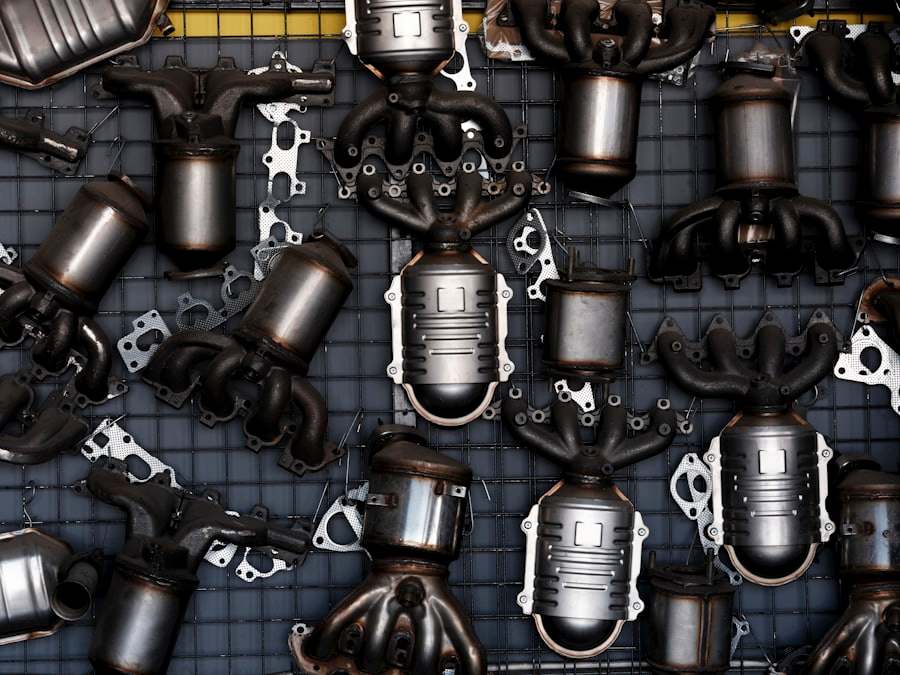
Automotive aftermarket and fleet workshops order low-volume, precision parts that dealers cannot supply quickly: mounting brackets, skid plates, roll-cage tubing, exhaust flanges, custom trailer parts and replacement components for vehicles no longer supported by the original manufacturer. Runs are typically 1 to 200 pieces, which makes on-demand laser cutting and CNC machining more practical than tooling for stamping or casting.
CutLinq routes these orders to workshops experienced with automotive tolerances and finishes. Upload a DXF or STEP file and receive a binding quote within 12 hours, with material and finish matched to the vehicle's operating environment.
Common part categories and materials
Structural brackets and skid plates are usually laser-cut from S235JR or higher-strength grades like S355J2, then bent and welded; aluminium versions in 5754 or 6061-T6 are used where weight matters, such as roof racks and off-road accessories. Exhaust components need stainless, typically 1.4301 (304) for general use and 1.4404 (316L) or 1.4571 for high-temperature or coastal-salt exposure, since 304 can develop surface staining from road salt and Gulf humidity over 2-3 years.
Roll cages and tube-frame parts are laser-cut on a tube laser to notch the ends for a precise weld fit-up, in either S355 structural tube or 4130 chromoly for motorsport applications. Machined parts like hub adapters, spacers and custom brackets for engine mounts are CNC milled or turned from 6061-T6 aluminium or C45 steel.
| Part type | Typical material | Process |
|---|---|---|
| Skid plates, underbody guards | S235JR, 5mm-6mm, or 6061-T6 | Laser cutting + bending |
| Exhaust flanges, brackets | 1.4301 (304), 1.4404 (316L) | Laser cutting + welding |
| Roll cage tubing | S355 tube, 4130 chromoly | Tube laser + TIG welding |
| Hub adapters, spacers | 6061-T6, 7075-T6 | CNC turning |
| Trailer chassis brackets | S235JR, S355J2 | Laser cutting + bending + welding |
Tolerances and fit-up for bolt-on parts
Bracket bolt patterns must match the vehicle chassis or engine bay within ±0.1-0.15 mm hole position to bolt up without reaming on site; laser-cut hole diameters should be specified at least equal to material thickness to avoid taper distortion. Skid plates and body panels tolerate a looser ±0.3-0.5 mm since they mount through slotted holes.
Exhaust flange faces need to be flat within 0.1 mm across the gasket surface and should be finish-machined or faced after welding, since welding heat distorts a laser-cut flange by 0.2-0.5 mm typically.
| Feature | Tolerance | Note |
|---|---|---|
| Bolt-pattern hole position | ±0.1-0.15 mm | Laser cut, no rework needed |
| Skid plate mounting slots | ±0.3-0.5 mm | Allows for install misalignment |
| Exhaust flange face flatness | 0.1 mm | Face-mill after welding |
| Hub adapter bore fit | H7 (+0.021/0 mm at 30 mm) | Press or slip fit per spec |
Welding and heat management
Roll cages and chassis brackets are TIG welded for controlled, clean joints, especially on chromoly tube where overheating reduces strength in the heat-affected zone. Stainless exhaust systems are TIG welded on thin wall tube (1-2 mm) with argon backing purge to prevent oxidation (sugaring) on the inside of the weld, which otherwise flakes off and can damage catalytic converters downstream.
Aluminium brackets and skid plates are TIG welded with matching 5356 or 4043 filler depending on the base alloy; 6061-T6 loses temper strength near the weld and regains only about 60-70% of base strength unless post-weld heat treated, so critical load-bearing welds should be oversized or reinforced.
Finishing for MENA driving conditions
Powder coating (60-120 microns, black or a fleet colour) is standard for steel brackets, skid plates and trailer parts exposed to road salt near Gulf coastal cities, sand abrasion in desert routes, and UV. Bare mild steel brackets under a vehicle in Jeddah or Dammam coastal conditions can show surface rust within weeks without coating.
Aluminium parts are often left bare or clear-anodised (5-25 microns) for corrosion resistance without adding coating thickness that would affect a precision fit. Stainless exhaust hangers and brackets are typically left as-welded with pickling and passivation to restore corrosion resistance at the heat-affected weld zone.
Design tips
- Specify bolt-pattern hole diameters equal to or slightly larger than sheet thickness on laser-cut brackets under 3 mm to avoid taper affecting fit.
- Add a minimum 3 mm edge distance from any laser-cut hole to the part edge to avoid tear-out under load.
- For exhaust flanges, machine the gasket face flat after welding rather than relying on the as-cut laser surface; weld distortion of 0.2-0.5 mm is common.
- Call out post-weld stress relief or oversized fillet welds on 6061-T6 structural brackets, since the heat-affected zone drops to roughly 60-70% of base material strength.
- For skid plates, use slotted mounting holes (not round) to absorb ±3-5 mm of installation variance between vehicle batches.
- Specify 1.4404 (316L) instead of 1.4301 (304) for any exhaust or bracket used in coastal Gulf cities to avoid surface staining within 2-3 years.
- Send the OEM part or a 3D scan file when reverse-engineering a discontinued bracket; a photo with two caliper dimensions is the minimum needed to start a rough quote.
Applications
| Industry | Example parts | Typical material |
|---|---|---|
| Off-road and 4x4 accessories | Skid plates, roof racks, recovery mounts | S235JR, 6061-T6 |
| Motorsport and race prep | Roll cages, subframe brackets, mounts | S355 tube, 4130 chromoly |
| Exhaust fabrication | Flanges, hangers, custom pipe sections | 1.4301 (304), 1.4404 (316L) |
| Fleet and commercial vehicles | Trailer chassis, tow brackets, guards | S235JR, S355J2 |
| Classic and discontinued models | Reverse-engineered brackets, trim parts | S235JR, 6061-T6 |
| Performance tuning shops | Engine mounts, intercooler brackets | 6061-T6, C45 |
Pricing and lead time
Price for automotive aftermarket parts is driven by material and thickness (stainless exhaust components and aerospace-grade aluminium cost more per part than mild steel brackets), by process combination (a bracket needing laser cutting, bending and welding costs more than a laser-only part), and by batch size (a one-off reverse-engineered bracket costs significantly more per piece than a batch of 20 for a fleet upgrade). Simple laser-cut brackets ship in 2-4 working days; welded assemblies like roll cages or exhaust systems in 5-10 working days depending on tube-notching and fit-up complexity.
Frequently asked questions
For simple flat brackets, yes -- a clear photo with two or three caliper measurements is often enough for a rough quote. For anything with 3D bends or critical bolt patterns, we recommend sending the part itself or a rough sketch with dimensions.
Upload a DXF or STEP file for your bracket, skid plate or exhaust part and receive a binding quote within 12 hours.