Edge Quality, Burr and Deburring
What causes burr on laser-cut and machined edges, how to specify edge quality, and which deburring method fits which part
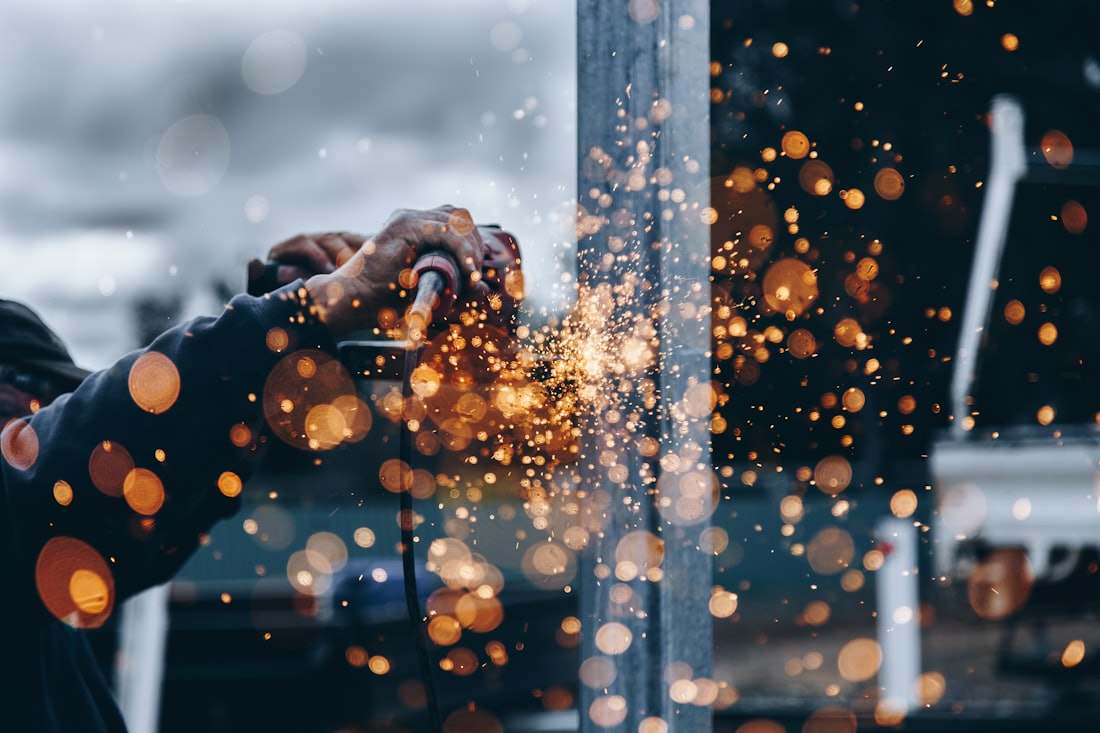
Burr is the thin ridge of displaced or re-solidified material left along a cut or machined edge; it forms differently in laser cutting, plasma cutting, punching and milling, and its height typically ranges from 0.02 mm on a well-tuned laser cut to 0.5 mm or more on a plasma-cut or heavily worn punch. Left unaddressed it causes sharp edges that cut hands during assembly, poor paint or plating adhesion, and interference in mating parts.
This page explains what causes burr on each process, how to call out edge quality using ISO 13715, and which deburring method (tumbling, vibratory, brushing, manual) suits which part geometry and quantity.
Burr formation by process
Fiber laser cutting produces the cleanest edge of the common processes: a well-set cut on mild steel up to 10 mm and stainless up to 8 mm typically leaves burr under 0.05 mm, often not perceptible by touch. Thicker sections, incorrect gas pressure, or a worn nozzle increase burr height and can leave a hard, re-solidified dross bead on the underside of the cut that needs grinding off.
Plasma cutting always leaves more burr than laser, typically 0.2-0.8 mm depending on thickness and cut speed, because the process melts a wider kerf and the molten material re-solidifies along the bottom edge. Punching and CNC punching leave a burr on the exit side of the tool, typically 0.05-0.15 mm on new tooling and increasing as the punch wears; milling leaves burr at the tool exit direction, generally 0.02-0.1 mm depending on feed rate and tool sharpness.
| Process | Typical burr height | Location | Deburring usually needed |
|---|---|---|---|
| Laser cutting (mild steel, 3-10 mm) | 0.02-0.08 mm | Bottom edge | Light, often optional |
| Laser cutting (stainless, 3-8 mm) | 0.03-0.1 mm | Bottom edge | Light to medium |
| Plasma cutting | 0.2-0.8 mm | Bottom edge, wider kerf | Always required |
| CNC punching | 0.05-0.15 mm new tool, up to 0.3 mm worn | Exit side | Medium, tool-dependent |
| CNC milling | 0.02-0.1 mm | Tool exit direction | Light, often optional |
Specifying edge quality with ISO 13715
ISO 13715 defines edge condition symbols for technical drawings, distinguishing a sharp edge, a permissible burr with maximum height, and a broken (chamfered or rounded) edge with a minimum and maximum dimension. Calling out a specific ISO 13715 symbol on the drawing avoids ambiguity between 'deburred' (which has no universal numeric meaning on its own) and a specific, inspectable requirement.
Most sheet metal and structural parts only need a general callout such as 'break all sharp edges 0.1-0.3 mm' rather than a full ISO 13715 symbol set, but parts that mate with seals, bearings, or that are handled frequently by operators benefit from an explicit maximum burr height and a specified edge break radius.
Deburring methods
Manual deburring with a file or hand grinder is used for low quantities, complex one-off shapes, or where only specific edges need attention; it is labour-intensive and inconsistent across large batches. Vibratory and tumbling deburring processes a batch of parts together in an abrasive media bath and is efficient for medium-to-high volumes of small to mid-size parts, giving a consistent edge break across the whole batch in one cycle, typically 30-90 minutes depending on part size and target finish.
Brushing (wire wheel or abrasive nylon brush) is used for flat sheet parts where only the top and bottom cut edges need light deburring without touching the flat faces, common after laser cutting. Electropolishing removes a thin surface layer electrochemically and gives both deburring and a bright, corrosion-resistant surface on stainless parts, but adds cost and is reserved for medical, food-contact or high-corrosion-resistance applications.
- Manual (file, hand grinder): low volume, complex or selective edges
- Vibratory/tumbling: medium-high volume, small-mid parts, consistent batch result
- Wire/nylon brushing: flat sheet parts, laser-cut edges, fast and low cost
- Electropolishing: stainless parts needing both deburring and a bright corrosion-resistant finish
- Thermal deburring: high-precision small parts (e.g. hydraulic components) with hard-to-reach internal burrs
Worked example
A batch of 200 laser-cut stainless brackets, 3 mm 1.4301 (304), with two mounting holes each: laser cutting leaves burr under 0.08 mm on the underside. Specifying 'edge break 0.1-0.2 mm all edges' and processing the batch through vibratory tumbling for 45 minutes removes the burr and lightly rounds all edges in one pass, at a fraction of the labour cost of manually filing 200 parts by hand, which would take roughly 8-10 times longer for the same result.
Design tips
- Specify an edge condition on every drawing, even a general 'break sharp edges 0.1-0.3 mm', rather than leaving it to the shop's default.
- Use ISO 13715 symbols for parts with tight mating tolerances, sealing surfaces or medical/food contact, not for general brackets.
- For parts handled frequently by hand, request a visible edge break (0.2-0.5 mm) rather than the minimum needed to remove burr, for safety.
- Avoid specifying deburring on internal features (small holes, slots) that vibratory media cannot reach; call these out for manual or thermal deburring instead.
- For plasma-cut parts, budget for grinding of the dross bead as a separate step, not a light deburr pass.
- If parts will be powder coated or anodised afterward, deburr before finishing; burr left under a coating telegraphs through and creates a weak point for corrosion to start.
- For high-volume small parts (fasteners, brackets, clips), vibratory tumbling in a batch is almost always cheaper per part than manual deburring above roughly 50 pieces.
Applications
| Industry | Example parts | Typical deburring method |
|---|---|---|
| Sheet metal enclosures | Brackets, panels, chassis | Vibratory tumbling or brushing |
| Machinery and OEM parts | Machined housings, plates | Manual or vibratory, ISO 13715 callout |
| Medical and lab equipment | Trays, instrument housings | Electropolishing |
| HVAC and ducting | Duct fittings, brackets | Brushing, light manual |
| Automotive aftermarket | Brackets, small machined parts | Vibratory tumbling |
| Hydraulic and pneumatic components | Manifolds, valve bodies | Thermal deburring |
| Signage and architectural | Facade panels, letters | Brushing, manual edge break |
Pricing and lead time
Deburring cost is driven by the method (vibratory tumbling is priced per batch and is cheaper per part at volume; manual deburring is priced per piece and scales with labour), by part geometry (internal features and complex shapes that need manual attention cost more than flat sheet edges), and by the finish specification (electropolishing and thermal deburring cost more than standard tumbling or brushing). Light deburring adds 0-1 working day to standard lead times; batch tumbling adds 1 day for scheduling; electropolishing typically adds 2-3 working days as a separate finishing step.
Frequently asked questions
A light edge break is standard practice on laser-cut sheet metal parts, but a specific ISO 13715 edge condition or heavier deburring should be stated on the RFQ so it is quoted and inspected against a clear requirement.
Upload your DXF or STEP file and state the edge condition you need; receive a binding quote within 12 hours.