CNC Punching
Turret punching for perforated sheets, louvres, enclosures and brackets in 0.5 to 6 mm sheet metal
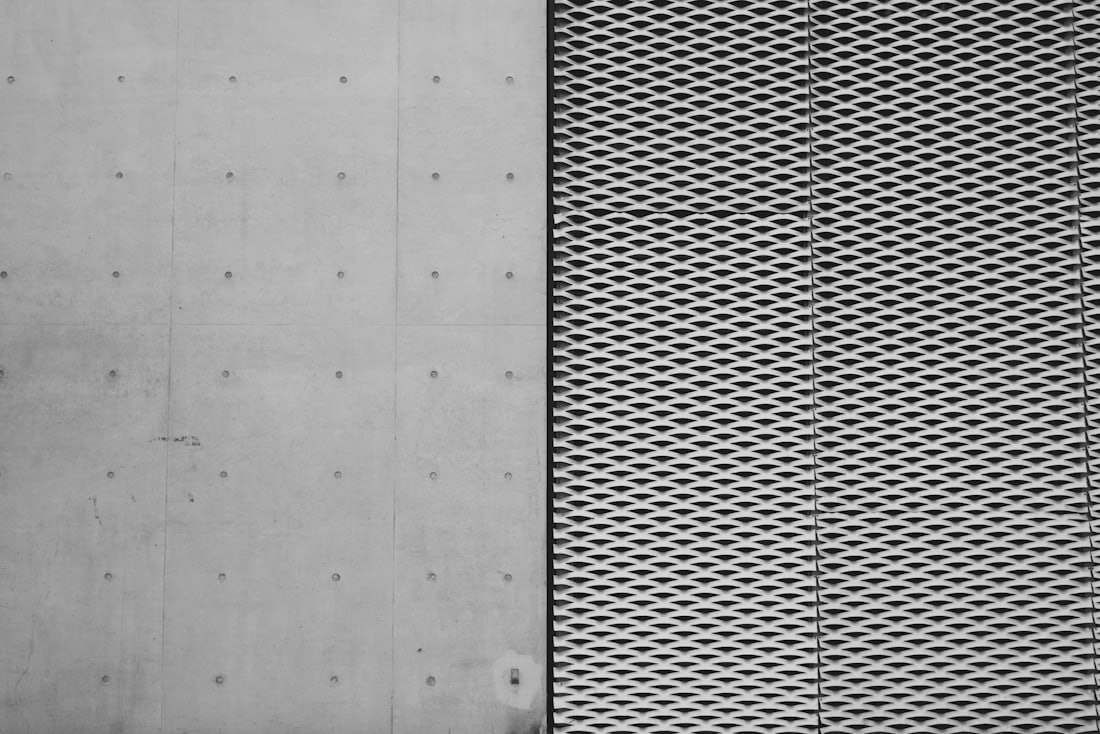
CNC punching uses a turret of hardened tools to stamp holes, slots and formed features into sheet metal, one hit at a time, at 300 to 900 hits per minute. It is the fastest and cheapest way to make parts with many repeated holes, such as perforated panels, cable trays, louvred vents, enclosure backplates and rack panels. Through CutLinq you can order punched parts in mild steel, galvanised steel, stainless and aluminium from 0.5 to 6 mm thick, with hole position accuracy of ±0.1 mm.
Unlike laser cutting, punching can also form features: louvres, countersinks, embossed ribs, extruded holes for tapping and knockouts. Upload a DXF file with hole sizes and receive a binding quote within 12 hours.
When punching beats laser cutting
A fiber laser cuts any contour but has to trace every hole. A punch press makes a 10 mm hole in one hit of 0.1 seconds. For a 1200 x 600 mm perforated sheet with 3000 holes, punching takes 5-6 minutes and laser cutting takes 25-40 minutes. Above roughly 200 identical holes per sheet, punching usually costs 30-50% less per part.
Laser wins for thick material, complex outer contours, small batches with many different hole sizes, and stainless above 3 mm where punching leaves a heavier burr. Many suppliers in the network run punch-laser combination machines that punch the holes and laser cut the contour in one setup.
| Criterion | CNC punching | Fiber laser cutting |
|---|---|---|
| Sheet thickness | 0.5 to 6 mm (steel), 0.5 to 4 mm (stainless) | 0.5 to 25 mm (steel) |
| Hole accuracy | ±0.1 mm | ±0.1 mm |
| Minimum hole | 1 x sheet thickness, min 1.5 mm | 1 x thickness, min 1 mm |
| Speed on 3000 holes | 5-6 min | 25-40 min |
| Formed features | louvres, ribs, countersinks, extrusions | none |
| Edge on outer contour | nibbled, small scallops | smooth |
| Tooling | standard shapes, custom tools extra | none |
Materials and thickness capacity
Punching force rises with thickness and shear strength. A 30-tonne turret press handles 6 mm mild steel with small tools and 4 mm stainless. Galvanised DX51D+Z sheet punches cleanly and the zinc layer stays intact on the flat faces, which matters for HVAC and cable tray work in the Gulf where salt air attacks bare cut edges.
Aluminium EN AW-5754 and 5052 punch well; 6061-T6 is harder and cracks on tight forming. Pre-painted and brushed stainless sheet can be punched with protective film on to keep the visible face clean.
| Material | Max thickness | Notes |
|---|---|---|
| Mild steel DC01 / S235JR | 6 mm | burr up to 10% of thickness |
| Galvanised DX51D+Z | 3 mm | zinc layer preserved on faces |
| Stainless 1.4301 (304) | 4 mm | tool wear higher, keep hole >1.5 x t |
| Aluminium EN AW-5754 | 5 mm | clean edges, good forming |
| Aluminium 6061-T6 | 4 mm | avoid tight louvres |
| Pre-painted steel | 1.5 mm | punched with film, visible face down |
Standard tools and formed features
Most suppliers stock round tools in 0.5 mm steps from 1.5 to 50 mm, squares, rectangles and obrounds in common sizes, plus forming tools for louvres (typical 40 x 8 mm and 60 x 10 mm), countersinks for M3 to M8 screws, extruded holes for M3 to M6 tapping in thin sheet, and card guides. Using stock sizes avoids tool costs; a custom shape needs a dedicated tool with 2-3 weeks lead time and a tooling charge.
Nibbling makes large openings or curves with a series of overlapping hits; the edge shows scallops of 0.1-0.2 mm which are acceptable inside enclosures but not on visible architectural panels.
- Round holes: 1.5 to 50 mm in stock, 0.5 mm steps
- Louvres: 40 x 8 mm, 60 x 10 mm, 80 x 12 mm standard
- Countersinks: 90° for M3, M4, M5, M6, M8
- Extruded holes: M3 to M6 in 0.8 to 2 mm sheet
- Embossed ribs for stiffening: 1.5 to 3 mm height
- Knockouts: 20.4 mm and 25.4 mm (cable gland sizes)
Design rules for punched parts
Hole diameter should be at least equal to sheet thickness, and 1.5 times thickness in stainless. Keep the web between holes at least 2 times thickness, and hole edge to sheet edge at least 1.5 times thickness, or the strip distorts. Holes near bend lines need a distance of 2.5 times thickness plus the bend radius, otherwise the hole pulls oval during bending.
Perforated patterns are cheapest when they use one tool in a regular pitch. A 60° staggered pattern of 5 mm holes on 8 mm pitch gives 35% open area and is a common spec for ventilation grilles and acoustic panels.
Finishing after punching
Punched parts carry a small burr on the die side. Specify burr side on the drawing so it faces away from the visible or the sealing surface. Deburring by vibratory finishing or a wide-belt machine removes it for a fee. Parts then go to bending, welding, powder coating (60-120 µm) or hot-dip galvanising as required.
Design tips
- Minimum hole diameter: 1 x sheet thickness in steel and aluminium, 1.5 x in stainless, never below 1.5 mm.
- Minimum web between holes: 2 x thickness; below that the material between holes bulges.
- Keep holes at least 2.5 x thickness plus inner bend radius away from a bend line.
- Use stock tool sizes (whole or half millimetres) to avoid a custom tool and 2-3 weeks extra.
- State the burr side on the drawing; default is burr on the non-visible face.
- Perforated area should stop 10 mm from the sheet edge and 15 mm from bend lines to keep the part flat.
- For sheets above 2 mm, expect 0.2-0.3 mm sheet distortion on dense perforation; ask for levelling if flatness matters.
Applications
| Industry | Example parts | Typical material |
|---|---|---|
| HVAC | louvred grilles, diffuser plates, filter frames | DX51D+Z 0.8-1.5 mm |
| Electrical enclosures | backplates, gland plates, rack panels | DC01 1.5-2 mm |
| Cable management | perforated cable trays, ladder rungs | DX51D+Z 1-2 mm |
| Architecture and signage | perforated cladding, sunscreens | EN AW-5754 2-3 mm |
| Food and beverage | sieve plates, drainage grids | 1.4301 (304) 1-2 mm |
| Solar | mounting brackets with slots, clamps | S235JR 3-4 mm |
| Acoustics | perforated ceiling and wall panels | DC01 0.8-1 mm |
Pricing and lead time
Price is driven by three things: hit count and sheet handling time, material grade and thickness (stainless 304 costs roughly 2.5-3 times mild steel in material and wears tools faster), and quantity, because nesting and program setup are fixed per job. Custom form tools add a one-off tooling charge. Realistic lead times are 3 to 5 working days for flat punched parts in stock material, 5 to 8 working days with deburring and bending, and 8 to 12 working days with powder coating or galvanising.
Frequently asked questions
If the sheet has more than about 200 identical holes and is under 4 mm thick, punching usually costs 30-50% less. Send the DXF and we quote both routes where relevant.
Upload your DXF now and receive a binding quote for CNC punched parts within 12 hours.