Laser vs Plasma vs Waterjet: Which to Choose
Thickness range, tolerance, edge quality and cost compared across the three cutting processes with a decision guide
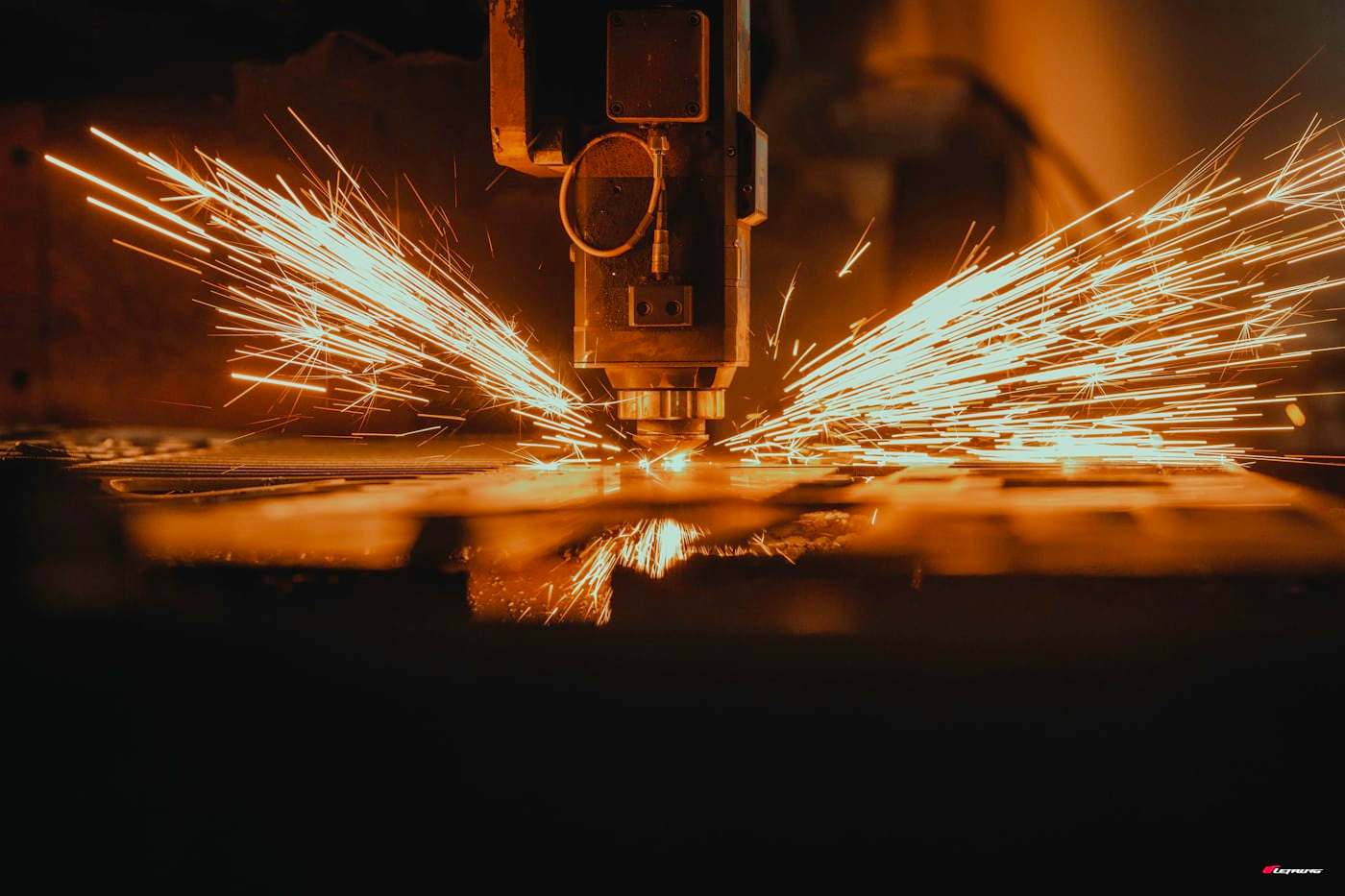
The three sheet and plate cutting processes overlap in the 6-20 mm range, which is where most buyers are unsure which to specify. Fiber laser gives the tightest tolerance and cleanest edge up to about 25 mm; plasma is faster and cheaper on thick plate but leaves a rougher, tapered edge; waterjet has no heat-affected zone and cuts any material but is the slowest and most expensive per part.
This page compares the three processes on thickness, tolerance, edge quality, heat effect and relative cost, with a decision guide so you can specify the right one before sending a DXF for quoting.
Thickness range and tolerance
Fiber laser is the default up to 25 mm mild steel, 20 mm stainless and 15 mm aluminium, holding ±0.1 mm on thin sheet and about ±0.2-0.3 mm above 10 mm. Plasma starts to make sense from about 6 mm where laser speed drops, and is the practical choice from 20 mm to 60 mm, with a wider tolerance of ±0.5-1.0 mm. Waterjet has no practical upper thickness limit for the materials CutLinq handles (used up to 150 mm) and holds ±0.1-0.2 mm regardless of thickness, but at low cutting speed on thick plate.
Below 3 mm, laser is faster and more accurate than either alternative and is the default choice for thin sheet in all three processes' overlap range.
| Process | Practical thickness (mild steel) | Typical tolerance | Cutting speed on 10 mm |
|---|---|---|---|
| Fiber laser | 1-25 mm | ±0.1 mm thin, ±0.2-0.3 mm thick | 1.5-2.5 m/min |
| CNC plasma | 3-60 mm | ±0.5-1.0 mm | 2-3 m/min |
| Waterjet | 1-150 mm | ±0.1-0.2 mm | 0.3-0.6 m/min |
Edge quality and heat-affected zone
Laser produces a near-vertical edge with a narrow heat-affected zone (0.1-0.3 mm) and a fine surface finish that often needs no secondary deburring on thin material. Plasma leaves a wider heat-affected zone (0.5-1.5 mm), some edge taper (2-5 degrees) and a rougher surface that usually needs grinding before painting or welding, especially above 15 mm.
Waterjet is a cold-cutting process with essentially no heat-affected zone, which matters for heat-treated tool steel, materials prone to warping, or parts that will be welded right up to the cut edge without loss of temper. It also cuts non-metals, composites and stacked materials that laser and plasma cannot.
| Process | Heat-affected zone | Edge finish | Secondary work needed |
|---|---|---|---|
| Fiber laser | 0.1-0.3 mm | Near-vertical, fine | Usually none under 10 mm |
| CNC plasma | 0.5-1.5 mm | Tapered, rougher | Grinding often needed above 15 mm |
| Waterjet | None (cold cut) | Vertical, matte | Usually none |
Decision guide by part type
Choose laser for parts under 20-25 mm needing tight tolerance, small holes, or a clean edge ready for bending or welding without grinding. Choose plasma for structural plate above 20-25 mm where a tapered edge and wider tolerance are acceptable and speed matters more than finish, common on base plates and heavy gussets before machining the bolt holes.
Choose waterjet when the material cannot tolerate heat (hardened tool steel, some plastics, layered or composite material), when zero heat-affected zone is a specification requirement, or for very thick plate above 60 mm where plasma edge quality is no longer acceptable.
- Thin sheet under 3 mm, any material: laser
- Precision brackets and enclosures, 1-15 mm: laser
- Structural plate 20-60 mm, edge to be machined or welded: plasma
- Hardened tool steel or heat-sensitive material: waterjet
- Very thick plate above 60 mm or non-metal materials: waterjet
Design tips
- Specify laser for any part with holes smaller than the material thickness; plasma and waterjet struggle with small holes.
- For plate above 20 mm cut by plasma, add 1-2 mm machining allowance on bolt hole diameters if a tight tolerance is needed.
- Do not specify waterjet purely for cost saving on standard steel; it is usually the most expensive of the three per part.
- For heat-treated or hardened material, always specify waterjet or state the heat sensitivity so the wrong process is not selected by default.
- Combine parts of the same thickness and process in one nesting layout to reduce per-part cost regardless of which process is used.
- If edge quality for direct welding matters, specify laser or waterjet rather than plasma to avoid a grinding step.
- State the process explicitly on the drawing if your tolerance or edge requirement rules one out; do not assume laser is used by default above 20 mm.
Applications
| Industry | Example parts | Typical process |
|---|---|---|
| Sheet metal enclosures | Chassis panels, brackets | Fiber laser |
| Structural steelwork | Base plates, heavy gussets | Plasma or waterjet |
| Machined tooling | Hardened die plates, jigs | Waterjet |
| Signage and architecture | Decorative panels, letters | Fiber laser |
| Oil and gas fabrication | Thick flanges, heavy brackets | Plasma or waterjet |
Pricing and lead time
Cost per part is driven by material thickness (laser cost rises sharply above 15 mm as speed drops, making plasma more economical there), by cut length and pierce count (small-hole parts favour laser regardless of thickness), and by required edge finish (a plasma-cut edge needing grinding adds a finishing cost that can offset its lower cutting price). Laser and plasma parts are typically ready in 2-5 working days; waterjet, being slower per part, in 3-6 working days across Egypt, the UAE and Saudi Arabia.
Frequently asked questions
Yes, waterjet tolerance (±0.1-0.2 mm) is tighter than plasma (±0.5-1.0 mm) at any thickness, but for plate above 20 mm where a tighter tolerance is not needed, plasma is faster and cheaper.
Upload your DXF or STEP file, and receive a binding quote within 12 hours with the process recommended for your part.