Heat-Affected Zone in Laser Cutting and Welding
What the HAZ is, how wide it gets, and how to design and specify parts to control its effect on strength and appearance
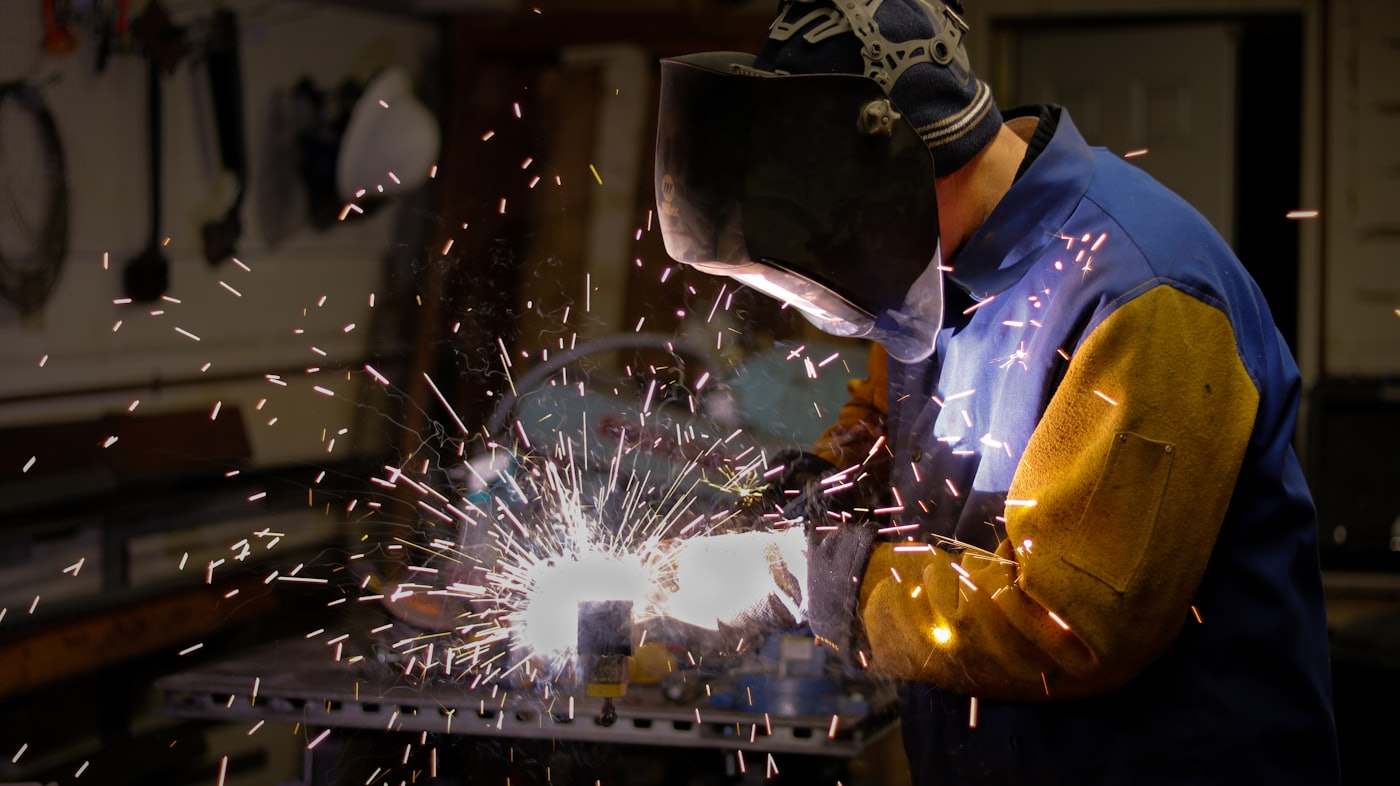
The heat-affected zone (HAZ) is the band of material next to a cut or weld where heat has altered the microstructure without melting it, changing hardness, ductility and, in stainless steel, corrosion resistance. It appears in both laser cutting and welding, though the width and effect differ significantly between the two processes and between materials.
This page gives realistic HAZ widths for common MENA fabrication materials and processes, and explains when the HAZ matters enough to specify a control measure such as post-weld treatment or a slower cut.
HAZ in laser cutting
Laser cutting is fast and localised, so the HAZ is narrow, typically 0.1-0.3 mm in mild steel and stainless up to 6 mm thickness, widening to 0.3-0.6 mm on plate over 15 mm where more heat input is needed. In mild steel the narrow HAZ rarely affects mechanical performance. In stainless steel, the HAZ next to a laser-cut edge can show a thin band of altered chromium oxide colour (a light straw to blue tint on nitrogen-assisted cuts, or a darker oxide on oxygen-assisted cuts), which is mostly cosmetic and can be removed by pickling or light grinding if appearance matters.
Aluminium has high thermal conductivity, so heat dissipates quickly and the visible HAZ is very narrow, under 0.2 mm, though the cut edge can show minor grain coarsening that very slightly reduces surface hardness right at the edge -- not usually significant for bracket and enclosure applications.
| Material | Thickness | Typical HAZ width (laser cut) |
|---|---|---|
| Mild steel S235JR | 1-6 mm | 0.1-0.2 mm |
| Mild steel S235JR | 10-25 mm | 0.3-0.6 mm |
| Stainless 1.4301 (304) | 1-6 mm | 0.1-0.3 mm |
| Aluminium 5754/6061 | 1-10 mm | under 0.2 mm |
HAZ in welding
Welding puts far more heat into the part over a longer time than laser cutting, so the HAZ is wider and its mechanical effect is more significant. In mild steel TIG or MIG welds, the HAZ typically extends 2-8 mm from the fusion line depending on heat input and plate thickness, and shows grain growth that slightly reduces toughness but rarely causes a functional problem in structural steel.
In heat-treated alloy steel like 42CrMo4, the HAZ can locally lose the hardness gained by quenching and tempering, dropping from a through-hardness of 40-45 HRC to as low as 20-25 HRC right next to the weld unless the joint is post-weld heat treated. In precipitation-hardened aluminium such as 6061-T6, the HAZ loses roughly 30-40% of its yield strength compared to base material and does not fully recover without a full solution heat treatment and re-aging, which is rarely practical for a finished weldment.
| Material / condition | Typical HAZ width (weld) | Mechanical effect |
|---|---|---|
| Mild steel S235JR, 3-6 mm | 2-5 mm | Minor toughness reduction, usually acceptable |
| Structural steel S355J2, 8-12 mm | 4-8 mm | Grain coarsening, verify with WPS if critical |
| 42CrMo4 quenched and tempered | 3-6 mm | Local hardness drops to 20-25 HRC without PWHT |
| Stainless 1.4301 (304) | 3-6 mm | Possible chromium carbide precipitation (sensitisation) above 450-850 degC |
| Aluminium 6061-T6 | 10-25 mm | Yield strength drops to roughly 60-70% of base |
Sensitisation in stainless steel welds
When 1.4301 (304) stainless is held between 450 and 850 degC during welding, chromium can combine with carbon at grain boundaries in the HAZ, locally depleting the chromium available to form the protective oxide layer and creating a corrosion-prone band next to the weld -- a problem called sensitisation. This matters most for stainless parts in humid or chloride-rich environments such as coastal Gulf sites or food and washdown applications.
Using low-carbon 1.4404 (316L) instead of standard 304, keeping weld heat input controlled, and passivating or pickling the finished weld reduces this risk. For critical corrosion applications near the coast, specifying 316L over 304 and requesting post-weld pickling is the standard mitigation.
Controlling HAZ effects in design and ordering
For structural mild steel parts, the HAZ from welding is rarely a design concern and no special measures are needed for typical bracket and frame applications. For hardened alloy steel parts that must be welded, specify post-weld heat treatment or design the weld away from the load-critical hardened area, using a bolted or press-fit connection instead where possible.
For 6061-T6 aluminium structural welds, oversize the weld or add a gusset to compensate for the local strength loss, since the joint will not match the parent material strength without a full re-heat-treatment cycle that is rarely done on finished assemblies.
Design tips
- For laser-cut stainless parts where cosmetic edge colour matters (visible architectural or food-display parts), request pickling or light grinding of the cut edge rather than leaving the oxide tint.
- Do not weld directly onto a hardened, ground surface on a tool steel or alloy steel part; the HAZ will soften it locally regardless of the original hardness.
- Design welded 6061-T6 aluminium joints assuming only 60-70% of base material strength at the weld; oversize fillets or add reinforcement at load-bearing welds.
- Specify 1.4404 (316L) instead of 1.4301 (304) for welded stainless parts used in humid, chloride, or washdown environments to reduce sensitisation-related corrosion risk.
- For thick plate (over 15 mm) laser cutting, expect a slightly wider HAZ and confirm whether the application needs edge hardness verification.
- Request post-weld heat treatment (stress relief or full temper) explicitly on the drawing for any hardened alloy steel part that must be welded structurally.
- Keep welds away from tight-tolerance machined features where possible; distortion from the HAZ shrinking as it cools can pull a nearby feature 0.1-0.3 mm out of position.
Applications
| Industry | Example parts | Typical material |
|---|---|---|
| Structural fabrication | Welded frames, brackets, beams | S235JR, S355J2 |
| Machinery and OEM | Shafts welded to plates, gearbox housings | 42CrMo4, S235JR |
| Food and pharma | Welded stainless hoppers, frames | 1.4301 (304), 1.4404 (316L) |
| Aluminium structures | Welded brackets, roll cages, frames | 6061-T6, 5754 |
| Precision tooling | Repaired die inserts | 1.2379 (D2), 1.2344 (H13) |
| Architectural and signage | Visible laser-cut stainless panels | 1.4301 (304) |
Pricing and lead time
HAZ control is factored into three cost drivers: process choice (nitrogen-assisted laser cutting leaves a cleaner, more oxide-free edge on stainless than oxygen-assisted, at a moderate cost premium), post-processing (pickling, passivation or edge grinding to remove HAZ discoloration adds a per-part or per-batch charge), and heat treatment (post-weld stress relief or tempering on alloy steel adds 2-5 working days). Standard laser-cut and welded parts with no special HAZ treatment ship in the normal 3-8 working day range for the process; parts requiring post-weld heat treatment or pickling add 2-5 working days.
Frequently asked questions
For mild steel S235JR or S355J2, the strength reduction is minor and rarely a practical issue for standard brackets and frames. For hardened alloy steel or 6061-T6 aluminium, the effect is larger and should be accounted for in the design, usually by oversizing the weld or keeping welds away from critical hardened features.
Upload a DXF or STEP file noting any hardness or corrosion-critical zones, and receive a binding quote within 12 hours.