Stainless Steel (304, 316L)
Grades, thicknesses, finishes and machining data for stainless steel parts made in Egypt, the UAE and Saudi Arabia
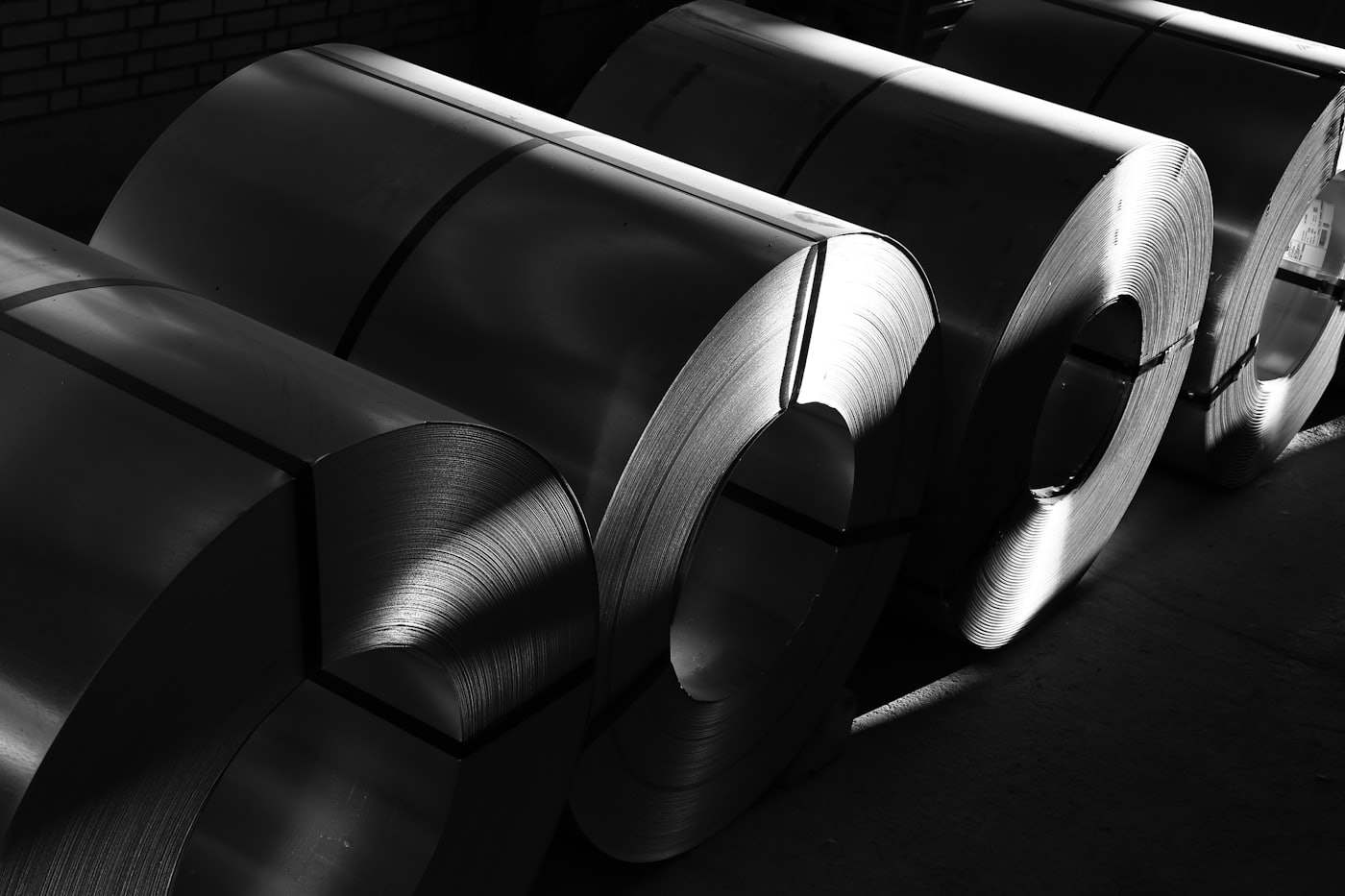
Stainless steel is an iron-chromium alloy with at least 10.5% chromium that forms a self-healing oxide layer. For fabricated parts in the MENA region two grades cover more than 90% of orders: 1.4301 (304) for indoor, food and general use, and 1.4404 (316L) for coastal, chemical and marine exposure. 304 is the default; 316L costs roughly 30-40% more and is worth it within 5 km of the Red Sea, Gulf or Mediterranean coast.
This page lists the grades stocked in the region, thickness ranges for laser cutting, bending and machining, standard surface finishes and the practical differences that affect price and corrosion life.
Grades available in the region
Sheet and plate stock in Egypt, the UAE and Saudi Arabia is mostly imported in EN and ASTM designations side by side, so drawings should state both. Austenitic grades (304, 316L) are non-magnetic, weldable and ductile; ferritic 1.4016 (430) is magnetic and cheaper but only suitable for dry indoor use; duplex 1.4462 (2205) is specified for desalination and oil-and-gas equipment.
| EN grade | ASTM | Type | Relative cost | Typical use |
|---|---|---|---|---|
| 1.4301 | 304 | Austenitic | 100% | Kitchens, enclosures, general fabrication |
| 1.4307 | 304L | Austenitic, low carbon | 100-105% | Welded assemblies over 6 mm |
| 1.4404 | 316L | Austenitic, 2% Mo | 130-140% | Coastal, chemical, pharmaceutical |
| 1.4016 | 430 | Ferritic | 70-80% | Indoor trim, appliance panels |
| 1.4462 | 2205 duplex | Austenitic-ferritic | 180-220% | Desalination, offshore, tanks |
| 1.4571 | 316Ti | Stabilised austenitic | 140-150% | Heat exchangers, exhaust |
Thickness ranges by process
Stainless is laser cut with nitrogen assist gas to keep the edge bright and oxide-free. Fiber lasers in the network cut stainless up to 20 mm; plasma takes over from 20 to 30 mm. Bending needs 30-50% more press force than mild steel of the same thickness and shows more springback, typically 2-4°, which the operator compensates.
| Process | Thickness range | Tolerance | Notes |
|---|---|---|---|
| Fiber laser cutting | 0.5-20 mm | ±0.1 mm to 6 mm, ±0.2 mm above | Nitrogen cut, bright edge |
| Plasma cutting | 6-30 mm | ±0.5-1.0 mm | Dark edge, grind before welding |
| Waterjet cutting | 1-100 mm | ±0.1-0.2 mm | No heat-affected zone |
| Press brake bending | 0.8-12 mm | ±0.5° angle, ±0.3 mm flange | Inside radius 1-1.5 x t |
| CNC milling and turning | Any | ±0.05 mm standard, ±0.01 mm achievable | Slower than steel, work-hardens |
| TIG welding | 0.8-10 mm | As per drawing | Argon back-purge for hygienic joints |
Surface finishes
Sheet is supplied in 2B (cold-rolled, matt, most common), BA (bright annealed, mirror-like) or No. 4 brushed (satin, 150-240 grit). Plate above 3 mm usually comes in No. 1 hot-rolled finish and is blasted or pickled for a uniform look. Protective PVC film on one side is standard on 2B and No. 4 and should be specified when the visible face must stay scratch-free through laser cutting and bending.
Post-fabrication options include brushing, mirror polishing to Ra 0.1-0.2 µm, electropolishing for hygienic surfaces, and bead blasting for a uniform matt look that hides weld marks.
- 2B: general fabrication, hidden parts, enclosures.
- No. 4 brushed with film: visible kitchen equipment, lift interiors, signage.
- BA or mirror No. 8: architectural cladding, decorative panels.
- Bead blasted: welded assemblies where a uniform matt look is needed.
Corrosion behaviour in Egypt and the Gulf
Chloride is the enemy of stainless steel. Gulf salt air, Red Sea spray and Mediterranean humidity in Alexandria deposit chlorides that cause pitting on 304 within 6-18 months on unwashed surfaces. 316L with 2% molybdenum resists pitting about three to four times longer under the same exposure. In Riyadh, Cairo or inland industrial cities with dry air, 304 performs well for decades.
Fabrication matters as much as grade. Heat tint from welding, embedded iron from carbon-steel tools and rough surfaces all start corrosion. Ask for pickling and passivation after welding and for stainless-only tooling in the workshop.
Machining and welding notes
Austenitic stainless work-hardens under the tool, so CNC machining runs at roughly 50-60% of the feed rates used for mild steel, and cycle time and price rise accordingly. 303 (1.4305) is the free-machining variant for turned fittings and should be used where corrosion demands allow. Welded joints in 304 above 6 mm should use 304L or 316L to avoid carbide precipitation and weld-zone corrosion.
Design tips
- Specify inside bend radius of at least 1 x thickness for 304 and 1.5 x thickness for 316L to avoid cracking on the outside of the bend.
- Keep laser-cut holes at 1 x thickness minimum on nitrogen-cut stainless; 0.7 x is possible below 3 mm.
- Note the grain direction for brushed No. 4 finish so all visible parts are cut with the grain running the same way.
- Request PVC film on the visible face and mark that face on the drawing when finish matters.
- Add a passivation note (ASTM A967 or citric acid) to every welded stainless assembly going outdoors.
- Use 316L, not 304, for any part within 5 km of the coast or in a swimming-pool, desalination or chemical environment.
- For machined threads in stainless specify M6 and above where possible; smaller taps in 316L break easily and raise the reject rate.
Applications
| Industry | Example parts | Typical material |
|---|---|---|
| Food and beverage | Tables, hoods, conveyor guards, hoppers | 1.4301 (304) 1.5-3 mm, No. 4 |
| Pharmaceutical and medical | Trolleys, cabinets, cleanroom panels | 1.4404 (316L) 1.5-2 mm, electropolished |
| Architecture and signage | Cladding, letters, handrails, screens | 1.4301 (304) or 316L, brushed or mirror |
| Oil, gas and desalination | Flanges, skids, tank fittings | 1.4404 (316L), 1.4462 (2205) |
| HVAC and marine | Coastal ducting, deck fittings, brackets | 1.4404 (316L) 1-6 mm |
| Machinery | Shafts, bushings, valve bodies | 1.4305 (303), 1.4404 (316L) bar |
Pricing and lead time
Price is driven by grade (316L roughly 30-40% above 304, duplex about double), thickness and finish (No. 4 with film costs 10-15% more than 2B, mirror polishing after fabrication can add 30-50%), and the processing route: laser cutting is fast and cheap per part, while CNC machining of stainless runs at around 1.5 to 2 times the cycle time of mild steel. Typical lead times are 2-4 working days for laser-cut flat parts, 4-7 working days for cut-and-bent parts, 5-10 working days for machined or welded assemblies, and add 2-3 working days for polishing or passivation.
Frequently asked questions
Indoors with regular cleaning, 304 is fine. For outdoor kitchens, rooftop plant and anything facing the sea, 316L is the safer choice and costs about a third more.
Upload your DXF or STEP file and receive a binding quote for stainless steel parts within 12 hours.