Steel Powder Coating (RAL Colours)
Electrostatic powder coating of laser-cut and welded steel parts in any RAL colour, 60-120 µm, with zinc primer for outdoor use
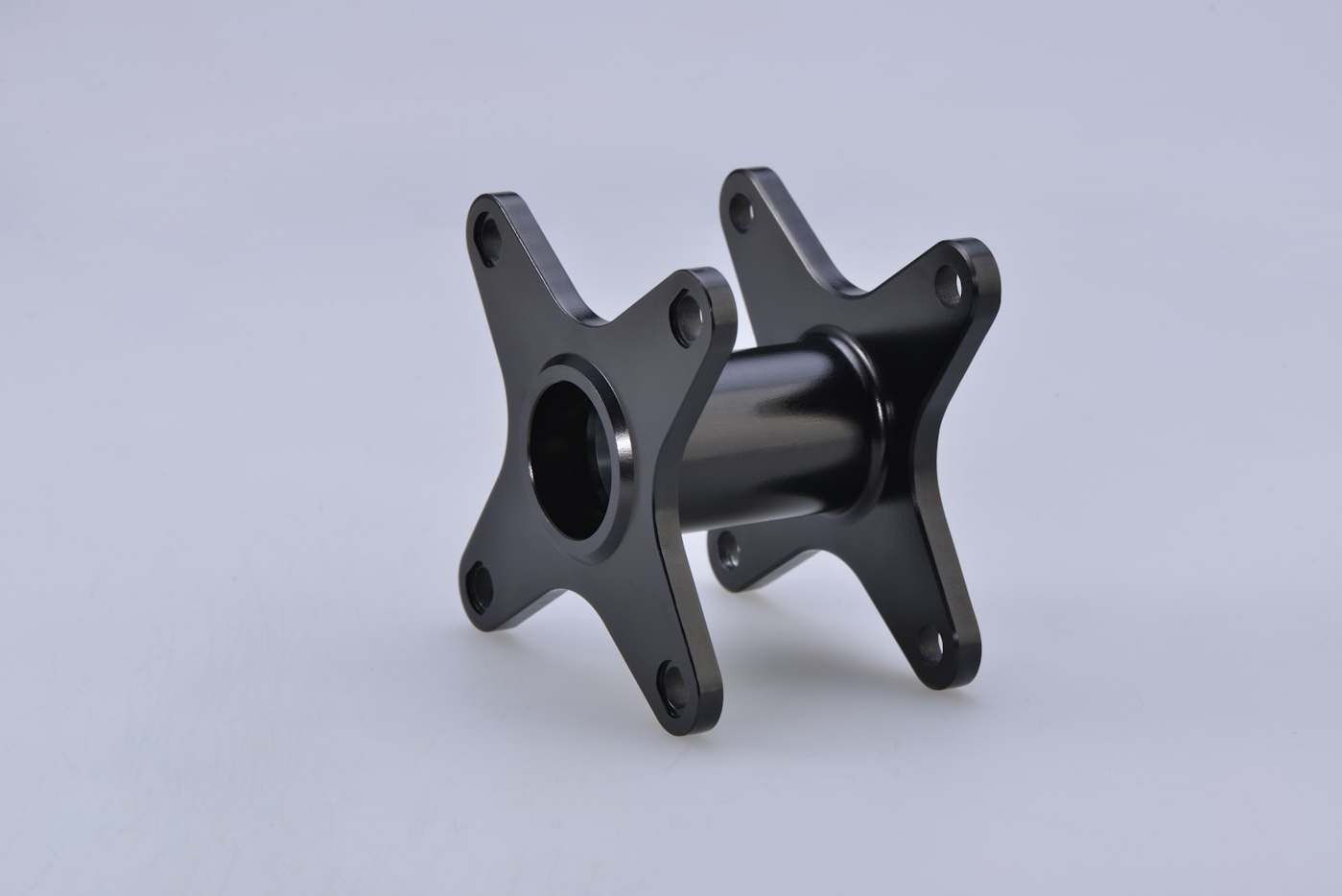
Powder coating is the standard finish for fabricated steel parts: an electrostatically charged polymer powder is sprayed onto the earthed part and cured at 180-200 °C into a continuous 60-120 µm film. On S235JR, S355 and DC01 it gives colour, UV resistance and 500 to 1000 hours of salt spray resistance depending on pretreatment, at a fraction of the cost of wet paint. Suppliers in the CutLinq network coat parts up to 3000 × 1500 × 1500 mm in any RAL Classic colour, in gloss, satin, matt and textured finishes, and apply the coating in the same order as cutting, bending and welding.
This page explains the powder types, the pretreatment that decides how long the coating lasts in Gulf and Egyptian climates, the RAL colours and textures commonly stocked, and how to design a part so the coating is even and the threads stay clean.
Powder types and where each is used
Polyester powders are the general-purpose choice: good UV resistance, good flexibility, cured at 180-200 °C for 10-15 minutes. Epoxy powders have the best chemical and corrosion resistance and edge coverage but chalk within months under desert sun, so they are limited to indoor panels and to primer layers. Epoxy-polyester hybrids sit between the two and are the usual indoor finish for enclosures and furniture. Super-durable polyesters, qualified to Qualicoat class 2 or equivalent, keep gloss and colour 2 to 3 times longer than standard polyester and are the correct choice for facades, signage and solar structures in Riyadh, Dubai and Upper Egypt.
| Powder system | Film thickness | UV resistance | Corrosion (with zinc phosphate) | Typical use |
|---|---|---|---|---|
| Epoxy | 60-100 µm | Poor (chalks outdoors) | 1000 h salt spray | Indoor, primer coat, chemical exposure |
| Epoxy-polyester hybrid | 60-90 µm | Moderate | 500-750 h | Indoor enclosures, furniture, racks |
| Standard polyester | 60-90 µm | Good (2-3 years gloss) | 500 h | Outdoor general, gates, machinery |
| Super-durable polyester | 60-90 µm | Very good (5+ years) | 500-750 h | Facades, signage, solar mounts |
| Zinc-rich epoxy primer + polyester top | 70 + 70 µm | Good | 1500 h+ | Coastal and marine, Jeddah, Dammam |
Pretreatment decides how long the coating lasts
Powder does not adhere to mill scale, laser oxide or oil. Every part is degreased, then either shot blasted to Sa 2.5 or chemically converted. Iron phosphate is the low-cost pretreatment for indoor parts; zinc phosphate roughly doubles salt spray resistance and is the minimum for outdoor use in the UAE and Saudi Arabia. Blasting to Sa 2.5 with a 40-70 µm profile gives the best adhesion on hot-rolled S235JR plate and welded frames and removes the dark oxide left by oxygen-assist laser cutting on edges, which otherwise flakes off with the coating within a year.
For hot-dip galvanised steel a sweep blast or specific etch is needed before powder; without it the coating peels in sheets. Duplex systems (galvanising plus powder) are common for solar structures and highway signage and give 20+ years in dry inland conditions.
| Pretreatment | Suitable for | Expected salt spray (polyester) | Cost relative |
|---|---|---|---|
| Degrease + iron phosphate | Indoor DC01, DX51D | 250-500 h | 1.0 |
| Degrease + zinc phosphate | Outdoor sheet parts | 500-1000 h | 1.2-1.4 |
| Shot blast Sa 2.5 | Hot-rolled plate, welded frames | 500-750 h | 1.3-1.6 |
| Blast + zinc-rich primer | Coastal structures | 1500 h+ | 1.8-2.2 |
| Sweep blast on galvanised | Duplex outdoor structures | 2000 h+ | 2.0-2.5 |
RAL colours, gloss and texture
Around 30 RAL colours are stocked by most coating shops in the region: RAL 9010 pure white, 9016 traffic white, 7035 light grey, 7016 anthracite, 9005 jet black, 5010 gentian blue, 3020 traffic red, 1023 traffic yellow, 6005 moss green and 8017 chocolate brown are the usual ones. Any other RAL Classic colour is available with 3 to 7 working days added for powder supply and a minimum batch of about 20 kg of powder, which covers roughly 80 to 100 m² of surface. RAL Design and Pantone matches, metallics and two-coat effects are possible but need a larger minimum.
Gloss is specified at 60°: full gloss 80-90 GU, satin 30-60 GU, matt below 30 GU. Fine and coarse texture finishes hide weld grinding marks and light scratches and are preferred for machine guards, electrical cabinets and outdoor furniture. Colour tolerance is Delta E below 1.5 against the RAL reference; two batches from different powder lots may differ by up to Delta E 1, so order matching parts together.
- Stocked colours: usually no surcharge, 3-5 working days
- Non-stocked RAL Classic: 3-7 working days added, 20 kg minimum powder
- Textured or structured finish: hides defects, adds 10-15%
- Metallic and bonded effects: 15-30% surcharge, single-source the batch
- Clear coat over metallic: second pass, adds 20-30%
Designing steel parts for powder coating
The Faraday cage effect means powder does not reach deep into narrow channels and recesses: a slot narrower than 5 times its depth will have thin coating at the bottom. Sharp laser-cut edges pull the coating thin, so a 0.5 mm edge break or deburring improves edge coverage significantly. Closed sections trap pretreatment chemicals and cure gases; add 6-10 mm drain holes at low points and vent holes in tubes. Threads, bearing seats and earthing points must be masked or re-tapped afterwards. Every part needs a hanging point: a 6 mm hole in a hidden position saves a visible hook mark.
Welded assemblies should be fully welded, not stitch welded, where they are exposed outdoors; the gap in a stitch weld collects moisture under the coating and starts rust that lifts the film. Grind welds flush only where the surface is visible; a textured finish covers the rest.
Performance in heat, dust and salt air
Powder coating on steel is stable to 120 °C continuous, which covers dark panels reaching 80-90 °C in direct sun in Riyadh or Aswan. Sand abrasion at ground level, for example on solar structure legs and gate bottoms, wears standard polyester at 5-10 µm per year; specify 100-120 µm film or a textured super-durable powder for those zones. Within 5 km of the coast in Alexandria, Jeddah, Dammam and the UAE, a zinc-rich primer under the polyester or a duplex galvanised system is the difference between 3 and 15 years before visible rust at edges.
Design tips
- Specify the system, not just the colour: 'zinc phosphate + super-durable polyester RAL 7016 satin, 80-100 µm'
- Add one 6-8 mm hanging hole per part in a hidden location and note it on the DXF
- Break all laser-cut edges by 0.5 mm or specify deburring; sharp edges are where coating fails first
- Put 6-10 mm drain and vent holes in every closed section and at the low point of welded frames
- Mask threads by calling out 'mask M8 holes' or plan to re-tap after coating; do not leave it to chance
- Keep recesses wider than 5 times their depth so powder reaches the bottom
- Order all parts that must colour-match in one batch; different powder lots differ by up to Delta E 1
Applications
| Industry | Example parts | Typical material |
|---|---|---|
| Electrical | Panel enclosures, cable trays | DC01 1.5-2 mm, RAL 7035 textured |
| Solar | Mounting brackets, inverter shelters | S235JR galvanised, duplex RAL 9006 |
| Furniture and fit-out | Table frames, shelving, display stands | S235JR tube, RAL 9005 matt |
| Machinery | Guards, frames, covers | S235JR 2-6 mm, RAL 5010 or 7016 |
| Signage | Cabinets, posts, totems | S235JR 2-3 mm, super-durable RAL to brand |
| Construction | Gates, railings, balustrades | S235JR, blast + primer + polyester |
| HVAC | Louvre frames, rooftop unit bases | DX51D+Z, sweep blast + polyester |
Pricing and lead time
Powder coating cost is driven by the surface area to be coated and the part size, since large parts fill the oven and the hanging line; by the pretreatment system, where blasting and zinc primer cost 1.5 to 2.2 times a simple phosphate; and by colour and finish, since non-stock RAL, textures and metallics add powder minimums and surcharges. Quantity reduces the cost per part sharply because line setup and colour change are fixed. Coating adds 2 to 4 working days to a cutting and bending order for stocked colours and 5 to 9 working days for special colours or primer systems, giving a total of 6 to 12 working days from file to delivery.
Frequently asked questions
Yes, RAL 7016 is a stocked colour in gloss, satin and matt. Within one batch the colour is within Delta E 1.5 of the RAL card; between batches it can differ by up to Delta E 1, so parts that sit next to each other should be coated together.
Upload your DXF or STEP file with the RAL colour and finish, and receive a binding quote within 12 hours.