Steel CNC Machining
CNC milling and turning of carbon, alloy and free-cutting steels with ±0.05 mm standard tolerance, delivered across Egypt, the UAE and Saudi Arabia
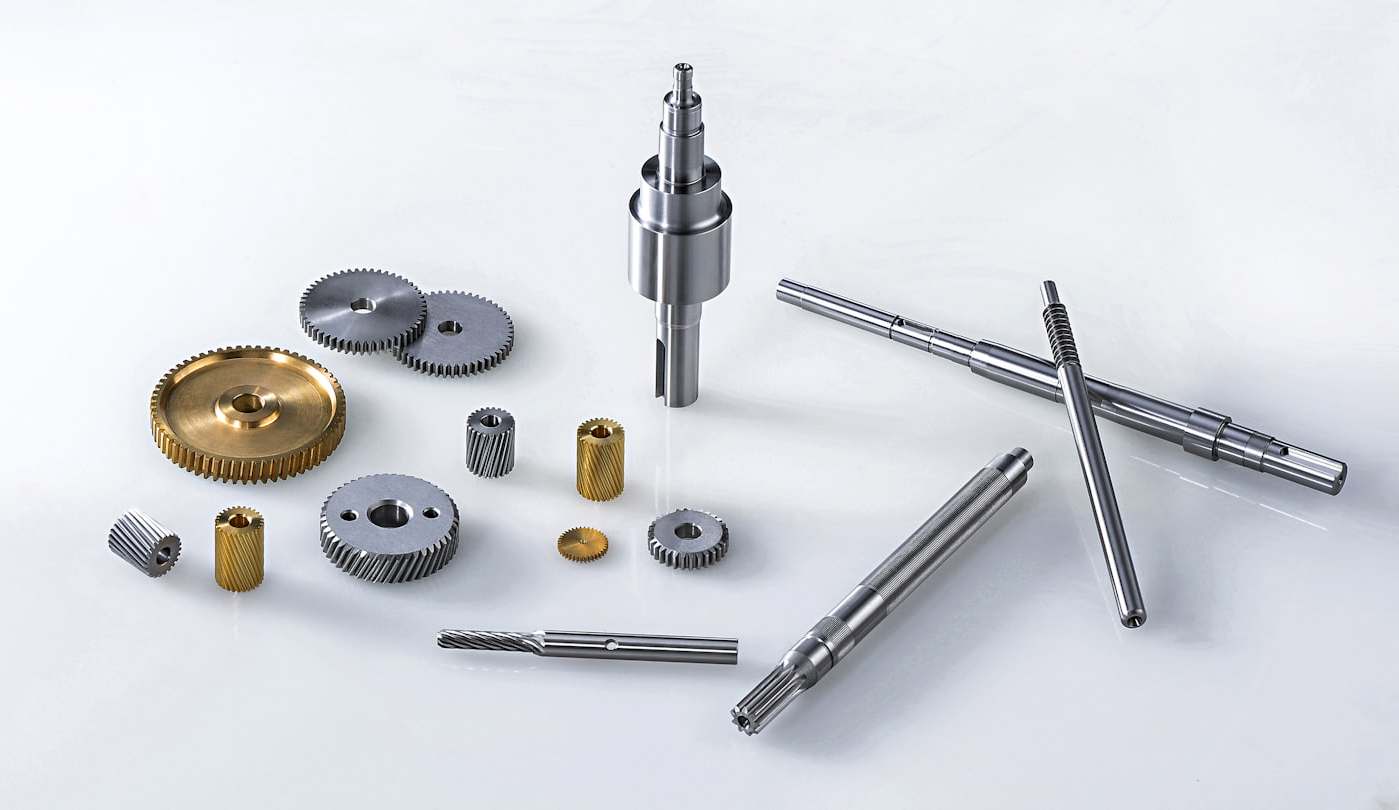
Steel CNC machining covers milled and turned parts made from carbon steel, alloy steel and free-cutting steel, from a single replacement bush to a batch of 500 flanges. Standard tolerance is ±0.05 mm on milled features and ±0.02 mm on turned diameters, with ±0.01 mm achievable by grinding. CutLinq quotes from your STEP file, allocates the job to a machining shop in Cairo, 6th of October, Dubai, Sharjah, Riyadh or Dammam with the right machine size, and manages heat treatment and coating as one order.
Below you will find which steel grade to pick for a machined part, what tolerances and surface finishes are realistic per operation, how heat treatment fits into the workflow, and how to protect a bare steel part against the region's humidity between delivery and installation.
Choosing a steel for machining
Mild structural steel S235JR machines but is gummy and leaves a torn finish; it is the right choice only for low-stress base plates and spacers. For general machined parts C45 (1045) is the workhorse, 42CrMo4 (4140) is used when strength or hardening is required, and 11SMn30 (1215) or 11SMnPb30 is chosen for turned fittings and bushes where machining speed matters and load is low.
Material availability in the region affects both price and lead time. Round bar in C45 and 42CrMo4 up to 200 mm and flat bar to 100 x 20 mm are stocked in Cairo, Jebel Ali and Dammam; larger blocks and 16MnCr5 may take an extra week.
| Grade (EN / AISI) | Machinability vs 11SMn30 | As-delivered hardness | Best for |
|---|---|---|---|
| S235JR (A283) | 60% | 110-150 HB | Base plates, spacers, jigs |
| C45 (1045) | 65% | 170-210 HB | Shafts, flanges, levers, general parts |
| 42CrMo4 QT (4140) | 55% | 28-34 HRC | Loaded shafts, hydraulic parts, bolts |
| 11SMn30 (1215) | 100% | 120-160 HB | Turned fittings, bushes, nipples |
| 16MnCr5 (5115) | 65% | 150-200 HB | Gears and pins to be case hardened |
| S355J2 (A572) | 60% | 150-190 HB | Machined structural components |
Tolerances and surface finish by operation
Unless the drawing states otherwise, machined steel parts are made to ISO 2768-mK. Tighter fits such as H7 bores and g6 shafts are held on the machine for sizes under 100 mm; above that, or for IT5, the feature is ground. Surface roughness on steel depends on tool, feed and coolant; a milled face at Ra 1.6 µm is standard, Ra 0.8 µm is a finishing pass, and anything below Ra 0.4 µm means grinding or polishing.
Thread machining on steel is done by tapping to M30 and by thread milling or single-point turning above that; ISO metric 6H/6g is the default, with UNC and NPT available on request for oil and gas parts.
| Operation | Standard tolerance | Achievable | Typical Ra |
|---|---|---|---|
| 3-axis milling | ±0.05 mm | ±0.02 mm | 1.6-3.2 µm |
| 5-axis milling | ±0.05 mm | ±0.02 mm | 1.6 µm |
| CNC turning, diameter | ±0.02 mm | ±0.01 mm | 0.8-1.6 µm |
| Boring H7, under 100 mm | H7 (+0.025/0 at 40 mm) | H6 | 0.8 µm |
| Cylindrical grinding | ±0.005 mm | ±0.002 mm | 0.2-0.4 µm |
| Tapped threads to M30 | 6H | 5H | n/a |
Heat treatment in the machining workflow
When a hardened part is needed, the sequence is rough machine, heat treat, finish machine or grind. Quench and temper of C45 or 42CrMo4 gives 30-45 HRC through the section; induction hardening gives a 50-58 HRC skin on shaft journals and cam surfaces; case hardening of 16MnCr5 gives 58-62 HRC on gear teeth. Each adds 2-4 working days and a distortion of 0.1-0.3 mm that the grinding allowance absorbs.
Suppliers in the CutLinq network in Cairo and Dubai handle the heat treatment logistics, so you place one order and receive one inspection report with dimensions and hardness.
Corrosion protection for machined steel
Machined steel is bright metal with no protection at all. In Alexandria, Jeddah or Dubai a bare C45 flange rusts overnight; in Riyadh or 10th of Ramadan City it survives a few days in dry storage. Every quote includes a protective oil and VCI wrapping; for longer storage or exposed service, add a finish.
Zinc plating at 8-12 µm with a blue or yellow passivation is the standard low-cost finish for bolts and brackets. Black oxide is decorative only and needs oil. For parts near the coast, or in cooling water or washdown, choose zinc-nickel 8-15 µm, hard chrome 20-50 µm on sliding surfaces, or switch to 1.4301 (304) or 1.4404 (316L) stainless.
- Oiled and VCI wrapped: shop protection, 2-4 weeks in packaging
- Zinc plating 8-12 µm, passivated: indoor, 96-200 h salt spray
- Zinc-nickel 8-15 µm: outdoor and coastal, 500-720 h salt spray
- Phosphate plus powder coat 60-80 µm: housings and non-fit surfaces
- Hard chrome 20-50 µm: shafts, rods, wear surfaces
- Black oxide plus oil: tooling and jigs kept indoors
Batch sizes and repeat orders
One-off parts are machined from bar or plate on a 3-axis mill or lathe with generic fixturing. From about 50 pieces, a dedicated fixture or a bar-fed lathe cuts unit cost by 30-50%. CutLinq keeps your STEP file, drawing revision and inspection results, so a repeat order of the same part a year later is quoted from the original setup and typically ships in fewer working days than the first batch.
Design tips
- Default to ISO 2768-mK and put explicit tolerances only on fits; every ±0.01 mm dimension adds a grinding operation.
- Use C45 for unhardened parts and 42CrMo4 QT for loaded shafts; avoid S235JR for anything with a fit or a thread.
- Keep internal pocket corner radii at 3 mm or larger; a 1 mm corner radius in steel needs a 2 mm cutter and multiplies milling time.
- Limit blind hole depth to 4x diameter for drilling and 2.5x diameter for tapping in steel.
- Add a 0.5 x 45° chamfer on all turned edges and thread starts; it prevents burrs and speeds assembly.
- Specify thread type and class (for example M12x1.75-6H) and whether it must survive zinc plating; plating adds 8-12 µm per flank.
- For parts over 30 kg, keep at least one flat face for clamping and add a lifting thread.
Applications
| Industry | Example parts | Typical material |
|---|---|---|
| Machinery and OEM | Shafts, couplings, gearbox housings | C45, 42CrMo4 |
| Oil and gas | Flanges, valve bodies, wrench adapters | 42CrMo4, C45, S355J2 |
| Construction equipment | Pins, bushes, hydraulic mounts | 42CrMo4 QT, C45 induction |
| Packaging and conveyors | Rollers, sprockets, guide blocks | C45, 11SMn30 |
| Automotive aftermarket | Hubs, adapters, suspension brackets | 42CrMo4, C45 |
| Solar and energy | Tracker pivot pins, drive brackets | C45 zinc plated, S355J2 |
| Plumbing and HVAC | Fittings, nipples, threaded bosses | 11SMn30, C45 |
Pricing and lead time
Three factors set the price of a machined steel part: the amount of material removed and the resulting machine hours (a part milled from a 100 x 100 x 50 mm block to a 20 mm thick bracket spends most of its cost turning steel into chips), the tolerances and surface finishes called out (each ground diameter or H7 bore adds a setup), and the quantity, since programming and fixturing are fixed costs spread over the batch. Simple milled or turned parts in C45 ship in 4-7 working days across Egypt and the Gulf; parts with heat treatment and grinding take 10-15 working days; batches of 200-500 pieces add 3-5 working days.
Frequently asked questions
ISO 2768-mK: for example ±0.1 mm on a 10-30 mm length, ±0.2 mm on 120-400 mm, and ±0.5° on angles. If you need a fit, mark it as H7, g6 or with a numeric tolerance on that feature only.
Upload your STEP file and drawing with the steel grade and finish, and receive a binding quote within 12 hours.