Stainless Steel Laser Cutting
Nitrogen-cut 1.4301 (304) and 1.4404 (316L) from 0.5 to 20 mm with clean, weldable edges
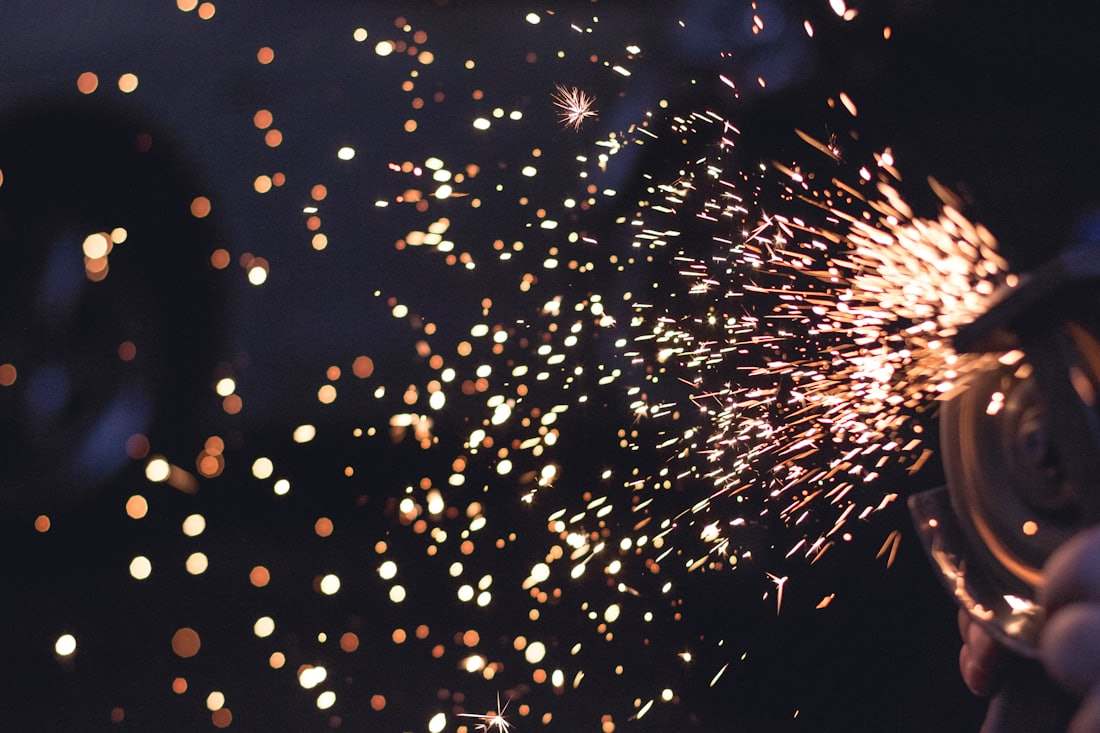
Stainless steel laser cutting uses a fiber laser with high-pressure nitrogen assist gas (12-20 bar) to melt and eject the metal without oxidising the edge. The result is a bright, burr-free edge on 1.4301 (304) and 1.4404 (316L) from 0.5 to 20 mm that can be welded, polished or passivated directly. Positional tolerance is ±0.1 mm on sheet to 3 mm and ±0.2 mm on plate to 12 mm. Upload a DXF or STEP file to CutLinq and receive a binding quote within 12 hours from stainless cutting shops in Egypt, the UAE and Saudi Arabia.
Stainless is cut more slowly than mild steel and consumes nitrogen rather than oxygen, so a 3 mm 304 part costs roughly 1.5 to 2 times a 3 mm S235JR part of the same geometry. The premium buys corrosion resistance that matters in the region: kitchen equipment in Cairo, coastal railings in Dubai and desalination parts in Jeddah all fail early in painted mild steel.
Why nitrogen cutting matters for stainless
Cutting stainless with oxygen forms a chromium-oxide scale that is dark, hard and reduces corrosion resistance at the edge. Nitrogen cutting prevents oxidation, leaving the edge silver and the chromium content intact. Nitrogen consumption rises sharply with thickness, from about 15 m3/h at 2 mm to over 60 m3/h at 12 mm, which is the main reason thick stainless costs more per metre than thick mild steel.
Some shops cut stainless above 12 mm with a nitrogen-oxygen mix or with air to save gas cost. This leaves a yellow or brown edge that must be pickled or ground before welding in food or marine applications. Specify nitrogen if the edge will be visible or wetted.
Grades and thickness range
The two austenitic grades cover 90% of demand. Ferritic 1.4016 (430) is used for decorative panels where cost matters and magnetism is acceptable. Duplex 1.4462 (2205) is cut for desalination and oil and gas parts but is stocked only in the UAE and Saudi Arabia.
| Grade EN (AISI) | Typical use | Laser range | Maximum | Relative sheet cost |
|---|---|---|---|---|
| 1.4301 (304) | Kitchens, architecture, tanks, general fabrication | 0.5-15 mm | 20 mm | 1.0 |
| 1.4307 (304L) | Welded assemblies, low carbon | 0.5-15 mm | 20 mm | 1.0-1.05 |
| 1.4404 (316L) | Coastal, chemical, marine, pharmaceutical | 0.5-15 mm | 20 mm | 1.3-1.4 |
| 1.4016 (430) | Decorative panels, appliance covers | 0.5-3 mm | 4 mm | 0.7-0.8 |
| 1.4462 (2205) | Desalination, oil and gas, high chloride | 2-12 mm | 15 mm | 1.8-2.2 |
| 1.4541 (321) | Exhaust, heat exposure to 800°C | 1-8 mm | 10 mm | 1.3-1.5 |
Tolerances, kerf and edge quality
Stainless cuts cleanly with almost no dross to 8 mm. Above 10 mm the bottom edge shows fine adhering dross that is removed by a deburring pass. Cutting speed on a 6 kW machine falls from 20 m/min at 1 mm to 1 m/min at 12 mm, so the cutting time and therefore the price grows roughly with the square of the thickness.
| Thickness | Kerf | Tolerance | Edge roughness | Minimum hole | Speed 6 kW |
|---|---|---|---|---|---|
| 0.5-2 mm | 0.15 mm | ±0.1 mm | Ra 2-4 µm | 1 x t | 12-25 m/min |
| 3-5 mm | 0.2 mm | ±0.1 mm | Ra 4-8 µm | 1 x t | 4-8 m/min |
| 6-10 mm | 0.3 mm | ±0.15 mm | Ra 8-14 µm | 1.2 x t | 1.5-3 m/min |
| 12-20 mm | 0.4-0.5 mm | ±0.25 mm | Ra 14-25 µm | 1.5 x t | 0.5-1 m/min |
Surface finish and protective film
Stainless sheet arrives in 2B (matte mill finish) or BA (bright annealed), or as brushed No.4 with grain 180-240 for architectural work. For visible parts, order sheet with PE protective film and ask the shop to cut film-side up; the laser burns through the film cleanly and the film stays on until installation. Brushed sheet should be nested with the grain in a stated direction so that all parts on an assembly match.
After cutting, common finishes are brushing to No.4, mirror polishing to No.8 (Ra below 0.1 µm), bead blasting for a uniform matte, electropolishing for food and pharma parts, and passivation in nitric or citric acid to restore the chromium oxide layer on welded assemblies.
Stainless cutting in Egypt, the UAE and Saudi Arabia
Stainless sheet in 304 from 0.8 to 6 mm is stocked in 1250 x 2500 and 1500 x 3000 mm across all three countries. 316L from 1 to 10 mm is stocked in Dubai, Jeddah and Dammam because of marine and desalination demand; in Cairo, 316L over 6 mm may add a few days for sourcing. Contamination is a regional issue: cut stainless must not be stored on carbon steel racks or handled with steel-contaminated gloves, because iron particles embed and rust in humid coastal air within weeks.
- Ask for dedicated stainless handling if the part will be used in food, pharma or marine service
- Specify passivation after welding for 316L parts within 10 km of the coast
- Brushed and mirror parts should ship with film and in separate cartons, not loose on a pallet
Design tips
- Keep hole diameter at or above sheet thickness; a 1.5 mm hole in 3 mm 304 is not achievable by laser and must be drilled.
- Draw at nominal size; the 0.15-0.5 mm kerf is compensated in the machine program.
- Leave a web of at least 1.5 x thickness between adjacent holes and 1 x thickness to the edge to avoid heat build-up and warping.
- For brushed panels, mark the grain direction on the DXF with an arrow and note it in the order; grain mismatch is the most common rejection reason.
- Design tab-and-slot joints with 0.1 mm clearance in 1-3 mm sheet and 0.2 mm in 4-6 mm to allow for kerf taper.
- Specify 316L instead of 304 only where chlorides are present; the extra 30-40% material cost buys nothing indoors in Riyadh or Cairo.
- Parts longer than 1500 mm in 1-1.5 mm sheet will bow after cutting; add a bend flange or increase to 2 mm.
Applications
| Industry | Example parts | Typical material |
|---|---|---|
| Commercial kitchens | Worktops, sinks, hood panels, shelving | 1.4301 (304) 1.2-2 mm, brushed |
| Food and beverage | Conveyor guides, washdown guards, hoppers | 1.4404 (316L) 2-4 mm |
| Architecture | Balustrades, cladding, perforated screens | 1.4301 (304) 2-3 mm, 316L coastal |
| Water and desalination | Strainer plates, brackets, tank flanges | 1.4404 (316L), 1.4462 (2205) 6-12 mm |
| Pharma and medical | Trolleys, cabinet panels, trays | 1.4404 (316L) 1.5-2 mm, electropolished |
| Oil and gas | Instrument brackets, junction box plates | 1.4404 (316L) 3-6 mm |
| Signage | Letter faces, mirror logos, plaques | 1.4301 (304) 1.5-3 mm, mirror or brushed |
Pricing and lead time
Price is driven by material grade and thickness (316L sheet costs 30-40% more than 304, and 10 mm plate costs about 4 times more per metre of cut than 3 mm because of speed and nitrogen consumption), cutting length and pierce count, and finishing steps such as brushing, deburring or passivation. Cut-only stainless parts ship in 2 to 4 working days from Cairo, Dubai, Riyadh and Jeddah; with bending and welding 5 to 8 working days; with polishing or electropolishing add 3 to 5 working days. Local courier delivery is same or next day for cartons under 30 kg.
Frequently asked questions
20 mm for 304 and 316L on 10-12 kW machines. Above 15 mm the edge is rougher and waterjet may be the better choice for parts that need a clean face.
Upload your DXF or STEP file to CutLinq and receive a binding stainless steel laser cutting quote within 12 hours.