Copper Laser Cutting
Fiber laser cutting of Cu-ETP and Cu-DHP sheet from 0.5 to 8 mm for busbars, earthing plates, heat spreaders and decorative panels
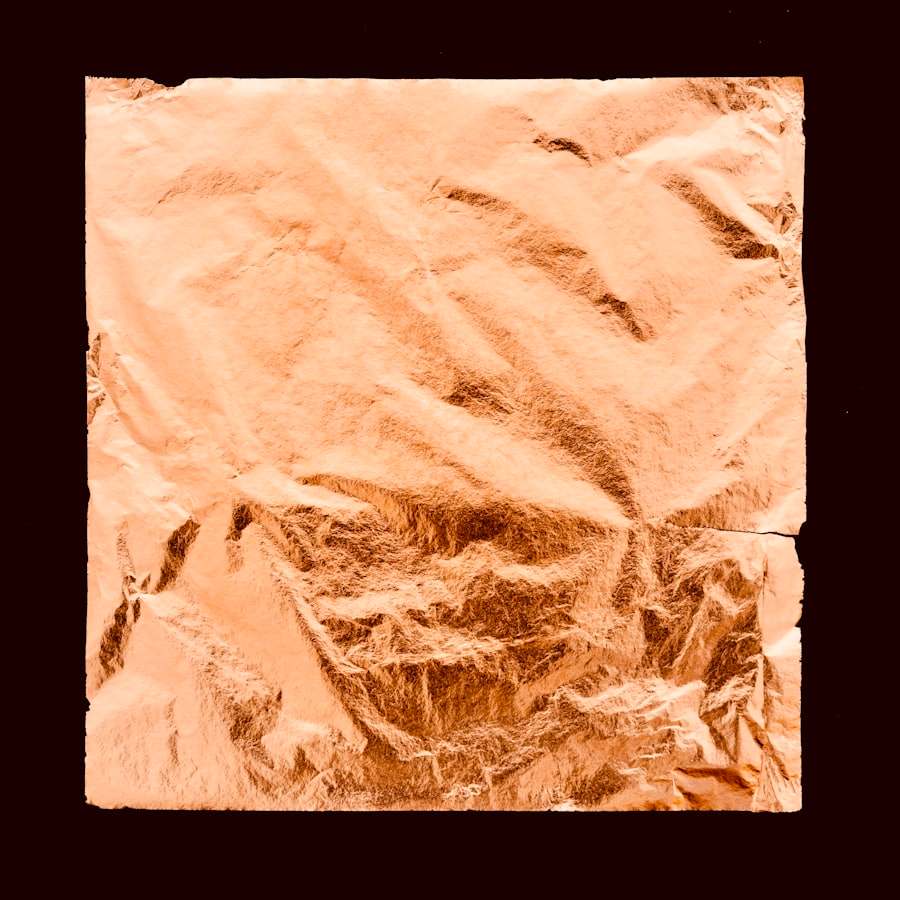
Copper laser cutting produces busbars, earthing and lightning-protection plates, transformer connections, heat spreaders and decorative panels from Cu-ETP (C11000) and Cu-DHP (C12200) sheet. Modern fiber lasers in the CutLinq network cut copper from 0.5 to 8 mm cleanly; CO2 lasers cannot, because copper reflects their wavelength. Upload a DXF file with the sheet thickness and grade and receive a binding quote within 12 hours from suppliers in Egypt, the UAE and Saudi Arabia.
This page explains the thickness limits, the tolerances and edge quality you can expect, when to choose waterjet or punching instead, and how to design busbars so the cut edges, holes and bends do not reduce the current-carrying capacity.
Why copper needs a fiber laser
Copper reflects about 95% of a CO2 laser beam at 10.6 µm, so only fiber lasers at 1.07 µm with 3 kW or more cut it reliably. Even then, thermal conductivity of 390 W/mK pulls heat away from the kerf, so cutting speeds are 30 to 50% lower than for stainless of the same thickness and nitrogen at 14 to 20 bar is used to eject the melt. Below 1 mm the cut is very fast and clean; above 6 mm the lower edge shows dross that is removed by grinding. The thickness ceiling is 8 mm on 6 kW machines and 10 to 12 mm on 12 kW machines, but above 8 mm waterjet or sawing is usually cheaper and gives a squarer edge.
| Sheet thickness | Fiber laser (6 kW) | Edge quality | Kerf width | Alternative |
|---|---|---|---|---|
| 0.5 to 1.5 mm | Fast, clean | Bright, no dross | 0.15 to 0.2 mm | CNC punching for large batches |
| 2 to 4 mm | Standard | Slight roughness, light dross | 0.2 to 0.3 mm | None needed |
| 5 to 6 mm | Slow, 8 kW preferred | Dross on lower edge, ground off | 0.3 to 0.4 mm | Waterjet |
| 8 mm | Limit for 6 to 8 kW | Rough, needs grinding | 0.4 to 0.5 mm | Waterjet or sawing |
| 10 to 12 mm | 12 kW machines only | Rough | 0.5 mm | Waterjet, milling |
Grades and their electrical properties
Cu-ETP (CW004A, C11000, electrolytic tough pitch) is the standard busbar grade at 100% IACS conductivity and 99.9% purity. Cu-OF (C10200, oxygen-free) is used where hydrogen embrittlement during brazing is a risk. Cu-DHP (C12200, phosphorus-deoxidised) is the plumbing and roofing grade, at 75 to 85% IACS, and is chosen for decorative panels and brazed assemblies. All are supplied soft (R220) for bending or half-hard (R240 to R290) for stiff busbars. State the temper: half-hard busbars can crack at inside radii below 1 x thickness.
| Grade (EN / ASTM) | Conductivity (IACS) | Tensile strength | Typical use | Relative cost |
|---|---|---|---|---|
| Cu-ETP CW004A (C11000) | 100% | 220 to 300 MPa | Busbars, earthing, transformers | 1.0 |
| Cu-OF CW008A (C10200) | 101% | 220 to 300 MPa | Vacuum, brazed electrical parts | 1.1 to 1.2 |
| Cu-DHP CW024A (C12200) | 75 to 85% | 220 to 300 MPa | Decorative, roofing, plumbing | 0.95 |
| CuZn37 brass (C27200) for comparison | 27% | 340 to 400 MPa | Decorative, fittings | 0.7 |
Tolerances and edge quality
Laser-cut copper holds ±0.1 mm on thin sheet and ±0.2 mm from 4 to 8 mm, with holes down to 1 x thickness (2 x thickness above 5 mm). Cut edges have a heat-affected zone of 0.1 to 0.3 mm that is fully annealed but has no practical effect on conductivity. Edge oxidation is a thin brown film; for bare busbar connections specify pickling or brushing, or ask for silver or tin plating of contact faces at 5 to 10 µm. Perpendicularity is within 0.05 mm per mm of thickness. Because copper is soft, parts scratch easily; request protective film on decorative work and interleaved packing.
- Dimensional tolerance: ±0.1 mm up to 3 mm, ±0.2 mm from 4 to 8 mm
- Minimum hole: 1 x thickness up to 5 mm, 2 x thickness above
- Minimum slot width: 1.2 x thickness
- Edge roughness: Ra 6 to 15 µm depending on thickness
- Flatness: as delivered sheet, typically 1 mm per metre; skin-passed sheet available
Designing busbars and earthing parts
Size busbars by current density: about 1.5 to 2 A per mm² for bare bars in free air at 35 °C ambient, less in an enclosed panel at 50 °C, which is a normal cabinet temperature in Riyadh or Dubai summers. A 40 x 5 mm bar carries roughly 500 to 600 A in these conditions. Bolt holes reduce the cross-section, so keep the remaining width at the hole at least 60% of the bar width and use M8 to M12 holes with 1 mm clearance. Bend radius should be 1 x thickness for soft copper and 2 x thickness for half-hard, with the bend line 90° to the rolling direction where possible. Send us the bar drawing as DXF for cutting and STEP for bent bars; we quote cutting, bending, plating and epoxy or heat-shrink insulation together.
Copper in the MENA environment
Copper does not rust, but in Gulf coastal air it forms a green patina of chloride and sulphate salts within one to two years that raises contact resistance on joints. Indoor panel busbars in Egypt and inland Saudi Arabia stay bright for years; coastal and outdoor installations in Jeddah, Dammam, Abu Dhabi or Alexandria should have tin-plated contact faces and be torqued with Belleville washers. For decorative panels and facade screens, the patina is often the design intent; a clear lacquer or wax slows it if the polished colour must be kept. Sand abrasion is not an issue for copper indoors but polished exterior panels will dull within one season.
Design tips
- Keep the remaining width at any bolt hole at least 60% of the busbar width to preserve current capacity.
- Use hole diameters of 1 x thickness or larger; 3 mm holes in 3 mm copper are the practical minimum.
- Specify soft temper (R220) for any bar that will be bent tighter than 2 x thickness.
- Add 1 mm clearance to bolt holes (9 mm for M8, 13 mm for M12) to allow for thermal expansion of 17 µm per m per °C.
- Ask for tin plating 5 to 10 µm on contact faces for coastal or outdoor installations.
- Nest busbars with common straight edges; copper sheet is expensive and yield matters more than on steel.
- Request protective film and interleaved packing on decorative or visible copper parts.
Applications
| Industry | Example parts | Typical material |
|---|---|---|
| Electrical panels | Busbars, links, neutral bars | Cu-ETP 5 to 10 mm, tin plated |
| Solar and energy | Combiner box bars, earthing plates | Cu-ETP 3 to 6 mm |
| Construction | Lightning protection tapes and plates | Cu-ETP 2 to 3 mm |
| Electronics | Heat spreaders, RF shields, PCB stiffeners | Cu-ETP 0.5 to 2 mm |
| Signage and architecture | Facade screens, decorative panels, letters | Cu-DHP 1 to 3 mm |
| Transformers and motors | Coil connections, terminals | Cu-ETP or Cu-OF 3 to 8 mm |
| HVAC and refrigeration | Brazed fittings, plates | Cu-DHP 1 to 4 mm |
Pricing and lead time
Copper cut parts are priced mainly on material, since copper sheet costs roughly 6 to 10 times mild steel per kilogram and 2 to 3 times stainless 304; the second driver is cutting time, which is longer than steel because of reflectivity and conductivity, and the third is post-processing such as deburring, plating or bending. Good nesting and using standard 2 x 1 m sheets keeps waste below 15%. Small batches of thin parts ship in 2 to 4 working days; 5 to 8 mm busbars with bending and tin plating take 6 to 10 working days.
Frequently asked questions
Yes, on fiber lasers of 3 kW and above. Older CO2 machines cannot, which is why many workshops decline. We route copper to suppliers with 6 to 12 kW fiber lasers that cut up to 8 mm as standard.
Upload your DXF or STEP file with the copper grade and thickness and receive a binding quote within 12 hours.