Brass CNC Turning
Precision turned brass fittings, bushings, connectors and valve parts in CuZn39Pb3 and CuZn37 for Egypt, the UAE and Saudi Arabia
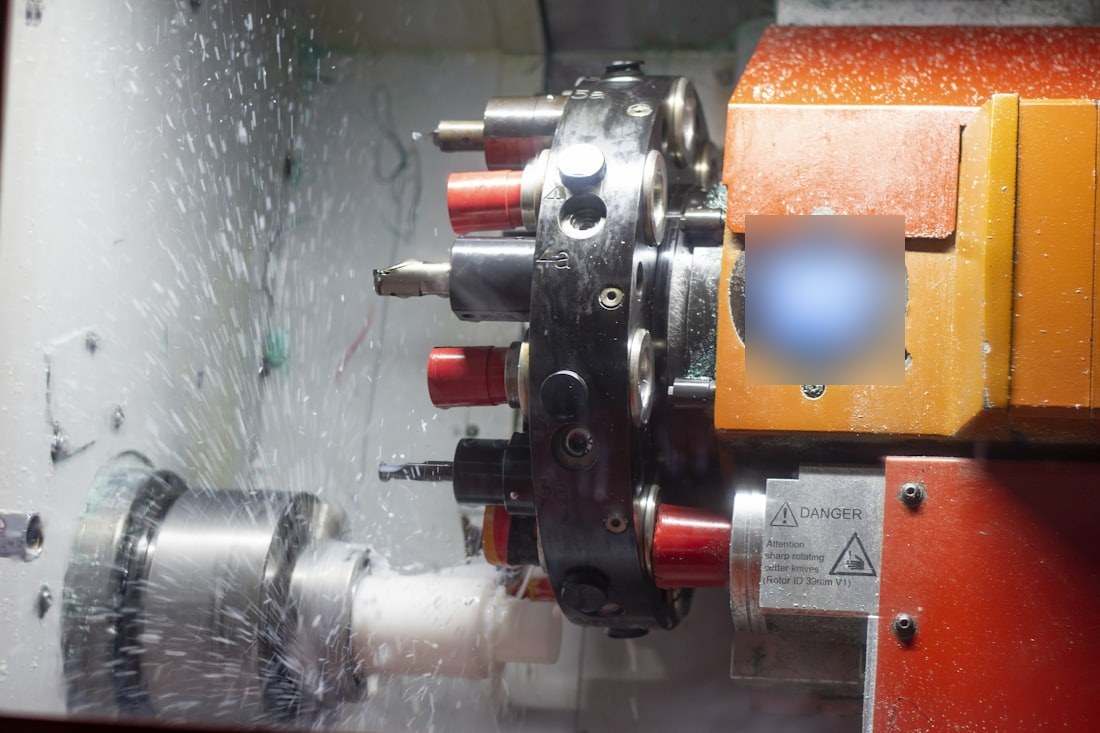
Brass CNC turning produces threaded fittings, bushings, electrical terminals, valve stems and decorative components from round bar, with tolerances of ±0.05 mm as standard and ±0.01 mm on request. Free-machining brass CuZn39Pb3 (CW614N, roughly C38500) is the fastest-cutting engineering metal, machining 2-3 times faster than mild steel and 5-6 times faster than stainless, which makes turned brass parts cheap despite the high bar price.
This page covers the brass grades stocked in the region, bar diameters and achievable tolerances, threading, surface finish and plating options, and what to include in your STEP file or drawing for a binding quote.
Brass grades for turning
Leaded brass CuZn39Pb3 is the default for turned parts: lead forms short chips and lets the lathe run at 200-400 m/min surface speed. Lead-free CuZn37 (CW508L, similar to C27200) is used where drinking water or RoHS rules apply, at the cost of longer chips and 20-30% lower feed rates. For sea-water and Gulf applications, dezincification-resistant CuZn36Pb2As (CW602N, DZR) is specified for plumbing and pool fittings.
| Grade (EN) | Common name | Machinability index | Relative bar cost | Typical use |
|---|---|---|---|---|
| CuZn39Pb3 (CW614N) | Free-machining brass, C38500 | 100% | 100% | Fittings, bushings, terminals |
| CuZn40Pb2 (CW617N) | Forging and machining brass | 90% | 98-102% | Hot-stamped valve bodies, then turned |
| CuZn37 (CW508L) | Deep-drawing brass, C27200 | 40-50% | 95-105% | Lead-free, decorative, RoHS parts |
| CuZn36Pb2As (CW602N) | DZR brass | 80% | 110-125% | Water fittings, coastal plumbing |
| CuZn30 (CW505L) | Cartridge brass, C26000 | 30-40% | 100-110% | Deep-drawn shells, cold-formed parts |
Bar sizes, tolerances and surface finish
Suppliers in the CutLinq network run bar-fed CNC lathes and Swiss-type machines for diameters from 3 to 42 mm and chucking lathes up to 100-150 mm. Hexagonal bar in 8-41 mm across flats is standard stock for fittings and lets the hex be left as-drawn without milling. Brass turns to a bright finish straight off the tool, Ra 0.4-0.8 µm, and polishes to Ra 0.1 µm without difficulty.
| Feature | Standard | Precision | Notes |
|---|---|---|---|
| Turned diameter | ±0.05 mm | ±0.01 mm | Up to 60 mm; larger diameters ±0.02 mm |
| Length | ±0.1 mm | ±0.02 mm | Sub-spindle parting gives best length control |
| Bore diameter | ±0.05 mm | H7 (reaming) | H6 by boring on Swiss-type |
| Concentricity | 0.05 mm | 0.01 mm | Single set-up on sub-spindle machines |
| Surface roughness Ra | 0.8 µm | 0.2-0.4 µm | Polished 0.1 µm on request |
| Thread pitch diameter | 6g / 6H | 4g / 5H | Thread milled or single-point above M20 |
Threads, knurls and secondary features
Brass threads form cleanly by single-point turning, thread rolling or tapping. Metric M3 to M48, BSP G1/8 to G2 and NPT 1/8 to 1 1/2 are all routine; BSP parallel threads dominate plumbing and HVAC fittings across Egypt and the Gulf. Knurling (straight, diamond, 0.8-1.6 mm pitch) is standard for grip surfaces on thumb screws and connector bodies.
Cross-holes, flats, hex sockets and slots are milled on the same machine with live tooling, so most fittings finish in one set-up. Parting-off leaves a small nub of 0.1-0.3 mm which is faced on the sub-spindle when a flat end is required.
- Specify thread standard explicitly: M (ISO metric), G (BSP parallel), R/Rp (BSP taper), NPT.
- Give thread length and undercut (DIN 76) to avoid an incomplete last turn.
- Ask for thread rolling on production batches over 500 pieces: stronger threads and no chips.
- Knurls need a 0.3-0.5 mm shoulder clearance and the diameter grows by roughly half the pitch.
Finishing and corrosion in the region
Bare brass tarnishes to brown within weeks in the humid air of Jeddah, Dubai or Alexandria, and dezincification attacks ordinary brass in warm chloride water. Plating solves both: nickel 5-10 µm for wear and appearance, chrome over nickel for decorative fittings, tin 5-8 µm for electrical terminals, and clear lacquer for indoor decorative parts. For drinking-water fittings, DZR brass with no plating is the typical specification in Saudi Arabia and the UAE.
Brass parts leave the machine coated in cutting oil; degreasing and ultrasonic cleaning are standard, and passivation with a benzotriazole solution delays tarnish for uncoated parts.
When to choose brass over other metals
Choose brass for electrical conductivity (28% IACS for CuZn39Pb3), corrosion resistance in fresh water and indoor air, low friction against steel, and the fastest machining cost. Choose stainless 303 when strength above 300 MPa or contact with acids is needed; choose aluminium 6061-T6 when weight matters; choose copper Cu-ETP only when conductivity above 90% IACS is required, since it machines far worse than brass.
Design tips
- Design around standard bar: round 3-100 mm and hex 8-41 mm AF; a 25 mm finished diameter from 25.4 mm bar wastes nothing.
- Keep length-to-diameter ratio under 5:1 for unsupported turning; longer parts need tailstock or Swiss-type and cost more.
- Use 0.2-0.5 x 45° chamfers on all external edges and thread starts; brass burrs are soft but sharp.
- Specify undercut DIN 76 at thread ends and 0.5 mm minimum corner radius at shoulder-to-diameter transitions.
- Minimum wall thickness 0.8 mm for bores in CuZn39Pb3; below that the part distorts in the chuck.
- Tolerance only what matters: ±0.05 mm general, ±0.01 mm on sealing diameters and press fits.
- For plated parts, add the plating thickness (5-10 µm per side) to the tolerance stack of any fitted diameter.
Applications
| Industry | Example parts | Typical material |
|---|---|---|
| Plumbing and HVAC | Compression fittings, valve stems, drain plugs | CuZn39Pb3, CuZn36Pb2As (DZR) |
| Electrical | Terminals, cable glands, busbar connectors, pins | CuZn39Pb3, tin plated |
| Oil, gas and instrumentation | Gauge adaptors, orifice fittings, ferrules | CuZn39Pb3, nickel plated |
| Furniture and interiors | Handles, feet, decorative caps, hinges | CuZn37, lacquered or chrome plated |
| Machinery | Bushings, guide sleeves, worm wheels | CuZn39Pb3, CuSn8 bronze for higher loads |
| Solar and irrigation | Drip fittings, manifold nipples, sensor bodies | DZR brass, nickel plated |
Pricing and lead time
Price is driven by bar weight (brass bar costs roughly 7-9 times mild steel per kilogram, so a hollow design that removes material from the bar diameter saves money), cycle time (features such as cross-holes, knurls and fine threads add seconds each, and Swiss-type work on diameters under 10 mm is priced per second), and batch size (set-up of 30-60 minutes is spread over the batch, so 500 pieces cost 40-60% less per piece than 20). Plating adds a fixed batch charge plus a per-piece amount. Typical lead times are 4-7 working days for 10-100 pieces, 7-12 working days for 500-5,000 pieces, and add 2-4 working days for nickel, tin or chrome plating.
Frequently asked questions
CuZn39Pb3 (CW614N). It is the standard free-machining bar in the region and gives the lowest price. Say DZR if the part touches drinking water or sea water, and lead-free CuZn37 if RoHS or food contact applies.
Upload your STEP file and drawing and receive a binding quote for brass CNC turning within 12 hours.