Plastics CNC Machining (POM, PEEK, PMMA)
Milled and turned engineering plastic parts in POM, PEEK, PMMA, PA6, PTFE and HDPE for Egypt, the UAE and Saudi Arabia
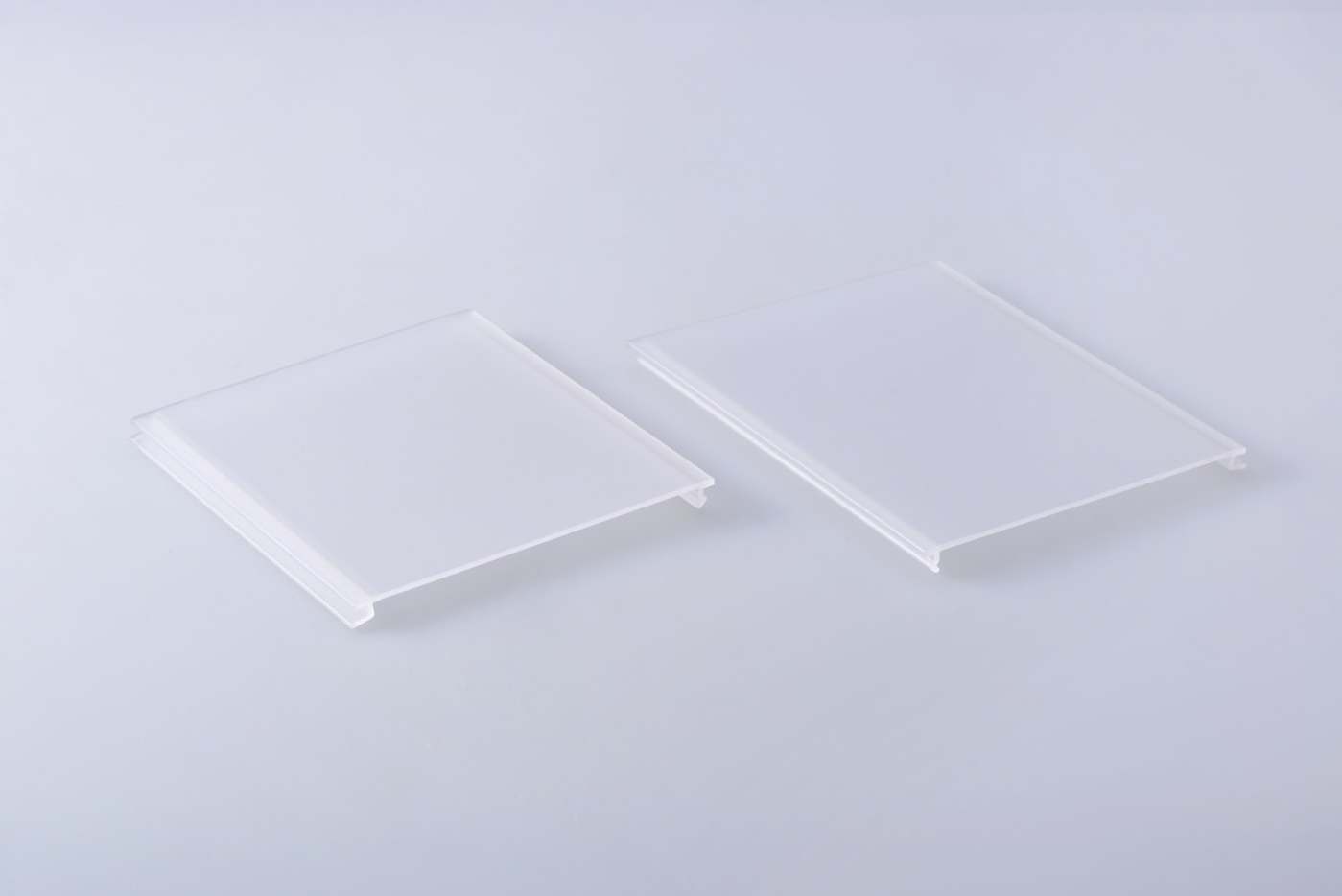
Plastics CNC machining cuts bushings, guides, wear pads, insulators, manifolds and clear covers from sheet and rod stock with the same milling and turning centres used for metal. Typical tolerance is ±0.1 mm, with ±0.05 mm achievable on POM and PEEK when the part is stable in section. Plastics machine 3-5 times faster than steel but move with temperature and moisture, which matters in Gulf summers where workshop and site temperatures differ by 30 °C.
This page covers the grades stocked in the region, their temperature and chemical limits, achievable tolerances per material, design rules that prevent warping and cracking, and what to send for a binding quote.
Engineering plastics and what they are for
POM (acetal, Delrin) is the general-purpose machining plastic: stiff, dimensionally stable, low friction. PA6 (nylon) is tougher and cheaper but absorbs up to 3% moisture and swells. PEEK is the high-performance option for 250 °C service and chemical plants, at 30-50 times the cost of POM. PMMA (acrylic) is chosen for transparency; PC (polycarbonate) for impact-resistant clear parts. PTFE and HDPE are used for chemical resistance and food contact where tolerances are relaxed.
| Material | Max continuous temperature | Tensile strength MPa | Moisture absorption | Relative cost/kg | Best for |
|---|---|---|---|---|---|
| POM-C (acetal copolymer) | 100 °C | 65-70 | 0.2% | 100% | Gears, bushings, guides, precision parts |
| PA6 (nylon 6) | 90-100 °C | 70-80 | 2.5-3% | 70-90% | Wear pads, rollers, impact parts |
| PEEK (natural) | 250 °C | 95-100 | 0.1% | 3000-5000% | Oil and gas seals, pump parts, medical |
| PMMA (cast acrylic) | 70-80 °C | 70-75 | 0.3% | 80-120% | Clear covers, guards, display parts |
| PC (polycarbonate) | 115-120 °C | 60-65 | 0.2% | 150-200% | Impact-resistant windows, guards |
| PTFE | 260 °C | 20-30 | 0.01% | 600-900% | Seals, chemical parts, low friction |
| HDPE / PE-1000 (UHMWPE) | 80 °C | 20-40 | 0.01% | 50-80% | Cutting boards, chute liners, food contact |
Tolerances and stability
Plastics have 5-10 times the thermal expansion of steel: POM grows 0.11 mm per 100 mm for a 10 °C rise, PA6 up to 0.15 mm. A 200 mm POM guide measured at 22 °C in the workshop is 0.4 mm longer at 40 °C on a Riyadh site. Drawings should state the measurement temperature, and fits against metal should allow for the difference. Internal stresses from extrusion also release during machining; roughing, resting for 24 hours and finishing gives the best flatness on thick sheet.
| Material | Standard tolerance | Achievable | Flatness per 100 mm | Notes |
|---|---|---|---|---|
| POM-C | ±0.1 mm | ±0.03 mm | 0.1 mm | Best all-round accuracy |
| PEEK | ±0.1 mm | ±0.03 mm | 0.1 mm | Anneal after roughing on thick parts |
| PMMA / PC | ±0.15 mm | ±0.05 mm | 0.15 mm | Polish-cut edges, no cracking |
| PA6 | ±0.2 mm | ±0.1 mm | 0.2 mm | Moisture swell after machining |
| PTFE | ±0.3 mm | ±0.1 mm | 0.3 mm | Cold flow, soft |
| HDPE / UHMWPE | ±0.3 mm | ±0.15 mm | 0.3 mm | Warps when clamped, low stiffness |
Machining methods and finishes
Flat parts up to 25 mm in PMMA and POM are laser cut with a CO2 laser, giving flame-polished acrylic edges. Milling handles pockets, threads and 3D contours; turning produces bushings, rollers and seals. Sharp single-flute or polished carbide tools and air cooling prevent melting. Machined plastic surfaces reach Ra 0.8-1.6 µm; PMMA can be vapour or flame polished to optical clarity.
Threads in plastic should be coarse and at least 1.5 x diameter deep, or use brass threaded inserts (heat-set or press-in) for anything tightened more than a few times.
- CO2 laser cutting: PMMA and POM up to 25 mm, HDPE and PA not laser cut (they melt and char).
- CNC milling: all materials, 3-axis standard, 5-axis for complex manifolds.
- CNC turning: POM, PEEK, PTFE, PA6 rod from 10 to 300 mm diameter.
- Finishing: edge polishing, brass inserts, drilling and tapping, silk-screen marking.
Plastics in Gulf and Egyptian conditions
Two regional factors decide plastic selection. Heat: rooftop and outdoor surfaces exceed 70 °C in summer, above the limit of PMMA and close to the limit of POM and PA6; specify PC, PEEK or PTFE for anything outside in the sun. UV: unstabilised PA and POM chalk and embrittle within 1-2 years outdoors; PMMA and PC are available in UV-stabilised grades and should be specified as such.
Sand abrasion favours UHMWPE and PA6 for chute liners and wear strips in cement, fertiliser and grain handling plants across Egypt and Saudi Arabia.
Design rules for machined plastics
Plastics crack at sharp internal corners and warp when material is removed asymmetrically. Keep wall thickness uniform, add generous radii and machine from both sides to balance stress. Press fits should use 0.1-0.3% interference, far less than for metals, and snap features need 1-2 mm deflection allowance.
Design tips
- Add 1 mm minimum internal corner radius in POM and PA6, 2 mm in PMMA and PC, to prevent stress cracking.
- Keep wall thickness above 1.5 mm for POM and PEEK, 3 mm for PMMA, PA6 and HDPE.
- Machine 3-5 mm from both faces of thick sheet rather than 8 mm from one face to keep the part flat.
- State the reference temperature (usually 23 °C) on any drawing with tolerances tighter than ±0.1 mm.
- Design in standard stock: POM and PA6 sheet 5, 6, 8, 10, 12, 15, 20, 25, 30, 40, 50 mm; PMMA 2, 3, 4, 5, 6, 8, 10, 12, 15, 20 mm.
- Use metal inserts for threads that will be tightened repeatedly; plastic threads strip after 10-20 cycles.
- Specify UV-stabilised and black or natural colour explicitly; colour pigments change machinability slightly and dyed stock has longer lead times.
Applications
| Industry | Example parts | Typical material |
|---|---|---|
| Packaging and conveyor machinery | Guide rails, star wheels, wear strips, change parts | POM-C, UHMWPE |
| Food and beverage | Cutting boards, scraper blades, filler parts | HDPE, POM-C (food grade), PEEK |
| Oil, gas and desalination | Seal rings, back-up rings, pump wear parts | PEEK, PTFE, PA6 |
| Electrical | Insulators, terminal blocks, busbar supports | POM, PA6, glass-filled PA |
| Signage and displays | Clear covers, light diffusers, machined letters | PMMA (cast), PC |
| Medical and laboratory | Fixtures, manifolds, trays | PEEK, POM, PC |
| Agriculture and water | Sprinkler bodies, valve seats, bushings | POM, PA6, PVC |
Pricing and lead time
Price is driven by material grade (PEEK stock costs 30-50 times POM, so a PEEK part is usually 5-10 times the price of the same part in POM), stock volume (plastics are sold by sheet and rod, and a 300 mm part from 50 mm plate is priced on the full plate section it consumes), and machining time (thin walls, deep pockets and tight flatness need slower passes and rest periods). Quantity discounts are modest for single parts but strong for batches over 50 where fixturing is amortised. Typical lead times are 3-6 working days for POM, PA6, PMMA and HDPE parts from stocked sheet, 6-10 working days for PEEK, PTFE and PC, and add 2-3 working days for polishing or inserts.
Frequently asked questions
POM handles 100 °C continuous, most oils and water, and is the cheapest precision plastic. Choose PEEK only above 120 °C, in aggressive chemicals, steam or where food or medical certification requires it.
Upload your STEP or DXF file and receive a binding quote for plastic CNC machining within 12 hours.