Aluminium Laser Cutting
Fiber laser cutting of 5754, 5052, 6061 and 1050 sheet from 0.5 to 15 mm with ±0.1 mm tolerance
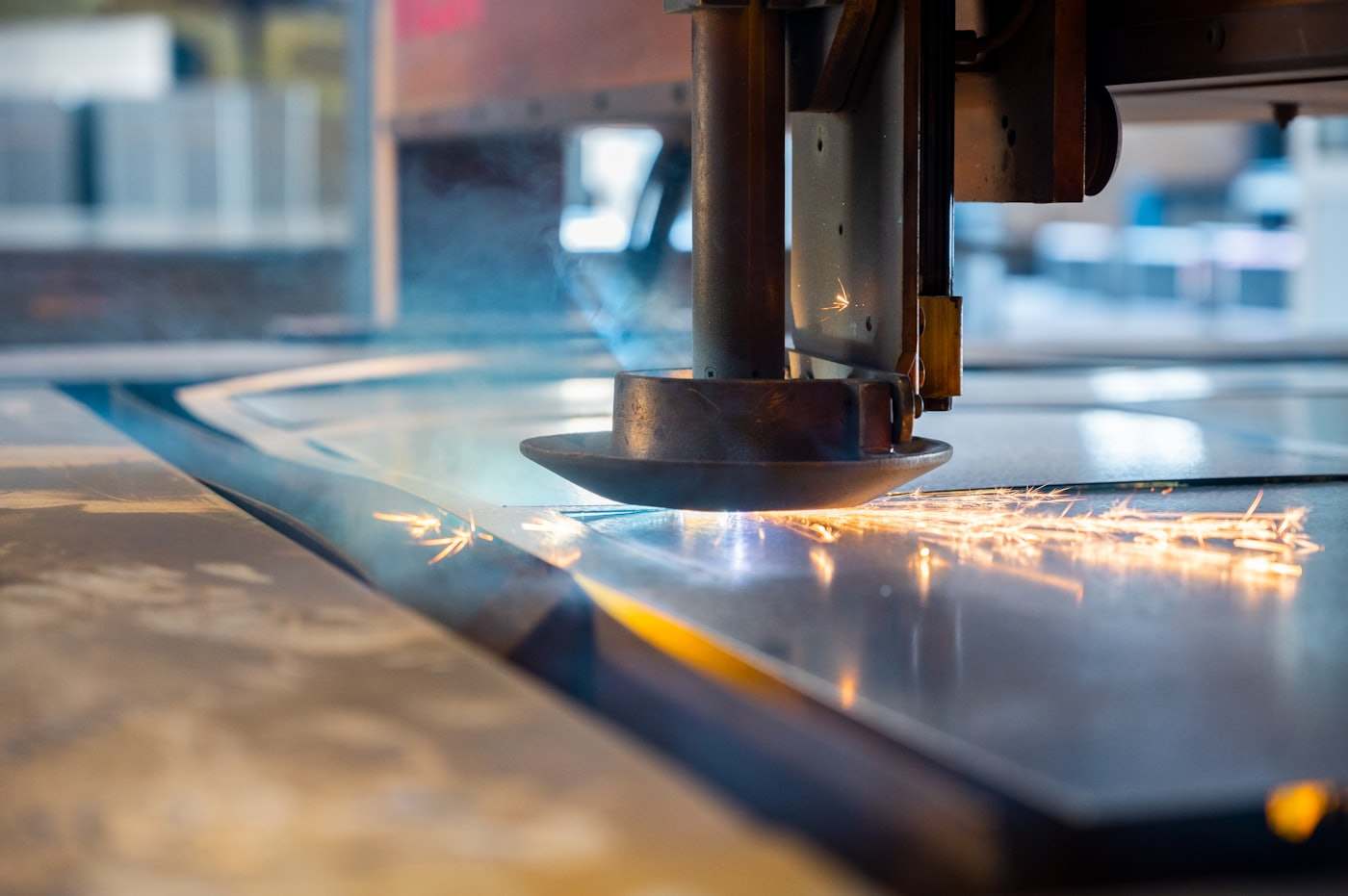
Aluminium laser cutting uses a fiber laser with nitrogen assist gas to cut sheet and plate from 0.5 to 15 mm without oxidation on the edge. Typical grades are EN AW-5754 (AlMg3) and 5052 for bent sheet parts, EN AW-6061-T6 and 6082 for flat machined plates, and 1050 for electrical and decorative work. Tolerance is ±0.1 mm up to 6 mm and ±0.2 mm above. Upload a DXF or STEP file and receive a binding quote within 12 hours from a workshop in Egypt, the UAE or Saudi Arabia.
This page explains which aluminium alloys cut best, how thickness affects edge quality and price, what dross and burr to expect, and how to design parts for bending and anodising after cutting.
Which aluminium alloys laser cut well
Aluminium reflects the laser wavelength and conducts heat quickly, so it needs 20 to 30% more laser power than the same thickness of mild steel and cuts more slowly above 6 mm. Magnesium alloys of the 5000 series give the cleanest, most burr-free edges. 6000 series plates cut well but leave a slightly rougher edge above 8 mm. 1050 pure aluminium is soft and prone to a small bottom burr. 7075 cuts but is rarely laser cut because parts are usually machined from plate.
In the MENA region the most stocked sheets are 5754 H22 and 5052 H32 in 1 to 6 mm, 6061-T6 and 6082-T6 in 5 to 25 mm plate, and 1050 H14 in 0.5 to 3 mm.
| Alloy (EN / common) | Temper | Laser cut edge quality | Bendable after cutting | Anodising result | Typical use |
|---|---|---|---|---|---|
| EN AW-5754 (AlMg3) | H22 / H111 | very good, minimal burr | yes, 1 t radius | good, uniform | enclosures, brackets, marine, trailers |
| EN AW-5052 (AlMg2.5) | H32 | very good | yes, 1 t radius | good | panels, tanks, ducting |
| EN AW-6061-T6 | T6 | good, slight roughness above 8 mm | limited, 2.5 t radius or more | good, may show streaks | flat plates, machined brackets |
| EN AW-6082-T6 | T6 | good | limited, 3 t radius | good | structural plates, heavy brackets |
| EN AW-1050 (Al99.5) | H14 | fair, small bottom burr | yes, 0.5 t radius | excellent, bright | nameplates, electrical bus, decor |
| EN AW-7075-T6 | T6 | fair | no | poor, dark | rarely laser cut, machined instead |
Thickness, tolerance and edge quality
Fiber lasers of 3 to 6 kW cut aluminium to 12 mm with clean edges; 8 to 12 kW machines reach 15 mm. Above 10 mm the bottom edge shows a light dross line that is removed by a quick grind. Kerf width is 0.15 mm on thin sheet and 0.3 to 0.4 mm on 12 mm plate. Minimum hole diameter is equal to sheet thickness for a round hole; smaller holes are pierced and drilled afterwards.
Edge roughness is Ra 3 to 6 µm up to 6 mm and Ra 10 to 20 µm on 12 to 15 mm plate. For visible architectural or signage parts up to 4 mm the edge is acceptable without finishing; above that specify deburring or a linished edge.
| Thickness | Tolerance | Kerf | Min hole | Edge roughness Ra | Relative cut time per metre vs 1 mm |
|---|---|---|---|---|---|
| 0.5 to 1.0 mm | ±0.1 mm | 0.15 mm | 0.8 mm | 3 µm | 1.0 |
| 1.5 to 3.0 mm | ±0.1 mm | 0.2 mm | 1.5 to 3.0 mm | 3 to 5 µm | 1.5 to 2.5 |
| 4.0 to 6.0 mm | ±0.1 to ±0.15 mm | 0.25 mm | 4 to 6 mm | 5 to 8 µm | 3 to 5 |
| 8.0 to 10 mm | ±0.2 mm | 0.3 mm | 8 to 10 mm | 10 to 15 µm | 7 to 10 |
| 12 to 15 mm | ±0.2 to ±0.3 mm | 0.4 mm | 12 to 15 mm | 15 to 20 µm | 14 to 20 |
Nitrogen versus air cutting
Aluminium is cut with nitrogen at 12 to 20 bar so the edge stays bright and can be welded or anodised without cleaning. Compressed-air cutting is cheaper and adequate for 1 to 3 mm parts that will be powder coated, but the edge carries a thin oxide film that must be removed before TIG welding or anodising. State the downstream process on the order so the workshop chooses the right gas.
- Nitrogen: bright edge, weldable and anodisable as cut, standard for 5754 and 6061
- Compressed air: 10 to 20% cheaper on 1 to 3 mm, edge has light oxide, fine for powder coating
- Oxygen: not used on aluminium
- Protective film: sheet can be cut with PE film on one side to protect the visible face in transit
From cutting to bending and anodising
Laser-cut 5754 and 5052 bend cleanly at an inside radius of 1 times thickness; 6061-T6 needs 2.5 to 3 times thickness or it cracks along the outside of the bend, especially across the rolling direction. Bend line placement in the DXF should stay at least 2.5 times thickness plus the radius away from any hole edge.
Anodising type II at 5 to 25 µm is applied after cutting and bending. The laser edge anodises the same colour as the face on 5754 and 1050; on 6061 the edge can appear slightly darker. Parts for architectural anodising in the Gulf, where sun and sand hit the surface, should specify 20 to 25 µm and sealed finish.
Heat, dust and coastal conditions
Aluminium does not rust, which is why it is chosen for solar tracker parts in Saudi Arabia, marine brackets in the UAE and outdoor signage in Cairo. It does corrode by pitting in salt air if left bare and in contact with steel fasteners; use stainless 1.4401 (316) bolts or nylon washers and specify anodising or powder coating for coastal installations. 5754 and 5052 have better marine resistance than 6061.
Design tips
- Choose 5754 or 5052 for any part that will be bent; reserve 6061-T6 for flat plates thicker than 5 mm.
- Keep hole diameter at or above sheet thickness; a 3 mm sheet should have holes of 3 mm or more.
- Space holes and slots at least 2 times thickness from edges and from each other to avoid distortion.
- Place bend lines at least 2.5 t plus inside radius from the nearest hole edge.
- For anodised parts specify the alloy on the drawing; mixing 5754 and 6061 in one anodising batch gives colour mismatch.
- Add 0.1 to 0.2 mm to slot widths on 8 mm and thicker plate to allow for kerf taper.
- Ask for nitrogen cutting when the part will be TIG welded or anodised; air cutting is acceptable only for powder-coated parts.
Applications
| Industry | Example parts | Typical material |
|---|---|---|
| Solar mounting | tracker plates, module clamps, rail splices | EN AW-6061-T6, 5754 H22 |
| Signage and architecture | letters, facade panels, perforated screens | EN AW-1050, 5754 |
| Electrical enclosures | chassis, heat sink plates, gland plates | EN AW-5754, 5052 |
| HVAC | fan blades, louvre blanks, damper frames | EN AW-5052, 1050 |
| Automotive and marine | brackets, deck fittings, trailer parts | EN AW-5754, 6082 |
| Machinery and OEM | guards, cover plates, mounting plates | EN AW-6061-T6, 5754 |
| Furniture and fit-out | table frames, lighting parts, brackets | EN AW-5754, 1050 |
Pricing and lead time
Aluminium laser cutting price is driven by material cost (aluminium sheet costs roughly 2.5 to 3 times mild steel per kilogram but weighs a third as much, so per square metre the difference is smaller), cutting time (thickness above 6 mm slows the cut sharply; a 10 mm part costs 7 to 10 times the cutting time of a 1 mm part per metre), and nitrogen consumption. A 300 x 200 mm bracket in 3 mm 5754 with six holes serves as a reference of 1.0; the same part in 3 mm mild steel costs about 0.7 to 0.8 and in 1.4301 (304) stainless about 1.3 to 1.5. Ordering 50 instead of 5 pieces reduces the unit price by 30 to 45% through nesting and shared setup. Lead time is 2 to 4 working days for cut parts, 3 to 6 working days with bending, and 6 to 10 working days with anodising. Delivery within Cairo, Dubai, Abu Dhabi, Riyadh and Jeddah is usually next day by courier, and WhatsApp support confirms dispatch.
Frequently asked questions
15 mm on high-power fiber machines in the network, with clean edges up to 12 mm. For 20 mm and above, waterjet or CNC machining is used instead.
Upload your DXF or STEP file for aluminium laser cutting and receive a binding quote within 12 hours.