How to Choose an Aluminium Alloy
A practical guide to 5052, 5754, 6061 and 7075 for sheet, extrusion and machined parts made in the Gulf and Egypt
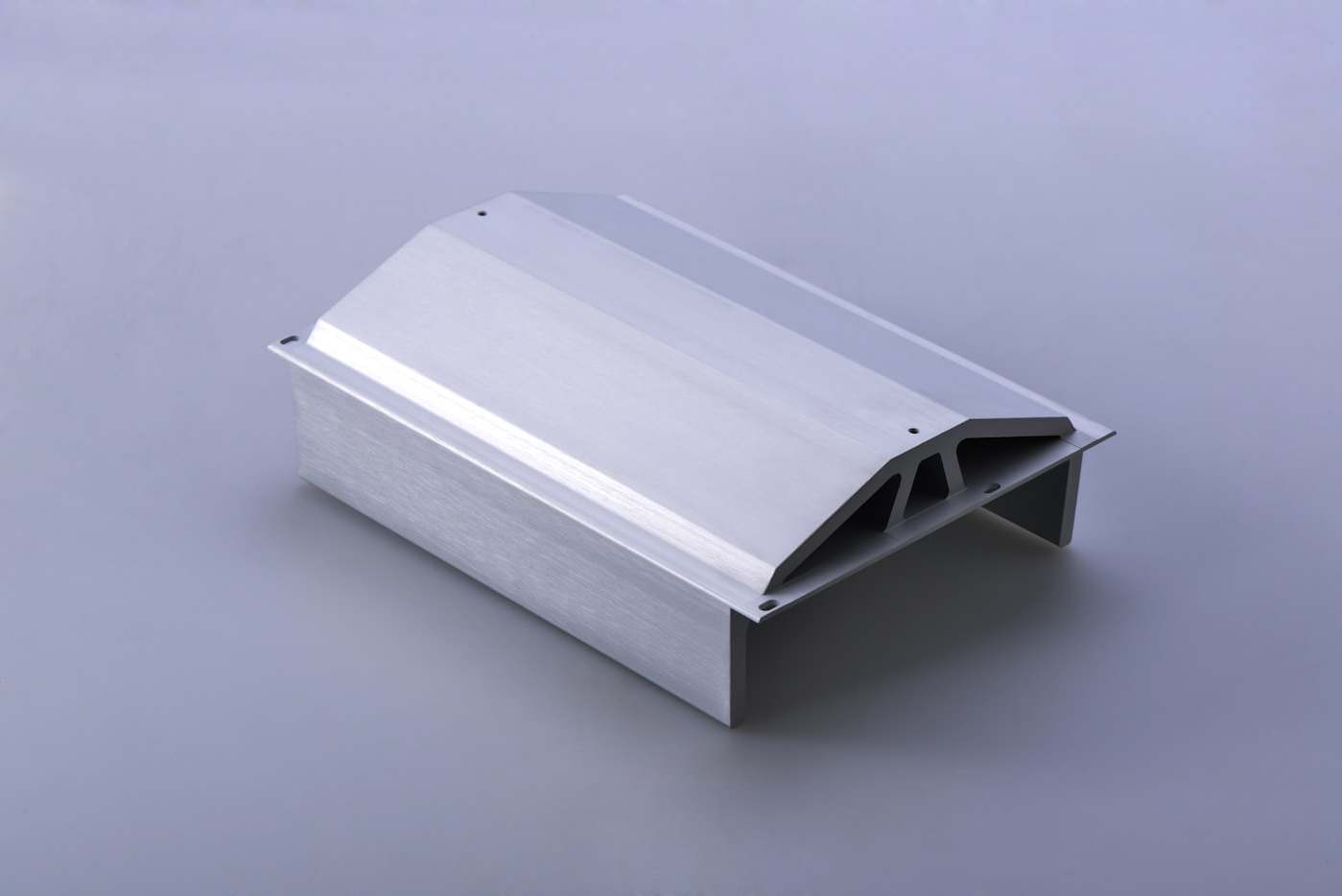
Aluminium alloys are grouped by their main alloying element into series (1000 to 7000), and the right choice depends on whether the part is sheet-formed, welded, machined, or needs maximum strength. EN AW-5754 and 5052 are the standard sheet-metal alloys for bent and welded enclosures; 6061-T6 is the general-purpose machining and structural alloy; 7075 is a high-strength aerospace-grade alloy used only where strength-to-weight is critical and welding is not required.
This page compares the four alloys most used in fabrication work in Egypt, the UAE and Saudi Arabia, with a numeric example showing how the choice changes weight and cost on a bracket design.
The four common alloys compared
5052 and 5754 (both 5000-series, magnesium-alloyed) are the default sheet metal grades: not heat-treatable, excellent corrosion resistance, easy to bend without cracking, and readily weldable with 5356 filler. 5754 is slightly lower strength but is the standard European automotive and general fabrication sheet grade; 5052 is the equivalent American designation used interchangeably in most shops.
6061-T6 (6000-series, magnesium and silicon) is heat-treated to a higher strength than the 5000 series and is the standard for machined parts, structural extrusions and anything needing a good strength-to-weight ratio with reasonable weldability (using 4043 or 5356 filler, with some strength loss in the heat-affected zone). 7075 (7000-series, zinc-alloyed) reaches roughly twice the yield strength of 6061-T6 but is difficult to weld, more expensive, and less corrosion resistant, so it is reserved for highly loaded machined parts, not sheet or welded assemblies.
| Alloy | Yield strength | Weldability | Corrosion resistance | Typical form |
|---|---|---|---|---|
| 5754 (EN AW-5754) | 80-130 MPa | Excellent | Excellent, marine grade | Sheet, plate |
| 5052 | 90-190 MPa | Excellent | Excellent, marine grade | Sheet, plate |
| 6061-T6 | 240-275 MPa | Good, some HAZ loss | Good | Sheet, extrusion, bar, machined |
| 7075-T6 | 460-500 MPa | Poor, not recommended | Fair, needs coating for coastal use | Bar, plate, machined only |
Matching the alloy to the process
For laser-cut and bent sheet metal enclosures, brackets and panels, 5754 or 5052 is the correct default: it bends to a tighter radius without cracking and does not need heat treatment to reach usable strength. For CNC-machined housings, shafts, plates and structural brackets, 6061-T6 is the default: it machines cleanly, accepts anodising well, and has enough strength for most mechanical parts.
7075-T6 is specified only when the part is highly loaded and weight matters more than cost: aerospace brackets, high-performance fixtures, tooling components. It should never be TIG or MIG welded structurally; if a 7075 part needs joining, mechanical fastening or adhesive bonding is used instead.
- Sheet metal enclosures, ducting, brackets: 5754 or 5052
- Welded aluminium frames and marine fittings: 5754 or 5083 (higher-strength marine grade)
- Machined housings, plates, general structural parts: 6061-T6
- Extruded profiles, window and facade sections: 6063 (not covered here) or 6061
- High-strength machined parts, no welding required: 7075-T6
Coastal corrosion behaviour
All four alloys resist corrosion well compared with steel, but they are not equal. 5000-series alloys are the most corrosion-resistant of the group and are the standard marine and coastal grade; unanodised 5754 or 5052 performs acceptably in Gulf coastal air for years. 6061-T6 is slightly less resistant but performs well when anodised, which is standard practice for architectural and enclosure parts. 7075-T6 is the least corrosion resistant of the four and should be anodised or coated for any exterior or coastal use in Dubai, Jeddah or Dammam; bare 7075 exposed to salt air pits faster than the others.
Sand and dust abrasion (common in desert environments across Egypt and Saudi Arabia) does not significantly differentiate the alloys since none of them are hardness-graded for abrasion resistance the way tool steel is; a hard-anodised surface (type III) helps regardless of which alloy is used underneath.
Worked example
A mounting bracket carrying 150 kg static load, 200 x 100 x 8 mm plate with two M10 bolt holes: in 6061-T6 (yield 240 MPa) the plate has a safety factor of roughly 4 against yield at 8 mm; the same bracket in 5754 (yield 90 MPa) would need to increase to about 12-14 mm to reach a similar safety factor, adding 50-75% more material weight and laser cutting time. Machining a lighter, higher-strength bracket in 6061-T6 is both cheaper and lighter than an over-sized 5754 part for this load case.
Design tips
- Default to 6061-T6 for CNC-machined parts and 5754/5052 for bent sheet metal unless a specific reason points elsewhere.
- Never specify structural TIG or MIG welding on 7075; use 6061-T6 or a 5000-series alloy if welding is required.
- Anodise 7075 and 6061 parts used outdoors in coastal Gulf cities; 5000-series sheet can often go unfinished in the same environment.
- If the part needs both good weldability and higher strength than 5754, consider 5083 (higher magnesium 5000-series) before jumping to 6061.
- State the load case (static or dynamic, magnitude) on the RFQ so the shop can flag an under-specified alloy or thickness.
- Do not mix 7075 fasteners into a 6061 or 5754 assembly without checking galvanic compatibility; both are aluminium so galvanic risk is low, but confirm the fastener finish matches the assembly's coating.
- For parts that will be anodised, request 6061 or 5754 over 7075: the copper content in 7075 gives a duller, less uniform anodised finish.
Applications
| Industry | Example parts | Typical alloy |
|---|---|---|
| Electrical enclosures | Panel boxes, brackets, mounting plates | 5754 sheet, 6061 machined parts |
| Solar mounting structures | Rails, clamps, brackets | 6061-T6 extrusion |
| Architecture and facades | Cladding, louvres, window sections | 6061 or 6063 extrusion |
| Machinery and OEM parts | Housings, shafts, structural plates | 6061-T6 |
| Marine and coastal fixtures | Deck fittings, brackets, hardware | 5754 or 5083 |
| Aerospace and tooling | High-load brackets, jigs, fixtures | 7075-T6 |
| HVAC and ducting | Panels, frames, enclosures | 5754 sheet |
Pricing and lead time
Alloy cost is driven by the alloying elements and heat treatment (7075 costs roughly 40-60% more than 6061-T6 per kg due to zinc content and processing), by form and stock availability (sheet in 5754/5052 and bar/plate in 6061 are widely stocked in the region; 7075 plate often needs to be sourced specifically, adding lead time), and by the process applied (machining removes more material and time from 7075 due to its hardness). Standard 5754 and 6061 sheet and plate ship in 3-6 working days; 7075 stock orders typically add 3-5 days for sourcing.
Frequently asked questions
Structural TIG or MIG welding on 7075 is not recommended; it is highly prone to hot cracking and the weld zone loses most of its strength. If a 7075 part must be joined, use bolted or riveted connections instead.
Upload your DXF or STEP file and receive a binding quote within 12 hours, in the aluminium alloy that fits your load case.