Aluminium Anodising Colours and Types
Type II decorative, Type III hard anodising and colour options for machined and sheet aluminium parts
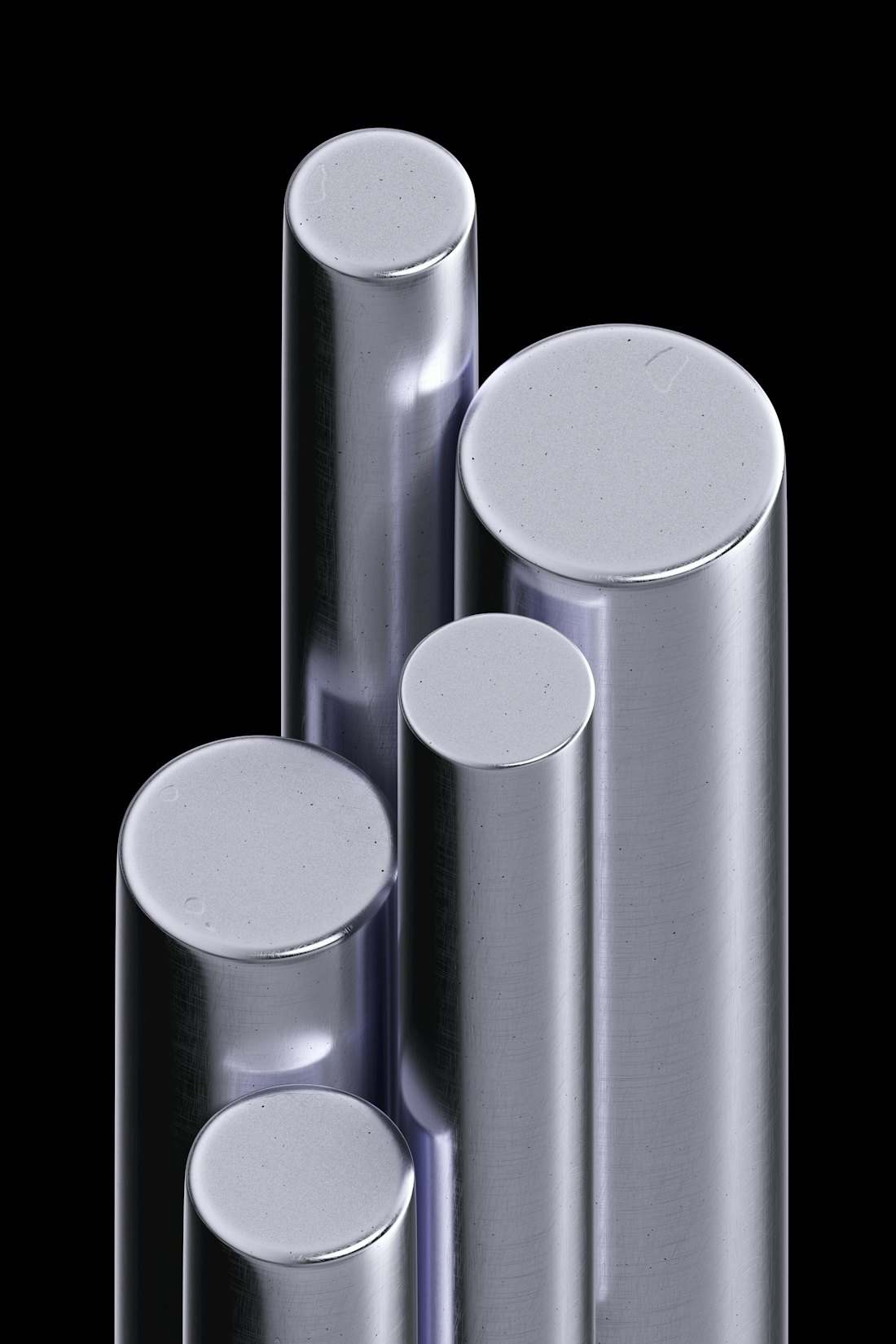
Anodising grows a hard, porous aluminium oxide layer on the surface of a part by passing current through it in a sulphuric acid bath. The layer is part of the metal, not a coating, so it does not chip or peel. It is dyed for colour, then sealed. Type II decorative anodising is 5-25 µm thick and comes in clear, black, gold, red, blue, bronze and more. Type III hard anodising is 25-50 µm, grey to dark grey, and resists sand abrasion and wear.
Through CutLinq you can order laser-cut, bent and CNC-machined aluminium parts anodised in the type and colour you specify. Upload your DXF or STEP file, state the alloy and anodising spec, and receive a binding quote within 12 hours.
Type II versus Type III: which one to specify
Type II (sulphuric acid, MIL-A-8625 Type II or ISO 7599) is the default for enclosures, panels, brackets and consumer-facing parts. It accepts dye, gives a uniform colour and adds little dimension. Type III (hard anodising, MIL-A-8625 Type III or ISO 10074) is run at low temperature and high current; the layer is denser, 25-50 µm, reaches 350-500 HV hardness and is used on sliding surfaces, pistons, gears, tooling and anything exposed to blowing sand.
Hard anodising grows roughly half into the metal and half outward, so a 40 µm layer increases each surface by about 20 µm. Threads, bores and fits must allow for this or be masked.
| Property | Type II decorative | Type III hard |
|---|---|---|
| Thickness | 5 to 25 µm | 25 to 50 µm (up to 100 µm on request) |
| Hardness | 200-300 HV | 350-500 HV |
| Colour options | clear, black, gold, red, blue, green, bronze | natural grey to dark grey, black dye possible |
| Dimensional growth per side | 2-5 µm | 12-25 µm |
| Salt spray ISO 9227 (sealed) | 336 hours | 500+ hours |
| Abrasion resistance | moderate | high, suitable for sand exposure |
| Relative cost | 1.0 | 1.8-2.5 |
Colours and how they behave in MENA sunlight
Organic dyes give strong colours but fade under UV. In Riyadh or Dubai sun, red and blue organic dyes on exterior parts lose visible colour within 1-3 years. Black, clear and inorganic gold (two-step electrolytic colouring in a tin bath) are UV stable and are the right choice for facades, signage and outdoor equipment. Bronze and champagne shades from electrolytic colouring are common on architectural extrusions.
Colour matching between batches is approximate. For a consistent look order all parts of one assembly in the same batch, and ask the supplier for a colour sample before a large run.
| Colour | Method | UV stability outdoors | Typical use |
|---|---|---|---|
| Clear (natural) | no dye, sealed | excellent | enclosures, heatsinks, machined parts |
| Black | organic dye or electrolytic | good to excellent | optical, consumer, signage |
| Gold / champagne | electrolytic (inorganic) | excellent | architectural, decorative |
| Bronze / dark bronze | electrolytic | excellent | facade profiles, handrails |
| Red, blue, green | organic dye | fair, fades in 1-3 years outdoors | indoor, labels, identification |
| Hard anodised grey | Type III, no dye | excellent | sliding parts, tooling |
Alloy choice affects the result
Anodising quality depends on the alloy. 6061-T6, 6082-T6 and 6063-T6 give clear, uniform finishes and are the safest choice for decorative work. EN AW-5754 and 5052 sheet anodise well with a slightly warmer tone. 7075-T6 anodises to a yellowish or brownish clear and is fine for hard anodising on functional parts. Cast alloys and 2024 with high copper content give dark, blotchy results and are usually not accepted for decorative colour.
Welded parts show the weld seam as a dark line after anodising because the filler alloy differs; if a uniform look is needed, bend or machine the part instead of welding, or powder coat.
- Best decorative result: 6063-T6, 6061-T6, 6082-T6, 5754, 5052
- Acceptable for hard anodising only: 7075-T6, 2017A
- Not recommended for colour: cast alloys (AlSi10Mg, A356), 2024
- Welds appear dark: 4043 filler shows grey, 5356 filler shows lighter
- Laser-cut edges anodise normally after deburring; heat tint must be removed first
Surface preparation and pre-treatments
The anodised finish shows every scratch and mark underneath it. Standard pre-treatment is degreasing and a caustic etch, which gives a matte satin look and hides fine machining marks. A brushed finish (grain 180-320) before anodising gives a linear satin texture common on panels. Bright dip or mechanical polishing before anodising gives a mirror look but costs more and shows every handling mark.
Ask for a rack-mark location on the drawing: every part needs an electrical contact point, which leaves a small unanodised mark of 2-5 mm. Put it on a hidden edge or a hole.
Masking, threads and tolerances
Type II adds 2-5 µm per side, which is within most tolerances. Type III adds 12-25 µm per side and changes H7 bores and M-threads enough to matter; either mask them with plugs and tape or machine them oversize by the growth. Anodised surfaces are electrically insulating, so earthing points and EMC contact areas must be masked or use a conductive chromate conversion coating instead.
Design tips
- Specify anodising as type, thickness and colour, for example Type II 15 µm black sealed, or Type III 40 µm natural.
- Allow for growth: Type III adds about 20 µm per side at 40 µm layer; machine bores +0.04 mm or mask them.
- Mark a rack contact location on the drawing on a hidden edge or inside a hole.
- Use 6061, 6082 or 6063 for decorative colour; avoid 2024 and cast alloys.
- Choose black, clear, gold or bronze for outdoor parts in Egypt and the Gulf; organic red and blue fade in 1-3 years.
- Order all parts of one visible assembly in one batch to keep the colour consistent.
- Mask earthing pads and EMC contact areas, or specify chromate conversion (Alodine) there instead.
Applications
| Industry | Example parts | Typical material |
|---|---|---|
| Electronics and enclosures | front panels, heatsinks, instrument housings | 6061-T6, 5754, Type II clear or black |
| Architecture and signage | facade fins, letters, handrail profiles | 6063-T6, 5754, electrolytic bronze or gold |
| Machinery and automation | guide rails, pistons, cam plates, jigs | 7075-T6, 6082-T6, Type III 40-50 µm |
| Solar | clamps, rails, mounting brackets in sand-exposed sites | 6063-T6, 6005A, Type II 20 µm or Type III |
| Automotive aftermarket | wheel spacers, pedal sets, trim pieces | 6061-T6, 7075-T6, Type II colours |
| Medical and laboratory | instrument trays, device housings | 6061-T6, Type II clear or hard |
| Furniture and interiors | table frames, lighting parts, handles | 6063-T6, 6061-T6, Type II colours |
Pricing and lead time
Anodising price is driven by three factors: surface area and rack loading (small parts racked by the hundred cost far less each than one large panel), type and thickness (Type III at 40-50 µm costs roughly 2 times Type II at 15 µm), and colour and pre-treatment, where electrolytic colouring and brushing add 20-40% over clear with etch. Masking is charged per feature. Realistic lead times are 3 to 5 working days for anodising alone, and 7 to 12 working days for a complete laser-cut or machined part with anodising, depending on the supplier queue in Cairo, Dubai, Sharjah or Riyadh.
Frequently asked questions
Type II at 20-25 µm sealed in clear, black or electrolytic bronze. If the parts see blowing sand or sliding contact, Type III hard anodising at 40 µm lasts much longer.
Upload your DXF or STEP file with the anodising type and colour and receive a binding quote within 12 hours.