Threads, Tapping and Press-In Inserts
Tapped holes, helicoils, PEM-type inserts and rivet nuts for sheet metal and machined parts, M2 to M24
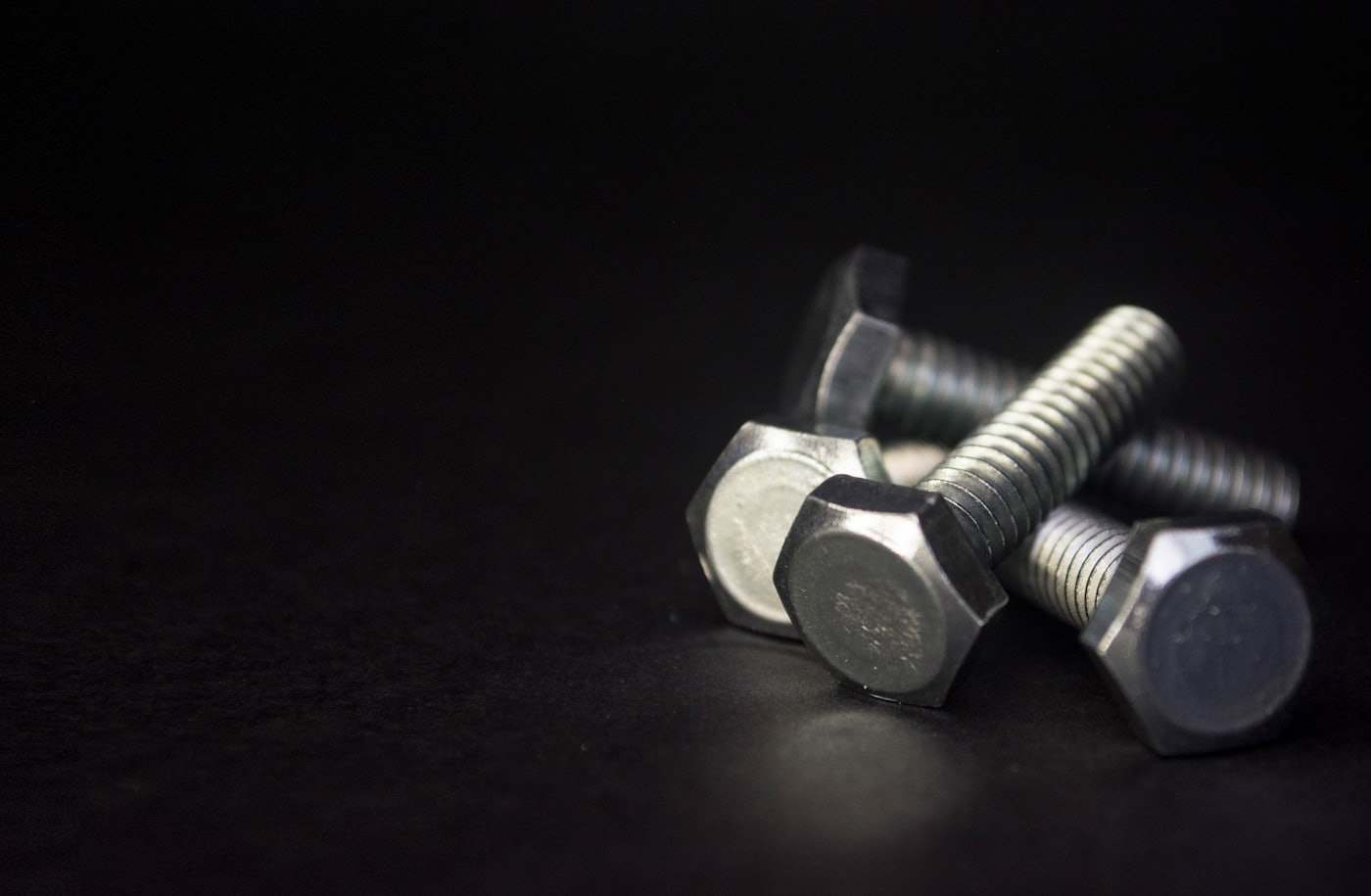
Threads in metal parts are produced by tapping, thread milling, form tapping or by installing a separate insert. Which method is right depends on the sheet or wall thickness: a tapped hole needs at least 1.5 thread pitches of engagement to hold a bolt, so a 2 mm sheet cannot carry a useful M6 thread on its own and needs a press-in insert or a rivet nut. Suppliers in the CutLinq network tap M2 to M24 in steel, stainless and aluminium, install PEM-type self-clinching nuts and studs in sheet from 0.8 to 6 mm, and fit helicoil inserts in aluminium and cast parts.
This page explains each method, the thread tolerances and engagement lengths to expect, and how to call them out on a drawing so the quote and the part match.
Threading methods and when to use each
Cut tapping is the default for machined parts and thick plate; it produces ISO 6H threads in one pass. Form tapping (roll tapping) displaces metal instead of cutting it and gives a stronger thread in aluminium 6061-T6 and low-carbon steel, with no chips to clear from blind holes. Thread milling on a CNC machining centre is used above M16, in hardened materials and where a broken tap would scrap an expensive part. For sheet metal under 3 mm the practical options are extruded (flared) holes with a formed thread, self-clinching inserts, or blind rivet nuts installed after powder coating.
| Method | Thread range | Min material thickness | Typical tolerance | Best for |
|---|---|---|---|---|
| Cut tapping | M2 - M24 | 1.5 × pitch engagement | ISO 6H | Machined parts, plate 5 mm and up |
| Form tapping | M2 - M12 | 1.5 × pitch | ISO 6H | Aluminium, mild steel, blind holes |
| Thread milling | M8 - M64 | Any | ISO 6H / 4H | Large or hardened parts, 1.4404 (316L) |
| Extruded hole + tap | M3 - M6 | 0.8 - 2 mm sheet | ISO 6H, 2-3 threads | Light-duty sheet covers |
| Self-clinching nut | M2 - M12 | 0.8 - 6 mm sheet | ISO 6H in nut | Enclosures, brackets before coating |
| Blind rivet nut | M3 - M12 | 0.5 - 6 mm | ISO 6H in nut | Closed sections, after coating |
| Helicoil insert | M2 - M20 | 2 × nominal dia. depth | ISO 6H | Aluminium, repeated assembly |
Thread engagement: the worked example
A bolt thread strips when the shear area of the internal thread is smaller than the tensile area of the bolt. As a rule of thumb, full bolt strength in steel needs 1 × nominal diameter of engagement, in aluminium 1.5 to 2 × diameter, and in plastics 2.5 × diameter. Take an M6 bolt (pitch 1.0 mm) in a 3 mm S235JR plate: 3 mm gives exactly three threads, about half the bolt's diameter, so the thread carries roughly 50% of the bolt's rated load. For a machine guard fixed with four bolts that is acceptable; for a lifting bracket it is not, and a self-clinching nut with an 8 mm long thread solves it.
In 1.4301 (304) stainless, work hardening makes cut tapping slow and taps break above M10 in blind holes. Suppliers use spiral-flute taps and lower speeds, which is why tapped stainless costs 30-50% more per hole than mild steel.
Press-in and self-clinching inserts
Self-clinching nuts, studs and standoffs are pressed into a punched or laser-cut hole in a ductile sheet. The knurled shank displaces sheet material into an undercut, giving a joint that withstands torque and push-out without welding. The sheet must be softer than the insert: steel and stainless inserts go into aluminium and mild steel sheet; for stainless sheet, hardened stainless inserts are required and the hole tolerance is tighter. Inserts must be installed before powder coating, and the thread masked, otherwise coating fills the thread.
Hole size is critical. An M4 self-clinching nut needs a 5.4 mm hole with a tolerance of +0.08/-0 mm; laser cutting holds this in sheet up to 3 mm, while plasma-cut holes are too rough and taper. Minimum sheet thickness is set by the insert series: standard S-type nuts need 0.8 mm minimum, heavy-duty types need 1.5 to 2 mm.
| Insert size | Hole in sheet | Min sheet thickness | Push-out (mild steel, approx.) | Torque-out (approx.) |
|---|---|---|---|---|
| M3 | 4.2 mm | 0.8 mm | 0.6 kN | 3 N·m |
| M4 | 5.4 mm | 1.0 mm | 0.8 kN | 5 N·m |
| M5 | 6.4 mm | 1.0 mm | 1.0 kN | 8 N·m |
| M6 | 8.7 mm | 1.4 mm | 1.5 kN | 13 N·m |
| M8 | 10.5 mm | 2.0 mm | 2.2 kN | 25 N·m |
| M10 | 14.0 mm | 2.3 mm | 3.0 kN | 45 N·m |
Rivet nuts and helicoils
Blind rivet nuts (rivnuts) are installed from one side with a hand or pneumatic tool, so they suit closed tubes, box sections and painted parts where an insert cannot be pressed. They are available in steel zinc plated, 1.4301 (304) stainless and aluminium, in round, hexagonal and knurled bodies; hexagonal bodies in a hexagonal laser-cut hole resist spin-out. Rivet nuts are the usual choice for solar rails and signage cabinets assembled on site in the UAE and Saudi Arabia.
Helicoil wire inserts reinforce tapped holes in aluminium 6061-T6 and 7075 where bolts are removed repeatedly, and repair stripped threads. The hole is tapped with an oversize STI tap, the stainless wire coil is screwed in, and the tang is broken off. Specify the insert length as a multiple of diameter: 1.5 D is standard, 2 D for high loads.
Calling out threads on a drawing
Write the thread as M6x1-6H with depth, for example M6x1-6H ↧ 12 on a blind hole, and give the drill depth separately (↧ 15) so the tap has chip clearance. For inserts, state the manufacturer type, thread and sheet thickness, for example 'S-M4-1 self-clinching nut, install from far side'. Note the installation side on the drawing; a nut installed on the wrong face cannot be corrected. For threads in corrosion-exposed parts in coastal Alexandria, Jeddah or Dammam, specify stainless inserts and dissimilar-metal isolation on aluminium.
- Blind hole: drill depth = thread depth + 3 × pitch minimum
- Through hole in sheet under 1.5 × diameter thickness: use an insert
- Countersink or chamfer 0.5 × pitch at thread start to prevent burrs damaging the bolt
- Do not tap after galvanising; the zinc closes the thread, tap after or use oversize tap
- Mask threads before powder coating or specify re-tapping after coating
Design tips
- Use inserts whenever sheet thickness is below 1 × thread diameter: 2 mm sheet with M6 needs an insert, 6 mm plate does not
- Keep insert holes at least 1.5 × hole diameter from a sheet edge and 3 × sheet thickness from a bend line
- Specify hole diameters for self-clinching inserts as +0.08/-0 mm and let laser cutting hold it; do not use plasma-cut holes
- Choose form tapping in aluminium and mild steel below M12 for 20-30% higher stripping strength
- For 1.4301 (304) or 1.4404 (316L) sheet, specify hardened stainless (400-series) inserts; standard steel inserts will not clinch
- Set thread depth to 1 × D in steel, 1.5 × D in aluminium, 2.5 × D in POM or PA
- Sequence: laser cut, form, deburr, install inserts, mask threads, powder coat, then rivet nuts if any
Applications
| Industry | Example parts | Typical material |
|---|---|---|
| Electrical enclosures | Door panels with M4 nuts and M5 studs for earthing | DC01 1.5-2 mm, zinc plated inserts |
| Telecom and IT | 19-inch rack rails with M6 cage nuts and M4 standoffs | DC01 2 mm, EN AW-5754 2 mm |
| Solar | Rail splices with M8 rivet nuts | S235JR galvanised 3 mm, 6061-T6 |
| Machinery | Tapped M10-M16 mounting plates | S235JR 10-20 mm, cut tapped |
| Food equipment | Hygienic stainless panels with M6 studs | 1.4301 (304) 1.5 mm, stainless inserts |
| Signage | Aluminium cabinets with M5 rivet nuts | EN AW-5754 2 mm |
| Automotive aftermarket | Brackets with M8 form-tapped holes | S355 5-6 mm, 6061-T6 |
Pricing and lead time
Thread cost depends on three things: the method (a tapped hole on a machining centre is cheaper than a pressed insert, which is cheaper than a helicoil), the material (stainless tapping costs 30-50% more than mild steel and aluminium), and the count per part, since inserts are installed one at a time on a press. Tapped holes in machined parts add nothing to lead time. Sheet metal parts with self-clinching inserts ship in 4 to 7 working days including cutting and bending; parts that also go through powder coating and rivet nut installation take 8 to 12 working days.
Frequently asked questions
2 mm gives two threads of M6, which strips at low torque. Either extrude the hole to gain about 3.5 mm of thread for light duty, or install an M6 self-clinching nut, which needs a minimum 1.4 mm sheet and holds around 13 N·m.
Upload your DXF or STEP file with thread callouts and receive a binding quote within 12 hours.