Corten Weathering Steel
Laser cutting, bending and welding of S355J2W (Corten A/B) for facades, screens, planters and landscape features in MENA
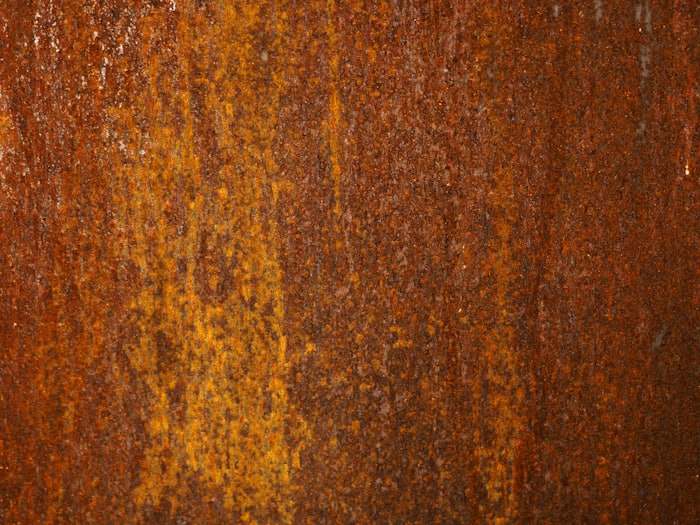
Corten is the trade name for weathering steel: a low-alloy structural steel with 0.25-0.55% copper, chromium and nickel that forms a stable, adherent rust patina instead of flaking. The standard grades are S355J2WP (EN 10025-5, close to ASTM A588 Corten A) for sheet and S355J2W (Corten B) for plate above 12 mm. Suppliers in the CutLinq network laser cut Corten from 1.5 to 20 mm, bend it on press brakes and weld it with matching filler, delivered either mill-finish or pre-weathered.
This page covers the grades, cutting and forming limits, how long the patina takes in the region's dry and coastal climates, and the drainage and detailing rules that stop rust staining the paving underneath.
Grades, thickness and mechanical properties
Weathering steel is roughly 30-60% more expensive than S235JR per kilogram and has a longer stock lead time in the region, so most architectural work uses 2, 3, 4 and 6 mm sheet; heavier plate is ordered to project. Mechanical values are similar to S355, which means tighter bend radii need higher tonnage than mild steel of the same thickness.
| Grade EN 10025-5 | Common name | Yield MPa min | Tensile MPa | Thickness stocked | Notes |
|---|---|---|---|---|---|
| S355J2WP | Corten A | 355 | 470-630 | 1.5-12 mm sheet | Higher phosphorus, best patina, sheet only |
| S355J2W | Corten B | 355 | 470-630 | 6-40 mm plate | Structural, weldable, plate and sections |
| S235J2W | Weathering mild | 235 | 360-510 | Rare in MENA | Easier forming, lower strength |
| ASTM A588 Gr. A/B | Corten B equivalent | 345 | 485 min | Import plate | US spec on some Gulf projects |
| ASTM A606 Type 4 | Corten A equivalent | 340 | 480 min | 1.0-6 mm coil | Cold-rolled, thin cladding |
Laser cutting and bending Corten
Fiber laser cuts weathering steel with the same parameters as S355: oxygen assist to 20 mm, nitrogen for oxide-free edges to about 8 mm. Kerf is 0.2-0.4 mm and positional tolerance ±0.1 mm on sheet to 6 mm. Because the patina forms on the cut edge too, edge quality only matters for fit-up, not appearance. Perforated screens with hole-to-web ratios below 1:1 in 3 mm sheet are routine; intricate calligraphy and mashrabiya patterns are a large share of Corten orders in the Gulf.
Bending follows S355 rules: inside radius at least 1.5 times thickness, so 6 mm minimum inside radius for 4 mm sheet, and a die opening of 8-10 times thickness. Springback is 2-3° more than mild steel. Grain direction should run across the bend line for tight radii.
| Thickness | Laser assist gas | Min inside bend radius | Max sheet size typical | Positional tolerance |
|---|---|---|---|---|
| 1.5-3 mm | Nitrogen or oxygen | 1.0 x t | 1500 x 3000 mm | ±0.1 mm |
| 4-6 mm | Oxygen | 1.5 x t | 1500 x 3000 mm | ±0.15 mm |
| 8-12 mm | Oxygen | 2.0 x t | 2000 x 6000 mm | ±0.2 mm |
| 15-20 mm | Oxygen or plasma | 3.0 x t (bending rarely done) | 2000 x 6000 mm | ±0.3 mm |
Welding weathering steel
Corten welds with MIG (GMAW) or TIG using a matching weathering filler such as ER80S-G or a nickel-copper wire (EN ISO 14341 G 46 4 M21 Z3Ni1Cu); plain ER70S-6 works for structural strength but the weld bead patinas a different colour and appears as a bright line on a facade. Preheat is not needed below 20 mm. Continuous welds are preferred over stitch welds outdoors because gaps trap water and bleed rust. After welding, grind flush only where specified; the oxide skin and weld tint disappear under the patina anyway.
- Filler: weathering-grade wire for visible joints, ER70S-6 acceptable for hidden structure
- Seal all outdoor joints continuously; leave no crevices
- Stainless fasteners A4 (316) with isolation washers to avoid galvanic staining
How the patina forms in Egypt and the Gulf
The protective layer needs wet-dry cycling. In Cairo, Riyadh and inland UAE with under 100 mm of rain per year, natural weathering takes 12-24 months to reach a uniform brown and the surface stays lighter and more orange; sand abrasion on windward faces can keep it patchy. In Alexandria, Jeddah, Dubai Marina and Dammam, humidity and salt speed up the first rust to 2-4 months, but chloride exposure within about 1 km of the sea prevents the patina from stabilising and the steel keeps corroding at 20-40 µm per year. For those sites specify pre-weathering plus a clear sealer, or use a Corten-look powder coat on galvanised steel instead.
Pre-weathering (accelerated patination with a mild acid-oxidiser spray, 3-6 cycles over 1-2 weeks) delivers an even brown-orange finish before installation and is standard on interior and courtyard pieces.
Detailing to avoid rust run-off
During the first 1-2 years Corten sheds rust-laden water that stains light stone, concrete and porcelain tiles permanently. Design drip edges 20-30 mm clear of paving, place a gravel margin 150-300 mm wide under free-standing panels, and avoid horizontal ledges where water pools. Planters need an internal liner (HDPE or bitumen paint) and 10 mm drain holes at 300 mm centres; do not weld the base watertight. Minimum recommended thickness for exterior panels is 3 mm and for planters 4 mm, because the patina consumes 0.1-0.2 mm of section over the first decade in inland climates.
Design tips
- Use 3 mm minimum for exterior panels and 4-6 mm for planters and street furniture; 2 mm is for interior cladding only.
- Keep perforation web width at or above sheet thickness (3 mm holes need 3 mm bars) to avoid heat distortion during cutting.
- Inside bend radius at least 1.5 x thickness; add 0.5 mm relief slots at bend ends to prevent tearing.
- Specify weathering-grade filler on the drawing for any visible weld.
- Add drain holes of 10 mm at 300 mm spacing and a 20-30 mm drip clearance above paving.
- State 'mill finish', 'pre-weathered' or 'pre-weathered and sealed' on the order; each has a different lead time.
- Use A4 stainless bolts with nylon or EPDM washers; zinc-plated fasteners fail within a year in contact with Corten.
Applications
| Industry | Example parts | Typical material |
|---|---|---|
| Architecture and facades | Cladding cassettes, mashrabiya screens, fins | S355J2WP 3-4 mm, pre-weathered |
| Landscape and public realm | Planters, retaining edges, bollards | S355J2WP 4-6 mm |
| Signage | Monument signs, cut-out lettering, wayfinding | S355J2WP 3-6 mm |
| Hospitality and fit-out | Feature walls, reception desks, fireplaces | S355J2WP 2-3 mm, sealed |
| Furniture | Table bases, benches, screens | S355J2WP 3 mm, 40x40 tube S355J2W |
| Art and sculpture | Large cut forms, plate sculptures | S355J2W 8-20 mm plate |
| Infrastructure | Bridge fascias, sound barriers | S355J2W 8-12 mm |
Pricing and lead time
Price is driven by material and thickness (Corten sheet costs roughly 30-60% more than S235JR and 6 mm costs about 2.5 times 3 mm per square metre), cut length and perforation density (a dense screen can have 10-20 times the cut length of a plain panel of the same size) and finishing route (pre-weathering adds roughly 15-25% to a cut panel, sealing a further 10-15%). Lead times: mill-finish laser-cut parts 3-6 working days if sheet is in stock, 10-15 working days if plate must be ordered; pre-weathered parts add 7-10 working days for the patination cycles.
Frequently asked questions
In dry inland air it forms a stable oxide after 1-2 years and then loses only about 5-10 µm per year. Within about 1 km of the coast, or where the surface stays wet, the patina never stabilises and it corrodes like ordinary steel; there we recommend sealing or a different material.
Upload your DXF or STEP file for Corten cutting, bending or pre-weathered panels and receive a binding quote within 12 hours.