How to Calculate the Weight of a Metal Part
Density values and a worked formula for sheet, plate, tube and machined parts
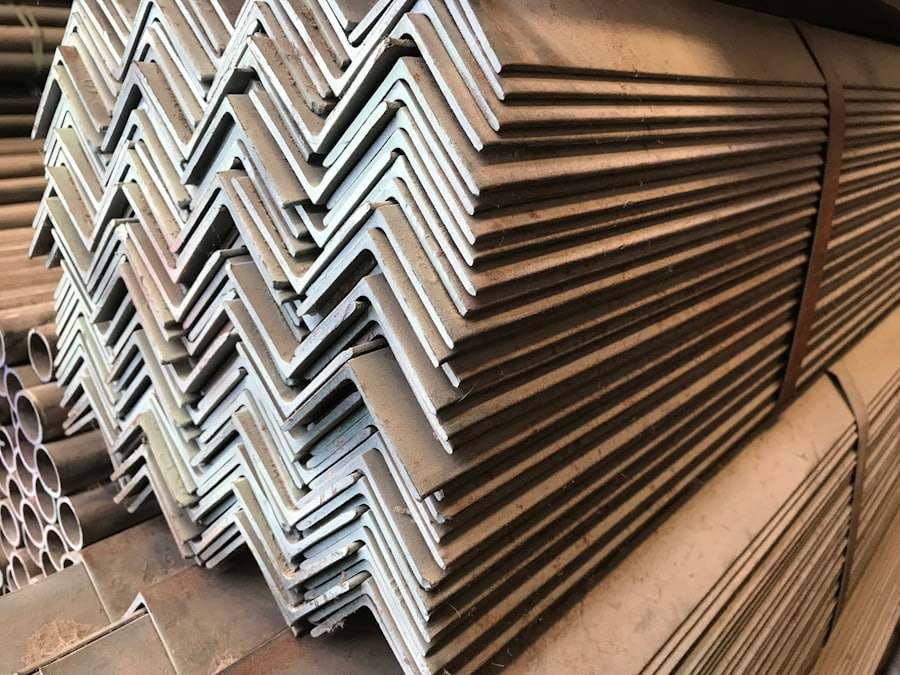
Part weight is calculated by multiplying the material's density by its volume, and for sheet or plate this simplifies to length x width x thickness x density. Weight matters for shipping cost estimates, structural load calculations, and sanity-checking a quote before ordering, since a part's price tracks material weight closely for a given process. Density does not vary meaningfully with grade within one metal family (all common stainless grades are close to 7.9-8.0 kg/dm3) so a general table covers most estimating needs.
This page gives the density values used in the region, a worked example for a laser-cut bracket, and how to adjust the calculation for parts with holes, bends or complex profiles.
Density values by material
Density is expressed in kg per cubic decimetre (kg/dm3), numerically equal to grams per cubic centimetre. For sheet metal work, the practical formula is: weight (kg) = length (m) x width (m) x thickness (mm) x density (kg/dm3). This works because 1 m x 1 m x 1 mm equals exactly 1 dm3 of material.
| Material | Common grade | Density (kg/dm3) | 1 m x 1 m x 1 mm sheet weight (kg) |
|---|---|---|---|
| Mild steel | S235JR, DC01 | 7.85 | 7.85 |
| Stainless steel | 1.4301 (304), 1.4404 (316L) | 7.90-8.00 | 7.90-8.00 |
| Galvanised steel | DX51D+Z | 7.85 (steel + thin zinc, negligible add) | 7.85 |
| Aluminium | 5754, 6061 | 2.70 | 2.70 |
| Brass | CuZn37 | 8.44 | 8.44 |
| Copper | Cu-ETP | 8.90 | 8.90 |
| Titanium | Grade 2, Grade 5 | 4.43-4.51 | 4.43-4.51 |
Worked example: a laser-cut bracket
A flat bracket measures 300 mm x 150 mm, cut from 3 mm S235JR mild steel sheet, before any holes are subtracted. Convert to metres: 0.3 m x 0.15 m = 0.045 m2 of area. Multiply by thickness in mm and density: 0.045 m2 x 3 mm x 7.85 kg/dm3 = 1.06 kg for the solid rectangle. If the bracket has four 10 mm diameter holes, each hole removes a small volume: area of one hole = pi x (5 mm)2 = 78.5 mm2 = 0.0000785 m2; four holes = 0.000314 m2; weight removed = 0.000314 m2 x 3 mm x 7.85 kg/dm3 = 0.0074 kg, negligible at this scale. The finished bracket weighs approximately 1.05 kg.
For a bent part, calculate the weight from the flat pattern area (before bending), not the 3D bounding box, since bending does not add or remove material.
Tube, bar and machined parts
For round tube, weight per metre = pi x (OD - wall) x wall x density, where OD and wall are in mm and the result is in grams per metre when density is in kg/dm3 (divide by 1000 for kg/m). For solid round bar, weight per metre = pi x (diameter/2)2 x density x 1000, with diameter in metres and the result in kg/m when density is kg/dm3. For a CNC machined part where material is removed from a billet, calculate the finished part's actual volume from the 3D model (most CAD software reports this directly) rather than estimating from the starting billet, since the two can differ by 30-70% depending on how much is machined away.
| Shape | Formula (mm dimensions, kg/dm3 density) | Result unit |
|---|---|---|
| Flat sheet/plate | L(m) x W(m) x t(mm) x density | kg |
| Round tube | pi x (OD-wall) x wall x density / 1000 | kg/m |
| Round solid bar | pi x (D/2)^2 x density / 1000 | kg/m, D in mm |
| Machined part from CAD | read volume directly from 3D model x density | kg |
Design tips
- Use the flat pattern area for bent sheet metal weight, not the folded 3D envelope
- Subtract hole and cutout area for parts where openings exceed roughly 10% of total area; below that, the difference is usually negligible for estimating
- For machined parts, read the finished volume directly from the CAD model rather than estimating from bounding box dimensions
- Use 7.85 kg/dm3 for both mild and galvanised steel; the zinc coating adds well under 1% to total weight
- When estimating shipping weight for a batch, calculate per-part weight first, then multiply by quantity and add 5-10% for packaging
- For welded assemblies, sum the weight of each component plus a small allowance (1-3%) for weld metal on larger structures
Applications
| Use case | Why weight matters | Typical calculation |
|---|---|---|
| Shipping cost estimate | courier and freight price by weight or volume, whichever is higher | sum of part weights plus packaging allowance |
| Structural load check | confirming a bracket or frame does not exceed a mounting point's rated load | individual part and assembly weight |
| Quote sanity check | material cost is roughly proportional to weight for a given process | compare quoted price per kg across materials |
| Material ordering | estimating sheet or bar stock quantity needed for a batch | part weight x quantity plus nesting waste allowance |
| Lifting and handling plan | determining if a part needs a hoist or two-person lift | finished part or sub-assembly weight |
Pricing and lead time
Weight calculation itself is free and does not affect lead time, but it directly affects the three real cost drivers on a quote: material cost (priced substantially by weight for a given grade and thickness), process time (heavier plate takes longer to cut and handle), and shipping (courier and freight pricing is weight- or volume-based). Calculating expected weight before requesting a quote lets you sanity-check the material cost component of a binding quote received within 12 hours, and helps confirm whether switching material (for example aluminium at 2.70 kg/dm3 instead of steel at 7.85) meaningfully reduces shipping cost for a large or distant order.
Frequently asked questions
Small differences usually come from unaccounted holes, rounding of density values, or actual sheet thickness varying slightly from nominal (a 3 mm sheet can be 2.9-3.1 mm within standard mill tolerance). These differences are typically under 2-3% and do not affect pricing significantly.
Upload your DXF or STEP file and receive a binding quote with calculated part weight within 12 hours.