What Drives CNC Machining Cost
Material, cycle time and tolerance are the three levers that set a milled or turned part's price
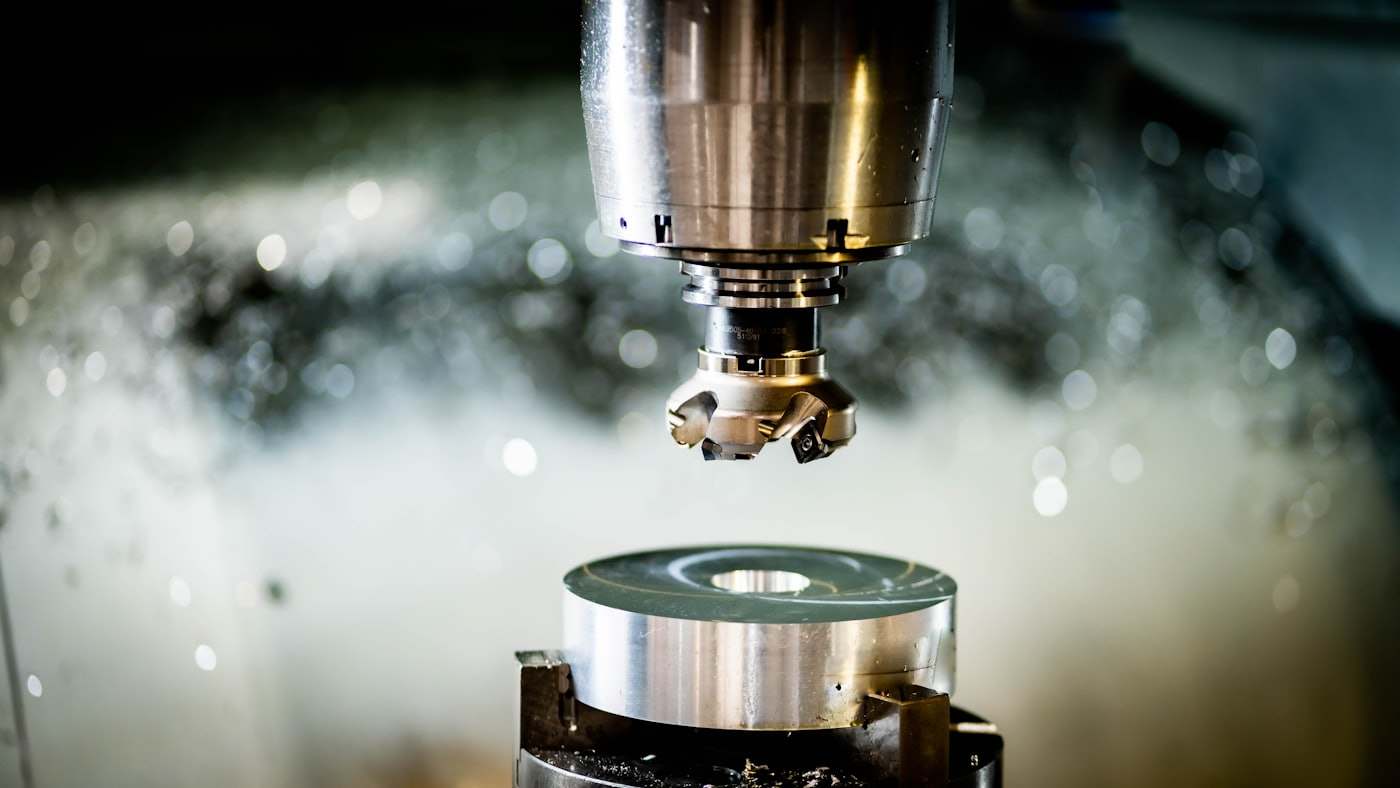
CNC machining cost is set by three factors: material (raw stock cost and how hard it is to cut), machining time (how much material must be removed and how many setups are needed), and tolerance (tighter tolerances slow feed rates and add inspection). A simple aluminium bracket and a complex titanium housing of similar size can differ in price by a factor of 10 or more.
Understanding these drivers helps a buyer simplify a design before quoting, or explain why two similar-looking parts come back at very different prices.
Material: stock cost and machinability
Raw material cost varies widely: 6061-T6 aluminium is among the cheapest and fastest to machine, mild steel S235JR sits in the middle, and 316L stainless steel (1.4404) or titanium Grade 5 cost significantly more per kilogram and cut slower due to work hardening and lower thermal conductivity.
As a rough guide, machining 316L stainless costs roughly 40-60% more than the same part in mild steel, and titanium Grade 5 can cost 3-5 times more than aluminium for an equivalent part, driven by both stock price and slower cutting speeds.
| Material | Relative machining cost | Typical use |
|---|---|---|
| 6061-T6 aluminium | baseline (1x) | brackets, housings |
| S235JR mild steel | 1.1-1.3x | structural parts |
| 316L stainless (1.4404) | 1.4-1.6x | hygienic, marine parts |
| Ti Grade 5 | 3-5x | aerospace, medical |
Machining time: removal volume and setups
Cycle time depends on how much material is removed (a part machined from solid billet with deep pockets takes far longer than a near-net-shape casting), how many separate setups or fixture changes are needed to access all faces, and whether 3-axis, 4-axis or 5-axis machining is required.
A part that needs to be flipped and re-fixtured to machine a second face typically adds 15-30 minutes of setup time per part, which matters most at low quantities where that setup cost is not spread across many units.
Tolerance and surface finish
Standard CNC milling holds ±0.05 mm without special measures; achieving ±0.01 mm requires slower feed rates, more tool changes, and often a CMM inspection report, all of which add cost. Specifying a tight tolerance only where the part actually needs it (a bearing bore, a mating face) rather than across the whole drawing keeps cost down.
Surface finish callouts (Ra values) below Ra 1.6 µm typically require an additional grinding or polishing pass beyond standard milling.
| Tolerance class | Typical cost impact |
|---|---|
| ISO 2768 medium (general) | baseline |
| ±0.05 mm (standard CNC) | baseline to +10% |
| ±0.02 mm | +15-25% |
| ±0.01 mm (achievable) | +30-50%, may need CMM report |
Worked example
A 100 mm aluminium bracket with two faces machined, general tolerance, costs a baseline amount X. The same part in 316L stainless costs roughly 1.5X due to material and slower cutting. Adding a ±0.01 mm bore tolerance and a CMM report on the stainless version pushes it to roughly 1.9-2.1X, even though the part's overall shape has not changed.
Design tips
- Specify ±0.05 mm (standard CNC) unless a specific feature genuinely needs tighter control.
- Use standard drill sizes for holes rather than odd diameters to avoid custom tooling.
- Keep pocket depth under 4x tool diameter where possible to avoid slow, deflection-prone cuts.
- Design parts to be machined from one or two setups rather than requiring multiple re-fixturing steps.
- Round internal corners to at least the cutting tool radius (typically 0.5-3 mm) instead of sharp corners.
- Choose 6061-T6 aluminium over stainless when the application allows it, for roughly 30-40% lower cost.
- Batch identical parts together; CNC setup cost drops sharply once quantity exceeds 10-20 pieces.
Applications
| Industry | Example parts | Typical material |
|---|---|---|
| Machinery OEM | Housings, brackets | 6061-T6, S235JR |
| Medical/lab | Fittings, instrument parts | 316L stainless |
| Oil and gas | Valve bodies, fittings | S355, 316L |
| Automotive aftermarket | Adapters, shafts | 6061-T6, mild steel |
| Electrical | Connector housings | 6061-T6 aluminium |
| Food and beverage | Contact parts | 316L stainless |
Pricing and lead time
CNC machining cost is driven by three factors: material grade and stock cost, machining time (removal volume and number of setups), and tolerance or surface finish requirements. Lead time for standard CNC parts runs 4-8 working days; complex multi-setup parts or those needing a CMM inspection report typically take 8-12 working days.
Frequently asked questions
Stainless stock costs more per kilogram, and it machines slower due to work hardening, so both material and machine-time cost rise, typically 40-60% more than an equivalent aluminium part.
Upload a STEP file with your material and tolerance callouts to receive a binding quote within 12 hours.